loader image
Skip to main content

Himalayan Outdoor Project

UPPER DOLPO Trek

the last truly isolated expedition environments

Peak icon
TREK Upper Dolpo
Elevation icon
Elevation 5,360m / 17,585ft
Region icon
Region Shey Phoksundo National Park
Route icon
Route Juphal
Expedition Duration icon
Co-ordinates 29°11'53"N 82°55'01"E
Group Size icon
Weather Reports Live Weather Report
Expedition Grade icon
Walking Per Day 5 – 7 Hours
Highest Camp icon
Trek Duration 20 Days
Accommodation icon
Accommodation Hotel | Tea House | Lodge
Best Season icon
Best Season Mar – May | Sept – Nov

Upper Dolpo Trek: Across the Desert Glaciers of the High Himalayas

TRIP HIGHLIGHTS

TREK OVERVIEW

Upper Dolpo is Nepal’s last forbidden kingdom a high, arid Trans-Himalayan region sealed off from outsiders until 1989. Hidden behind the Dhaulagiri massif in the rain shadow of the Himalaya, it looks and feels more like Tibet than Nepal: stark valleys, wind-carved cliffs, and villages where Bon and Tibetan Buddhist traditions remain unbroken. This is the world made famous by Peter Matthiessen’s The Snow Leopard and Eric Valli’s Oscar-nominated film Caravan.


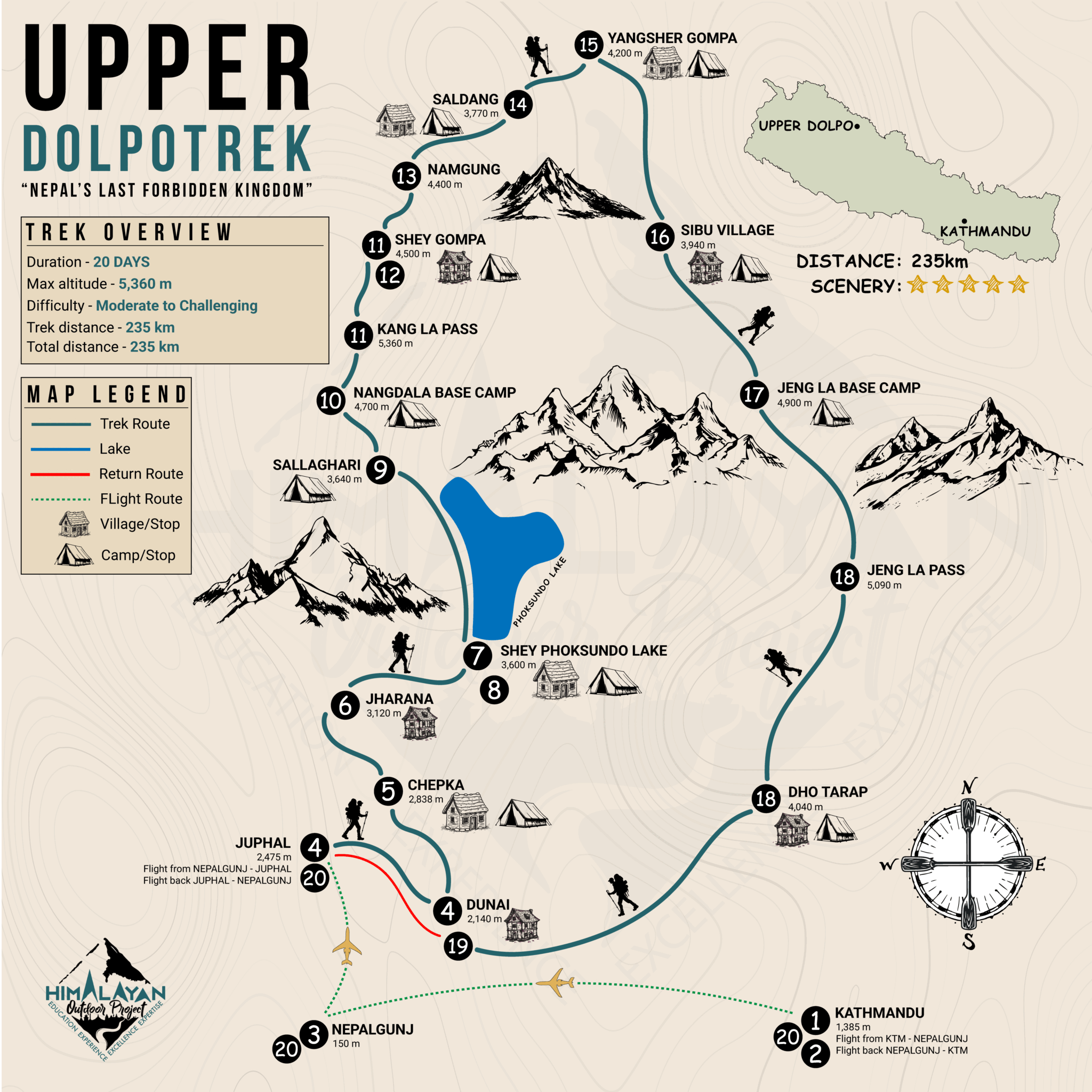
The journey begins with flights from Kathmandu to Nepalgunj and on to the small airstrip at Juphal, gateway to the region. From there the trail follows the Suli Gad gorge to Ringmo village and the shimmering waters of Phoksundo Lake, before climbing into true wilderness. The route crosses the Kang La Pass at 5,360m to reach Shey Gompa, the Crystal Monastery, then continues deeper into Inner Dolpo through Saldang and Namgung to the high desert settlement of Dho Tarap.


This is a fully self-supported camping trek. Teahouses are almost non-existent above Ringmo, so the expedition crew carries kitchen, dining, and sleeping tents for the entire route. Every permit, campsite, and river crossing must be planned with precision there is no room for improvisation this far from help.


The Upper Dolpo Trek is not merely about reaching a destination; it is about walking into one of the last places on Earth where the modern world has yet to arrive. It is a once‑in‑a‑lifetime journey that demands exceptional preparation but offers rewards that last forever.

Here is brief information regarding the expedition, including dates, duration, pricing and more.
  1. MONTH

    March - May | Setpember - November
  2. GROUP SIZE

    4 - 14 adventurers
  3. DURATION

    Expedition duration is 20 days
  4. TRANSPORTATION

    We will be travelling via private transportation
  5. DIFFICULTY

    The level will be moderate

Itinerary

  • Day 1: Welcome to Nepal – Expedition recovery & acclimatization

    (Overnight altitude: 1,350m) Meals: Breakfast Namaste and welcome to Nepal. The moment you step out of Tribhuvan International Airport, your expedition team is there to greet you. A private vehicle whisks you to our comfortable 4‑star hotel in Kathmandu. Today is intentionally relaxed. After long‑haul flights, you need rest, hydration, and a mental reset. We’ll ease into the adventure with a welcome briefing, initial medical checks and a casual team dinner.

  • Day 2: Kathmandu expedition preparation & cultural orientation

    (Overnight altitude: 1,350m) Morning starts with military-style briefings on route, weather, emergency protocols, and movement. Then a medical session covering AMS, HAPE, HACE, hydration, cold injuries and evacuation. Next, gear inspection (sleeping bags, boots, waterproofs, medical kits), plus duffel bag allocation, porter loads and permit confirmation. Logistics wrapped by lunch. Afternoon – cultural visit to Swayambhunath Stupa (Monkey Temple). A short walk up steps aids acclimatisation and offers Kathmandu Valley views. Learn Himalayan Buddhist culture before heading into Upper Dolpo.

  • Day 3: Fly Kathmandu – Nepalgunj

    (Overnight altitude: 150m) A one‑hour domestic flight takes us west to Nepalgunj, the lowland gateway to far western Nepal. The air gets warmer, the pace slows, and we enjoy our last hot showers and cold drinks before the trail. This is our final staging point – tomorrow we deploy into Dolpo.

  • Day 4: Fly Nepalgunj – Juphal (2,475m), trek to Dunai (2,140m)

    (Overnight altitude: 2,140m) A short 35‑minute flight lands us at Juphal airstrip the true start of our adventure. The air is crisp and the mountains feel close. We lace up our boots for a gentle 2‑3 hour trek along the Thuli Bheri River. The trail drops slightly to Dunai, the district headquarters of Dolpo. Tonight we camp and the expedition rhythm begins.

  • Day 5: Dunai to Chhepka

    (Overnight altitude: 2,838m) A 6‑7 hour trek that takes us deep into Shey Phoksundo National Park. We move through dense pine forest, cross rushing streams on narrow bridges and pass tiny villages tucked into hillsides. The trail climbs steadily not too steep, but enough to remind you that you’re gaining altitude.

  • Day 6: Chhepka to Jharana

    (Overnight altitude: 3,120m) Today the trail gets serious. We trek 5‑6 hours on cliffside paths with dramatic drops to the river below. The gorge narrows, and the vegetation thins. It’s exposed, beautiful and a little thrilling. We camp at Jharana, where the sound of waterfalls (Jharana means “waterfall” in Nepali) lulls us to sleep.

  • Day 7: Jharana to Shey Phoksundo Lake

    (Overnight altitude: 3,600m) A shorter day 4 - 5 hours but the reward is immense. We arrive at Phoksundo Lake, one of Nepal’s most iconic alpine gems. Its turquoise waters are surrounded by sheer cliffs and pristine forest. We set up camp, then take a gentle reconnaissance walk along the shoreline. Drink water, rest, and let the altitude settle into your bones.

  • Day 8: Acclimatization day – Phoksundo

    (Overnight altitude: 3,600m) A critical rest day. We take controlled acclimatisation hikes to higher ground, then return to camp. Medical staff monitor SpO2 levels, hydration and any signs of altitude sickness. We review our gear, plan the coming high‑altitude phase, and give our bodies time to adapt. It’s not a rest from adventure it’s a rest for success.

  • Day 9: Phoksundo to Sallaghari

    (Overnight altitude: 3,640m) A 5‑6 hour trek that follows remote cliffside trails above the lake’s western shore. The views back across Phoksundo are unforgettable. We gain altitude slowly but surely and the landscape becomes more barren and alpine. Camp at Sallaghari feels like a true wilderness outpost.

  • Day 10: Sallaghari to Nangdala Base Camp

    (Overnight altitude: 4,700m) Today we enter high‑altitude operational terrain. A 5‑6 hour climb brings us to Nangdala Base Camp at 4,700m. The air is thin and every step requires discipline. We move slowly, breathe deeply and stay together as a team. This is our launchpad for tomorrow’s pass crossing.

  • Day 11: Cross Kang La Pass (5,360m) – trek to Shey Gompa

    (Overnight altitude: 4,500m) Major expedition objective day. An early alpine start headlamps on, layers zipped. The climb to Kang La (5,360m) is cold, steep and utterly spectacular. At the top, the Dhaulagiri Range spreads out before you, with Crystal Mountain glinting to the east and the vast Upper Dolpo Plateau unfolding like a frozen ocean. After photos and high‑fives, we descend carefully to Shey Gompa (4,500m). This is what you came for.

  • Day 12: Shey Gompa exploration & recovery day

    (Overnight altitude: 4,500m) A well‑deserved recovery day. We visit the famous Shey Gompa (also known as Crystal Monastery), perched on a hillside with panoramic views. Some of us take a short reconnaissance towards Crystal Mountain. Others rest, hydrate and let our bodies recover from the pass. Medical checks continue we are still at altitude.

  • Day 13: Shey Gompa to Namgung via Saldang La

    (Overnight altitude: 4,400m) A 6‑7 hour trek that crosses the remote Saldang La pass and drops into the trans‑Himalayan valleys of Upper Dolpo. The landscape is stark, beautiful and reminiscent of the Tibetan plateau. We camp at Namgung, a small settlement surrounded by barren hills and blue skies.

  • Day 14: Namgung to Saldang

    (Overnight altitude: 3,770m) A shorter day 4‑5 hours but we arrive at Saldang, one of the largest settlements in Upper Dolpo. The village feels like a time capsule: whitewashed houses, chortens and fields of barley. We camp nearby and enjoy the slightly thicker air at lower altitude.

  • Day 15: Saldang to Yangze Gompa

    (Overnight altitude: 4,200m) A 5‑6 hour trek along ancient Tibetan trade trails. The route is dotted with mani walls and prayer flags. We reach Yangze Gompa, a remote monastery that sees few visitors. The monks may offer us tea a simple but profound welcome.

  • Day 16: Yangze to Sibu

    (Overnight altitude: 3,940m) Another 5‑6 hour day through a long, remote valley. We share the trail with yak caravans their bells echoing off the hillsides. The landscape softens as we descend towards Sibu. Camp is peaceful, and the stars are incredibly bright.

  • Day 17: Sibu to Jeng La Base Camp

    (Overnight altitude: 4,900m) We climb 5‑6 hours back into high alpine terrain. Jeng La Base Camp (4,900m) is our staging point for the second major pass. The air is thin again but our bodies are more prepared this time. Early to bed tomorrow is another big day.

  • Day 18: Cross Jeng La Pass (5,090m) – trek to Dho Tarap

    (Overnight altitude: 4,040m) A long operational day 7‑8 hours. We ascend Jeng La Pass (5,090m) in the cold dawn light. The views stretch across hidden valleys and distant peaks. Then a long descent to Dho Tarap, the highest permanent settlement in Dolpo. Stone houses, prayer wheels and a warm welcome. We’ve conquered our second major pass.

  • Day 19: Trek to Dunai & return flight phase preparation

    (Overnight altitude: ~2,100m – lodge or camp) Our final trekking day. We descend through lower valleys and along river systems. The trail widens, and the vegetation returns. We reach Dunai by afternoon the same place we camped on Day 4. Tonight we consolidate equipment, repack duffels and prepare for extraction. A sense of accomplishment fills the air.

  • Day 20: Fly Juphal - Nepalgunj - Kathmandu - expedition debrief & farewell

    (Overnight altitude: 1,350m) We retrace our steps: a short flight from Juphal to Nepalgunj, then another to Kathmandu. In the evening, we hold a full expedition debrief sharing lessons learned, leadership reflections and favourite moments. A farewell dinner follows, complete with photos and laughter. You’ve completed a true Himalayan journey. Tomorrow, you fly home with stories that will last a lifetime.

THE HOP DIFFERENCE

Special Forces Leadership. Veteran Sherpa Experience. One Team. One Mission. One Trek.

At Himalayan Outdoor Project, every trek is approached with the same mission-focused mindset as an expedition. Founder and Expedition Planner Ex. Special Forces Maj. Rajiv Chand served for more than twenty years in the Nepali Army Special Forces, leading teams in complex and demanding environments where preparation, leadership, teamwork and risk management determined success. That same philosophy now guides every HOP trek.

Our treks combine:

The leadership, planning, discipline and risk‑management systems of Special Forces operations with

The mountain wisdom, resilience and experience of Nepal’s most accomplished trekking guides and Sherpas

This combination creates a trekking environment built on trust, professionalism, teamwork and safety – essential ingredients for the physical and mental challenge of a fully self-supported camping trek through one of Nepal’s most isolated regions.

OUR TREKKING PHILOSOPHY

PLAN. PREPARE. EXECUTE. RETURN SAFELY.

Successful Upper Dolpo treks begin long before arriving in Kathmandu and they end only when every trekker is safely home.


PLAN

Every detail matters – Route | Logistics | Weather | Equipment | Contingencies | Emergency response. Nothing is left to chance. The remoteness of Upper Dolpo and the crossing of Kang La and Jeng La require precise planning and self-sufficient logistics.


PREPARE

Preparation creates confidence. Every trekker receives guidance on: Physical training | Trekking systems | Equipment selection | Nutrition and hydration | Mental preparation for the high‑altitude challenge.


EXECUTE

In the mountains conditions constantly change. Our team adapts, communicates and makes informed decisions based on: Weather | Trail conditions | Team health | Individual performance | Safety considerations.


RETURN SAFELY

The destination is only halfway. Our objective is simple: Bring every trekker home safely. Safety First. Summit Second.

HOP UPPER DOLPO TREK PREPARATION PROGRAM

Most treks start in Kathmandu. Ours starts months before.


Physical Preparation

Develop the endurance, strength, and resilience required for 24 to 27 days in the Himalayas. The trek involves daily walks of 5 to 7 hours over rugged terrain, sustained altitude gain, and two major passes above 5,000m. Recommended training period: Minimum 4‑6 months.


Technical Preparation

No technical climbing skills are required there is no mountaineering, rope work, or need for prior expedition experience. However, trekkers should be comfortable walking on rugged, remote terrain with basic endurance and self-sufficiency.


Mental Preparation

Manage fatigue, uncertainty, fear, stress, team dynamics, and the psychological demands of a long, fully self-supported camping trek in one of Nepal’s most isolated regions.

Equipment Preparation

Our team provides detailed equipment consultation and gear recommendations. Final equipment checks are conducted in Kathmandu.

YOUR TREKKING TEAM

Our trekking guides and Sherpas are not simply support staff.

They are your partners. | Mentors. | Teachers. | Leaders.


Many members of our team have extensive experience in the Dolpo region, with multiple Upper Dolpo crossings under their belts. Their knowledge of the mountains, weather, terrain, and high‑altitude decision‑making is invaluable. Experience matters.


Important: Upper Dolpo is a restricted area. A licensed guide is legally mandatory, and a minimum of two trekkers is required in a group (solo permits are not issued).


That is why we work only with highly experienced, government‑licensed trekking guides who share our commitment to professionalism and safety.

WHO IS THIS TREK FOR?

This trek is designed for adventurers who:


✓ Have previous high‑altitude trekking experience
✓ Possess excellent physical fitness
✓ Are comfortable walking 5–7 hours per day for over three weeks
✓ Are prepared for a fully camping trek
✓ Want to experience one of Nepal’s most remote and untouched cultures
✓ Understand teamwork and trekking commitment
✓ Possess the patience and resilience for a 24‑27 day journey
✓ Are seeking true solitude far from commercial trekking routes

RECOMMENDED EXPERIENCE

  • Previous high‑altitude trekking experience (4,500m+) is strongly recommended
  • Excellent fitness and endurance
  • Experience with multi-week camping treks is beneficial
  • No technical climbing experience required
  • Recommended training period: Minimum 4‑6 months
  • Ideal for experienced trekkers seeking Nepal’s ultimate wilderness journey

ACCLIMATIZATION STRATEGY

Proper acclimatisation is one of the most important factors in successful high‑altitude treks.


Our strategy includes:
✓ Gradual ascent through the Suli Gad valley to Phoksundo Lake
✓ Acclimatisation day at Phoksundo Lake (3,611m)
✓ High camp staging before Kang La Pass (4,402m)
✓ Rest and exploration day at Shey Gompa (4,340m)
✓ Rest day at Dho Tarap before descent
✓ Continuous health monitoring


Every trekker acclimatises differently. The itinerary remains flexible to maximise safety and success.

TEA HOUSE & CAMPING LIFE

The Upper Dolpo Trek is a fully camping trek. Teahouses are sparse and unreliable above Ringmo.


Facilities include:
✓ Comfortable expedition tents
✓ Dining tent
✓ Kitchen tent with dedicated trekking crew
✓ Communication facilities (limited satellite only above Ringmo)
✓ Team meetings and briefings
✓ Hygienic meals – breakfast, lunch, and dinner
✓ Rest and recovery facilities


Note: This is one of Nepal’s most remote treks. There is no electricity, Wi-Fi, or resupply beyond Juphal. Trekkers should come prepared to embrace complete wilderness self-sufficiency.


SAFETY & RISK MANAGEMENT

Safety is the foundation of every HOP trek.


Our safety systems include:
✓ Experienced trekking leadership
✓ Government‑licensed trekking guides
✓ High guide‑to‑trekker ratio
✓ Daily health monitoring
✓ Satellite communication
✓ Comprehensive medical kits
✓ Professional weather forecasting
✓ Emergency evacuation coordination
✓ Established contingency plans

COST INCLUDES

Permits & Logistics
Upper Dolpo Restricted Area Permit (RAP), Lower Dolpo Restricted Area Permit (RAP), Shey Phoksundo National Park Entry Permit, TIMS Card, garbage deposit, government taxes.

Accommodation & Meals
Kathmandu hotel accommodation, camping and lodge accommodation during trek, full board meals during trek (breakfast, lunch, dinner), welcome and farewell dinners in Kathmandu

Transportation
Airport transfers, domestic flights (Kathmandu – Nepalgunj – Juphal return), trek cargo transportation

Expedition Support
Trek leader, government‑licensed trekking guides, cook and kitchen crew, porters and pack animals, group camping equipment

Training & Additional
Trek briefings, HOP trek merchandise, trek completion certificate

COST EXCLUDES

  • International flights

  • Nepal visa fee

  • Personal trekking equipment

  • Personal travel insurance

  • Emergency evacuation insurance

  • Personal expenses

  • Lunch and dinner in Kathmandu

  • Alcoholic beverages

  • Personal tips

  • Additional accommodation due to delays

  • Costs arising beyond our control

MANDATORY INSURANCE
  • Comprehensive travel and high-altitude rescue insurance is mandatory.


    Coverage must include:

    ✓ High-altitude helicopter rescue

    ✓ Medical treatment

    ✓ Emergency evacuation

    ✓ Repatriation

IMPORTANT NOTE

The Upper Dolpo Trek is one of the most remote and demanding treks in Nepal. Weather, trail conditions, and health issues may require itinerary changes. Flexibility, patience, resilience and teamwork are essential.


The trek involves walking 5–7 hours daily over rugged terrain, crossing two passes above 5,000m, and sustaining a fully self-supported camping expedition for over three weeks. The region has no electricity, Wi-Fi, or resupply beyond Juphal. Trekkers must be physically fit and mentally prepared for extended isolation.


Important legal requirements:

  • A licensed guide is legally mandatory

  • A minimum of two trekkers is required (solo permits are not issued)

  • Both Upper and Lower Dolpo Restricted Area Permits are required

  • Permits must be obtained through a registered trekking agency

Our mission is simple:

Professionally Planned. | Thoroughly Prepared. | Safely Executed.


HIMALAYAN OUTDOOR PROJECT

Education | Experience | Excellence | Expertise

FAQs

How Expensive Is Trekking In Nepal?
The cost of trekking in Nepal can depend upon many factors, including the number of days, trekking region, and difficulty level. Many treks are affordable, and some that are expensive. 
 
In general, trekking in the Himalayas of Nepal can cost between US$100 to $200 per person per day. The cost includes trekking permits, accommodation, food, transport, guides and porters, and other expenses.
 
Do I Need A Trekking Permit In Nepal?
Yes, the majority of the treks in Nepal would require you to have a trekking permit. A common trekking permit that you require are the National Park/Conservation Area Project Permits which is applicable if your trekking trail passes through any national park or conservation area.
 
Restricted Area Permits are required in certain remote and rural areas near the borders that the Nepal Government highly regulates. Some areas like Upper Mustang, Dolpo, Humla, Kanchenjunga require this permit. An independent trekker cannot collect it. Hence, one should hire a registered Nepali travel agency to acquire the permit.
Are there age restrictions?

People 14 years or older can join the trip. This ensures everyone is physically capable and can follow safety guidelines.

How Difficult Is Trekking In Nepal?
Trekking in Nepal has been categorized into three major difficulty levels – Easy to Moderate, Moderate to Difficult, and Difficult to Challenging. 
 
Trekking in the Himalayas of Nepal often means walking in rugged trails with distant shattered lodges, no transportation facilities in rural areas, chances of high altitude sickness, and unprecedented weather changes in the Himalayas. They add to the challenge of trekking in Nepal.
What Is The Best Time To Visit Nepal For Trekking?
The best season for trekking in Nepal is the Autumn and Spring seasons. The autumn season lasts from September to November, while the Spring season lasts from March to May. These are the best months for trekking in Nepal. The weather is clear during these seasons with blue skies, fresh vegetation, blooming wildflowers, and ideal temperature. The views of the Himalayan range around Nepal are clear.
 
The winter season from December to February has temperatures dropping to -18 degrees celsius so it is not suitable for higher altitude trek.  If you want to plan a trip in winter, keep reading our blogs about winter treks in Nepal. The Monsoon season from June to August is the
 
How Much Cash Should You Bring On The Trek?

The cash that you need to carry entirely depends upon the length of the trek and if you are opting to plan the trek with a travel agency or not. All the basic facilities like food, accommodation, porters and guides are provided by the travel agency if you go on an all-inclusive package with them. In that case, you need to bring cash only for your personal expenses, tipping and shopping.

What documents should i bring for the tour?
You need to carry your visa, passport, insurance policy documents, and relevant permits while coming for a trek to Nepal. Visa on arrival and some of the permits can be acquired after you land in Nepal as well. To acquire permits you would require to carry 3-4 passport sized photos. 
What is the best time of year for these trips?
The sweet spot for trekking in Nepal is from September to November and April to May. With perfect weather conditions.
How physically demanding are the trips?
Trips vary in difficulty, but a general level of fitness is recommended! Our guides will ensure everyone is safe and comfortable!
 
What if I have dietary restrictions?
Let us know in advance, and we’ll do our best to accommodate your needs!
 
 
Can I extend my stay in Nepal?

Of course! Just let us know, and we can help with arrangements.

What Happens If There Is An Emergency?
If there is an emergency while trekking in the himalayas of Nepal, your first point of contact can be our guide who has got the relevant safety training. They will arrange for any rescue mission by coordinating with the travel agency.