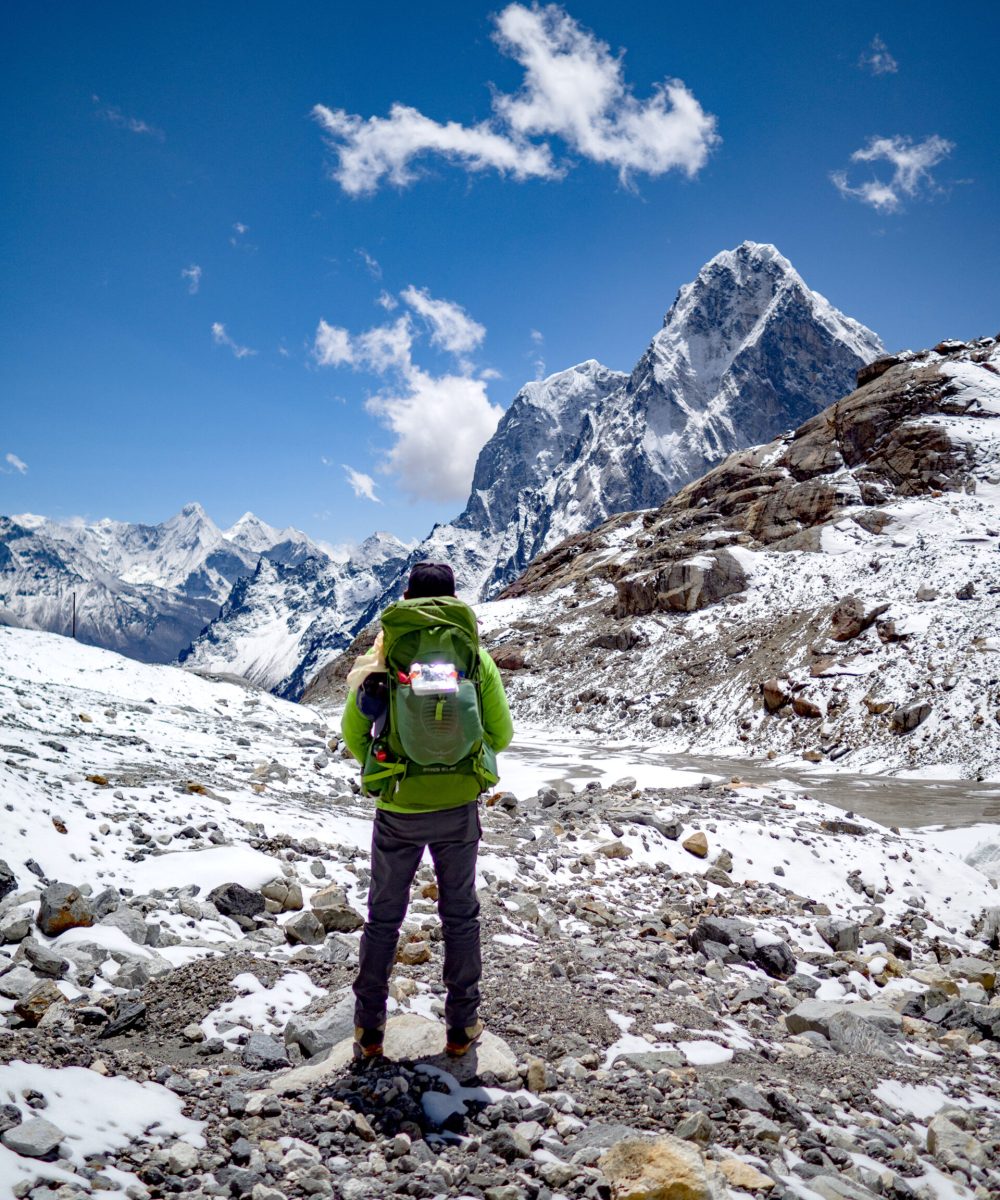
"How hard is the Everest Base Camp trek?" is one of the most-searched questions about the route, and it's usually asked by people picturing something closer to a climb than what the trek actually is. The honest answer: it's not technical mountaineering, and it doesn't require ropes, crampons, or climbing experience.
What it requires is respect for altitude, a realistic sense of the daily physical demand, and patience with a pace that's slower than most first-timers expect. Here's what the difficulty actually consists of.

01Physical Difficulty: Distance, Terrain, and Daily Demand
Most days on the trek involve 5–7 hours of walking, on trail that alternates between stone steps, rocky paths, and suspension bridge crossings over river gorges. None of it is technical you're not using hands to climb but the cumulative elevation gain and loss adds up. Some days involve significant descent followed immediately by a steep climb back up to the next village, which surprises trekkers who assumed the route was a steady climb toward Base Camp.
The terrain itself isn't the limiting factor for most people. Reasonable trekking fitness — the kind built from regular hiking or cardio training is enough to handle the physical walking demand. The limiting factor is almost always altitude.
02Altitude: The Real Challenge
The trek's high point, Kala Patthar, sits at 5,644 meters well above where altitude sickness becomes a real risk for anyone, regardless of fitness level. This is the part first-timers most often underestimate: being physically fit does not protect you from Acute Mountain Sickness (AMS). Elite athletes get AMS. Sedentary trekkers who pace correctly often don't.
AMS symptoms headache, nausea, disrupted sleep, loss of appetite typically appear above 3,000m and become more likely the faster you ascend. The standard prevention is straightforward: ascend gradually, include rest/acclimatization days at key altitude thresholds, stay hydrated, and never push through worsening symptoms in the hope they'll pass. (We cover this in more depth in our full altitude sickness guide.)
This is also where trek itinerary length matters more than most people realize before booking.
03Standard Trek vs. Fast Trek: How Itinerary Length Changes the Difficulty
HOP offers both a standard Everest Base Camp Trek and an Everest Fast Trek. The mountain, the trail, and the destination are identical what changes is the acclimatization schedule.
The standard itinerary builds in the rest days needed to ascend at a safer pace, which meaningfully reduces AMS risk for most trekkers. The Fast Trek compresses the schedule for experienced trekkers who already have proven high-altitude acclimatization history and want a shorter time commitment.
If this is your first time trekking above 3,000m, the standard itinerary is the appropriate choice not because the Fast Trek is unsafe in principle, but because it assumes a level of altitude experience that most first-timers don't yet have.
04Who Actually Struggles on This Trek
In practice, the trekkers who have the hardest time aren't the least fit they're the ones who make a few specific mistakes:
- ✓Ignoring acclimatization days. Skipping or rushing through built-in rest days to "make better time" is the single most common cause of AMS on this route.
- ✓Packing too heavy. A daypack that's overloaded adds unnecessary strain on days that are already long; porters carry the bulk of gear for a reason.
- ✓Underestimating the cold. Teahouse accommodation at altitude is unheated overnight, and temperatures drop sharply after dark even in the "warmer" trekking seasons.
- ✓Pushing through symptoms. Treating a worsening headache or nausea as something to walk off rather than a signal to stop ascending.
None of these are fitness failures. They're pacing and preparation failures which is exactly why guided, correctly-paced itineraries exist.
05Realistic Training Timeline
You don't need to be an athlete, but showing up with zero preparation makes the trek harder than it needs to be. A reasonable approach:
8–12 weeks out
Build a base of regular cardio (hiking, running, cycling) 3–4 times a week.
4–6 weeks out
Add weighted hikes or stair climbing to condition for daypack weight and sustained ascent/descent.
2 weeks out
Taper training intensity, focus on rest and logistics prep rather than pushing fitness gains.
Fitness helps with the physical demand of the trail. It does nothing for altitude which is why pacing, not training, is what actually determines whether most trekkers make it comfortably to Base Camp.
06The Honest Summary
Everest Base Camp is a demanding trek, but it's demanding in a specific way: long days, cumulative altitude, and a pace that has to be slower than most first-timers instinctively want to go. It is not a technical climb, and it doesn't require prior mountaineering experience.
"What it requires is a correctly-paced itinerary and the discipline to follow it which is largely a function of who you trek with, not just how fit you are before you arrive."
Choose the pace that's right for you
Same mountain, same trail the standard itinerary builds in acclimatization; the Fast Trek is for experienced high-altitude trekkers on a shorter timeline.