
Close
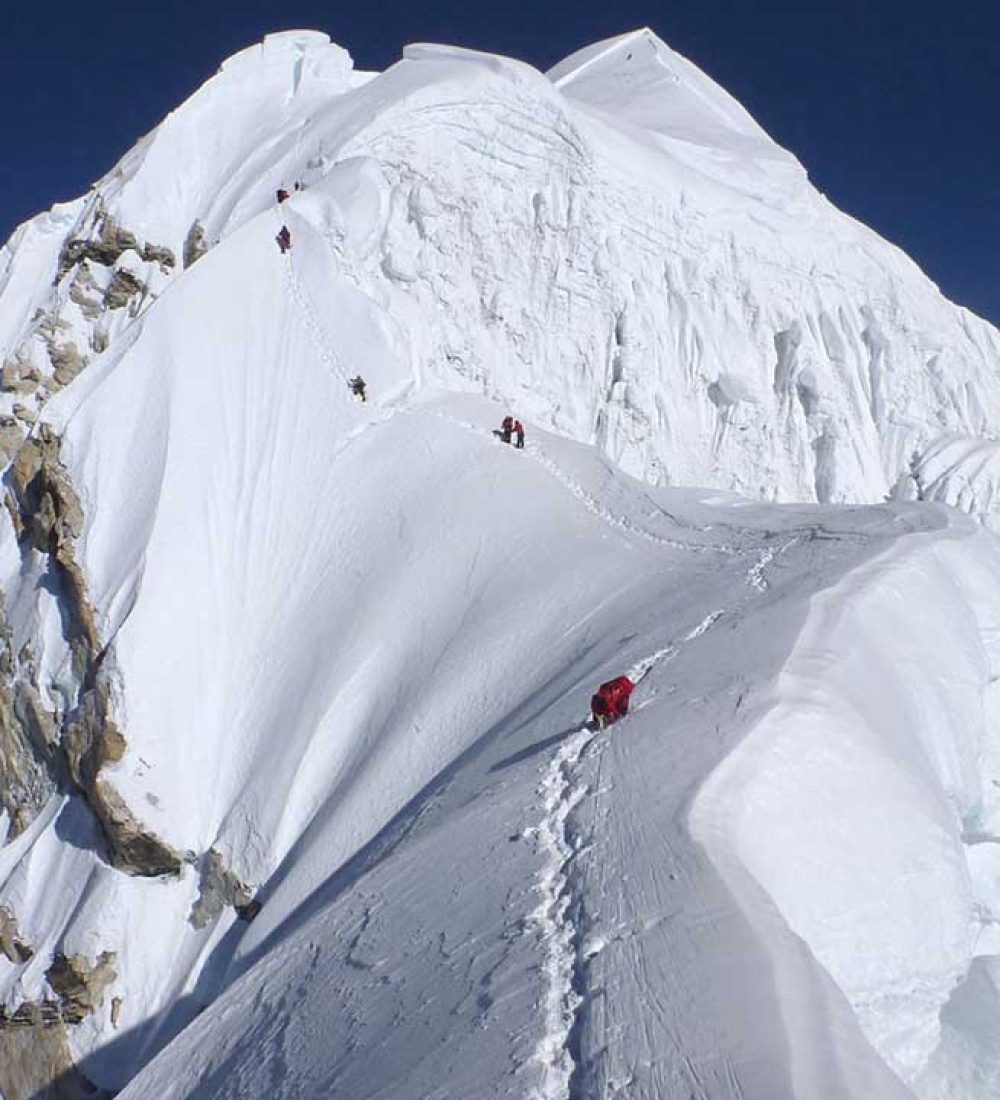
28°49'39"N · 84°14'15"E — MANASLU REGION, NEPAL
Follow the path of myths to the foot of the sky.
Expedition Data
Packages
Mission Brief
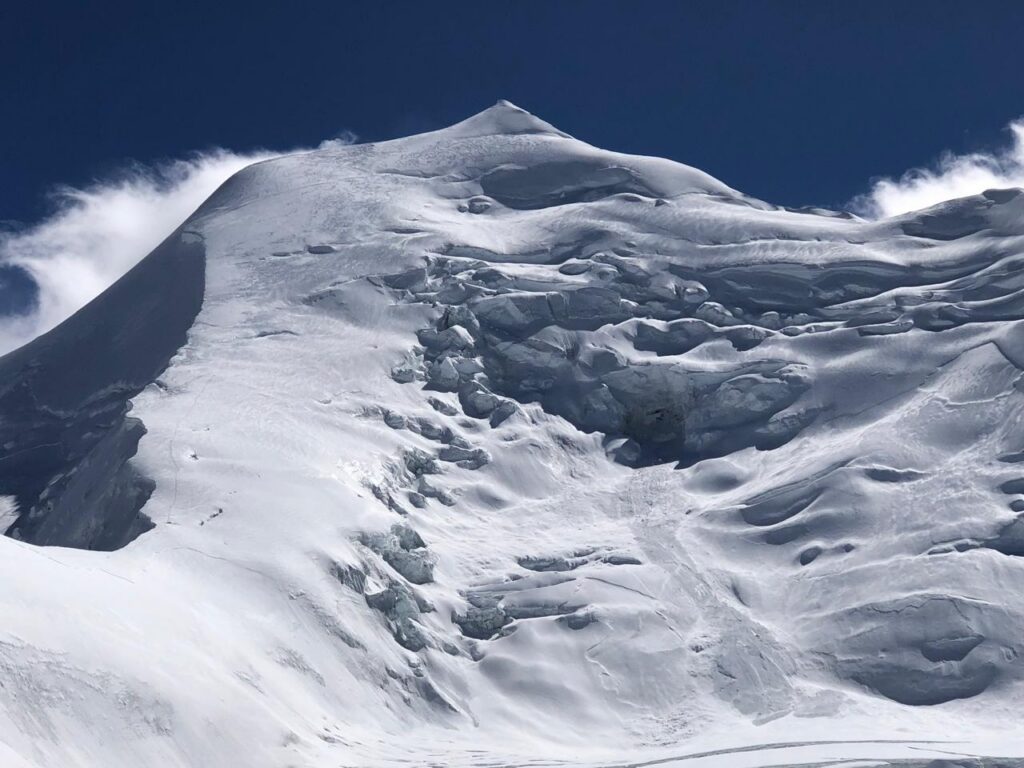
Himlung Himal, standing at 7,126 metres in the remote Nar-Phu Valley of Nepal's Manaslu region, is rapidly becoming one of the most sought-after 7,000-metre peaks in the Himalayas. Located near the Tibetan border, Himlung offers a true high-altitude expedition experience without the extreme difficulty or overcrowding found on other peaks. It is the ideal stepping-stone for climbers aiming to progress from 6,000-metre peaks to the 8,000-metre giants like Everest or Manaslu.
The mountain was first climbed in 1992 by a Japanese expedition via the east ridge from the south. Since then, Himlung has become the preferred choice for climbers seeking to gain valuable 7,000-metre experience. Nepal now requires every Everest permit applicant to have at least one 7,000-metre summit, and Himlung has become the most popular way to tick that box.
The journey begins with a drive from Kathmandu to Besisahar, followed by a trek through the legendary Annapurna Circuit before diverting into the remote Nar-Phu Valley. The trek passes through medieval stone villages and ancient monasteries. Upon reaching Base Camp at 4,900m, the expedition transitions into high-altitude rotations through Camps I (5,400m), II (5,900m), and III (6,300m) before the final push to the summit.
The Himlung Expedition is not merely about reaching a summit; it is about proving your readiness for the 8,000-metre peaks that lie beyond. It is a once-in-a-lifetime journey that demands exceptional preparation but offers rewards that last forever.
Route Profile











Trail Manifest
The HOP Difference
At Himalayan Outdoor Project, every expedition is approached as a mission. Founder and Expedition Planner Ex. Special Forces Maj. Rajiv Chand served for more than twenty years in the Nepali Army Special Forces, leading teams in complex and demanding environments where preparation, leadership, teamwork and risk management determined success. That same philosophy now guides every HOP expedition.
Our expeditions combine:
This combination creates an expedition environment built on trust, professionalism, teamwork and safety essential ingredients for the immense physical and mental challenge of climbing a 7,000-metre peak.
Our Expedition Philosophy
Successful Himlung expeditions begin long before arriving at Base Camp and they end only when every climber is safely home.
Every detail matters Route | Logistics | Weather | Equipment | Contingencies | Emergency response. Nothing is left to chance. The remote location and three-camp system of Himlung require precise planning and careful route management.
Preparation creates confidence. Every climber receives guidance on: Physical training, Technical skills, Expedition systems, Equipment selection, Nutrition and hydration, Mental preparation for the 7,000-metre challenge.
In the mountains conditions constantly change. Our team adapts, communicates and makes informed decisions based on: Weather, Route conditions, Team health, Individual performance, Safety considerations.
The summit is only halfway. Our objective is simple: Bring every climber home safely. Safety First. Summit Second.
Preparation Program
Most expeditions start in Kathmandu. Ours starts months before.
Develop the endurance, strength, and resilience required for thirty days in the Himalayas and the demands of a 7,000-metre summit.
Build confidence in fixed rope travel, ascender systems, crampon techniques, ladder crossing, glacier travel and ice axe skills. Himlung requires proficiency on moderately steep snow slopes and glacier terrain.
Manage fatigue, uncertainty, fear, stress, team dynamics, and the psychological demands of high-altitude climbing on a remote 7,000-metre peak.
Our team provides detailed equipment consultation and gear recommendations. Final equipment checks are conducted in Kathmandu.
Your Expedition Team
This expedition is led by Tashi Chhumbel Sherpa. Our climbing Sherpas are not simply support staff they are expedition partners, mentors, teachers and leaders. Many members of our Sherpa team have extensive experience on 7,000-metre and 8,000-metre peaks, including Himlung. Their knowledge of the mountain, weather, terrain, and high-altitude decision-making is invaluable. Experience matters.
That is why we work only with highly experienced, government-certified climbing Sherpas who share our commitment to professionalism and safety.
Fit Check
Recommended Experience
Acclimatization Strategy
Proper acclimatisation is one of the most important factors in successful Himalayan expeditions.
Base Camp Life
Himlung Base Camp (4,900m), nestled near the upper borders of Phu village, becomes home for several weeks. Facilities include:
Safety & Risk Management
Cost Breakdown
Permits & Logistics
Accommodation & Meals
Transportation
Expedition Support
Training & Additional
Mandatory Insurance
Important note: Climbing Himlung Himal is a serious undertaking in one of Nepal's most remote regions. Weather, route conditions, and health issues may require itinerary changes. Flexibility, patience, resilience, and teamwork are essential. Himlung involves glacier travel, moderately steep snow slopes, and fixed rope ascents, with sections of the summit push reaching 70–80 degrees. Climbers must be proficient with crampons, ice axes, and fixed rope systems. The remoteness of the Nar-Phu Valley adds an additional layer of challenge logistics are more complex and emergency response times are longer than in more frequented regions. Our mission is simple: Professionally Planned. Thoroughly Prepared. Safely Executed.
FAQs
From The Journal
 Trekking · Field Notes
Both cross a high pass in the cold before dawn but they ask very different things of the people who walk them. Here's what actually happens on each.
Read the guide → Educational
Nepal visa & permit guide for trekkers and climbers the visa, restricted area permits, and the extra paperwork required for regions like Nar-Phu.
Read the guide → Trekking · Field Notes
Another high-altitude circuit worth knowing - Kongma La, Cho La and Renjo La connect the Khumbu's separate valleys into one continuous route.
Read the guide → Gear
Gear
What to bring for every season during trekking in Nepal overpacking is the most common mistake first-time Himalayan trekkers make.
Read the guide →