loader image
Skip to main content

Himalayan Outdoor Project

tamur expedition

Jewel of the East

Peak icon
River Tamur
Elevation icon
Elevation 100m – 3,000m / 328ft – 9,843ft
Region icon
Region Far-East Nepal
Route icon
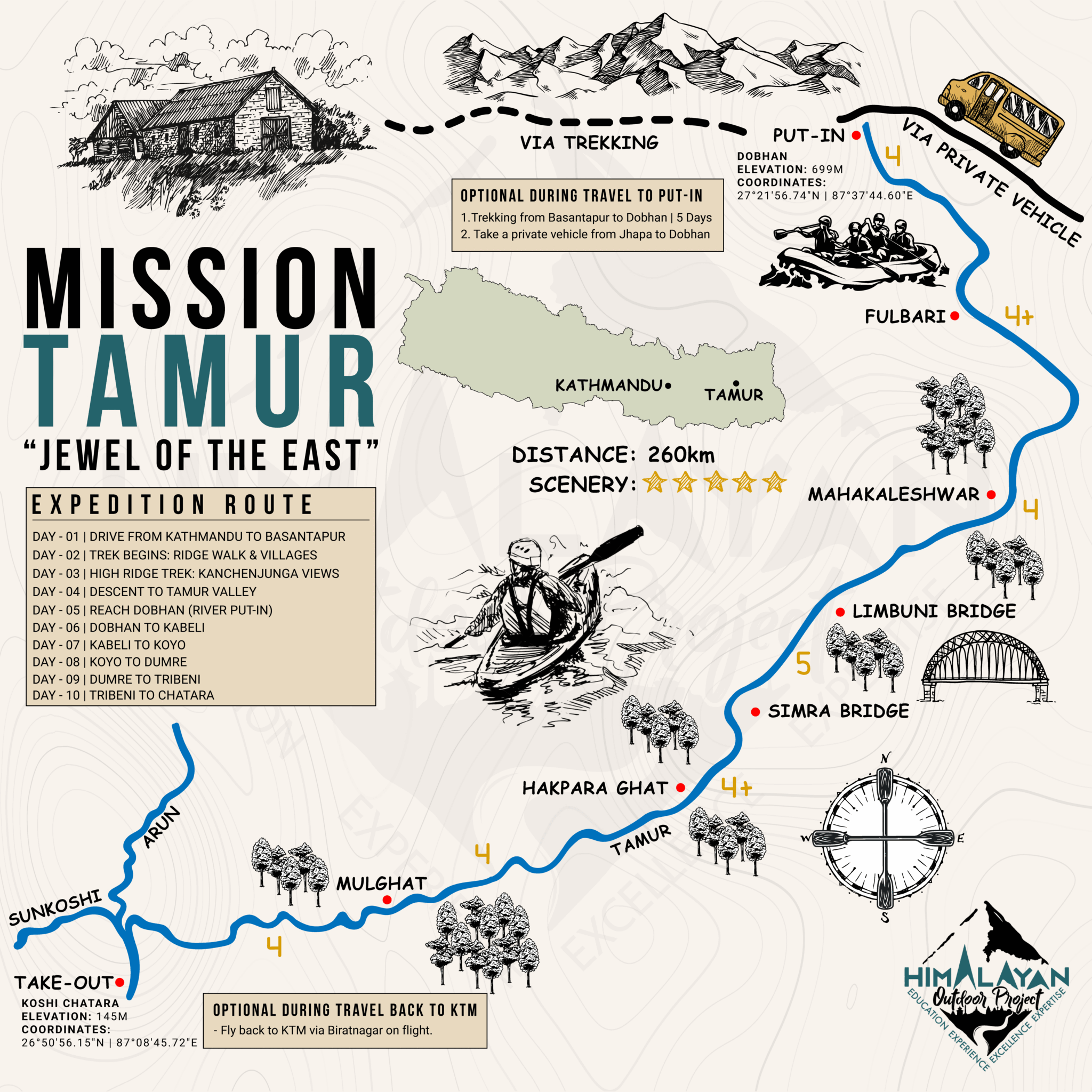
Route Basantapur – Dobhan (Trek) | Dobhan – Chatara (Raft)
Expedition Duration icon
Co-ordinates 27°10'22"N 87°25'12"E
Group Size icon
Weather Reports Live Weather Report
Expedition Grade icon
Rapids Grade Class IV – V
Highest Camp icon
Expedition Duration 10 Days
Accommodation icon
Accommodation Riverside Camping
Best Season icon
Best Season Oct | Nov

Tamur River: A Terrifying Dance in the Foam

TRIP HIGHLIGHTS

EXPEDITION OVERVIEW

The Tamur River, known as the “Jewel of the East,” is one of Nepal’s most spectacular and remote whitewater expeditions. Originating from the melting snows of Mount Kanchenjunga the world’s third‑highest peak this sixth‑largest river in Nepal offers a multi‑adventure experience like no other. Unlike the more accessible rivers of Nepal, the Tamur requires a four‑day trek through the foothills of the eastern Himalayas just to reach the put‑in, making it one of the most exclusive rafting expeditions in the country.


The journey begins with a flight from Kathmandu to Biratnagar, followed by a drive to Basantapur in the Tehrathum region. From there, you embark on an awe‑inspiring four‑day trek along a 3,000‑metre ridge through rhododendron forests, remote villages, and alpine meadows. The trek rewards you with panoramic views of Kanchenjunga, Makalu, and even Everest before descending into the lush Tamur Valley. At Dobhan, the trek ends and the rafting begins.


The river itself is a relentless 120km descent through more than 100 of the most exciting rapids in the world. The rapids range from Class IV to Class V, with powerful currents, big waves, and technical drops that demand respect. The first commercial descent of the Tamur was only made in 1990, and very few descents have been made since you are entering a truly wild and untamed river. Evenings are spent camping on pristine white sandy beaches, sharing stories around the campfire, and sleeping under a canopy of stars.


The Tamur Expedition is not merely about rafting a river; it is about earning your place on the water through a Himalayan trek, connecting with remote cultures, and experiencing one of the world’s greatest whitewater journeys. It is a once‑in‑a‑lifetime adventure that demands preparation but offers rewards that last forever.

Here is brief information regarding the expedition, including dates, duration, pricing and more.
  1. MONTH

    November - 3rd - 12th | 15th - 25th
  2. GROUP SIZE

    4 - 14 adventurers
  3. DURATION

    Expedition duration is 6 days
  4. TRANSPORTATION

    We will be travelling via private transportation
  5. DIFFICULTY

    The level will be moderate

Itinerary

  • DAY: 0 Kathmandu Welcome and Team Huddle

    Touchdown in Nepal! We pick you up, you kick back. Check into your comfy hotel in Kathmandu, breathe in that Himalayan air, and let the adventure vibe sink in. In the evening, we gather for a team huddle: gear talk, last minute questions, and some laughs over our first dinner together. It’s getting real.

  • DAY: 1 Kathmandu To Basantapur

    A long but stunning Himalayan drive (12–15 hours) takes you from Kathmandu to Basantapur, where you'll settle in for an expedition briefing and overnight lodge stay.

  • Day 2: Trek Begins: Ridge Walk & Villages

    You'll trek 5–6 hours along a scenic ridge, passing through traditional hill villages and dense forests before setting up camp with your first teasing views of the high Himalaya.

  • Day 3: High Ridge Trek: Kanchenjunga Views

    Today's 5–7 hour climb opens into alpine meadows with jaw-dropping panoramas of Kanchenjunga, Makalu, and even Everest, camping high among the giants.

  • Day 4: Descent to Tamur Valley

    A 5–6 hour descent takes you down through beautiful forests toward the Tamur River, with the roar of the rapids growing louder as you camp near the water's edge.

  • Day 5: Reach Dobhan (River Put-in)

    After a final 4-hour trek, you arrive at Dobhan where the rafting crew has set up a riverside camp, and you'll complete a full safety briefing and paddle practice.

  • Day 6: DOBHAN To KABELI

    Your first day on the river delivers immediate action with continuous Class III–IV rapids, and after 4–5 hours of paddling you pull into camp at Kabeli.

  • Day 7: KABELI To KOYO

    This is the heart of the expedition: a tight canyon with pushy Class IV–V rapids requiring full focus and teamwork over 5–6 hours before camping at Koyo.

  • Day 8: KOYO To DUMRE

    Big water and long, playful wave trains keep the adrenaline high for 5–6 hours, ending at a beautiful sandy beach camp near Dumre.

  • Day 9: DUMRE To TRIBENI

    The valley widens as you paddle 5–6 hours through fast, continuous Class III–IV rapids, camping at a spectacular spot where the river bends and the stars shine bright.

  • Day 10: TRIBENI To CHATARA

    Your final 4–5 hour run takes you through warm lowlands and nonstop rapids to the take-out at Chatara, followed by the drive back to Kathmandu and a farewell dinner.

THE HOP DIFFERENCE

World-Class River Leadership. Special Forces Logistics. One Team. One Mission. One River.


At Himalayan Outdoor Project, every expedition is a collaboration between two extraordinary minds. Anup Gurung, your Expedition Leader and world-class kayaker, has conquered the world’s most extreme waters from the frigid rivers of Iceland with Viking Rafting to the raging whitewater of the Himalayas. An IRF instructor, solo paraglider, and enduro rider, Anup brings an unmatched depth of river intuition, technical mastery, and sheer passion for the water. He doesn’t just guide he lives for the river.


Behind every expedition is Ex. Special Forces Maj. Rajiv Chand, the architect of logistics and safety. A retired Major from the Nepali Army Special Forces with over 20 years of field experience in navigation, leadership, and decision-making, Rajiv ensures that every detail from route planning to emergency contingencies is executed with military precision. His systems turn wilderness adventures into professionally managed operations where nothing is left to chance.


Our river expeditions combine:

  • The river wisdom, technical mastery, and IRF-certified expertise of Anup Gurung and our world-class guide team with

  • The leadership, planning, logistics, and risk‑management systems of Ex. Special Forces Maj. Rajiv Chand’s Special Forces discipline

This partnership creates an expedition environment built on trust, professionalism, teamwork, and safety essential ingredients for navigating one of Nepal’s most remote and challenging rivers.

OUR RAFTING PHILOSOPHY

PLAN. PREPARE. EXECUTE. RETURN SAFELY.

Successful Tamur expeditions begin long before arriving in Kathmandu and they end only when every paddler is safely home.


PLAN

Every detail matters – Route | Logistics | Weather | Water levels | Equipment | Contingencies | Emergency response. Nothing is left to chance. The remote location of the Tamur, requiring a four‑day trek just to reach the river, demands precise planning and flawless execution.


PREPARE

Preparation creates confidence. Every paddler receives guidance on: Physical training | Paddling techniques | Safety protocols | Equipment selection | Nutrition and hydration | Mental preparation for the river challenge.


EXECUTE

On the river conditions constantly change. Our team adapts, communicates and makes informed decisions based on: Water levels | Weather | Team health | Individual performance | Safety considerations.


RETURN SAFELY

The take-out is only halfway. Our objective is simple: Bring every paddler home safely. Safety First. Adventure Second.

HOP TAMUR EXPEDITION PREPARATION PROGRAM

Most expeditions start in Kathmandu. Ours starts months before.


Physical Preparation

Develop the endurance, strength, and resilience required for 12 to 15 days of combined trekking and rafting. The four‑day trek involves walking 5–6 hours daily along a 3,000m ridge, followed by six days of paddling through Class IV–V rapids. A high level of cardiovascular fitness and upper body strength is essential. Recommended training period: Minimum 3‑6 months.


Technical Preparation

Previous rafting experience is strongly recommended for the Tamur due to the challenging Class IV–V rapids. However, safety briefings, paddle drills, and rescue training are conducted before we launch. Trekkers should be comfortable walking on rugged terrain with a daypack.


Mental Preparation

Manage fatigue, uncertainty, fear, stress, team dynamics, and the psychological demands of navigating one of Nepal’s most remote and challenging rivers. The Tamur’s remote location means no roads, no crowds just the river, the jungle, and the stars.

Equipment Preparation

Our team provides detailed equipment consultation and gear recommendations. Final equipment checks are conducted in Kathmandu.

YOUR RIVER TEAM

Our river guides and crew are not simply support staff.

They are your partners. | Mentors. | Teachers. | Leaders.


Many members of our team are International Rafting Federation-certified guides and safety kayakers with extensive experience on Nepal’s wildest rivers. Led by Anup Gurung a world-class kayaker who has conquered rivers from Iceland to the Himalayas – our team brings unparalleled river intuition, technical mastery, and genuine passion for the water.


That is why we work only with highly experienced, certified river guides who share our commitment to professionalism and safety.

WHO IS THIS EXPEDITION FOR?

This expedition is designed for adventurers who:


✓ Have previous rafting experience (strongly recommended)
✓ Possess excellent physical fitness
✓ Are comfortable trekking 5–6 hours per day
✓ Are prepared for challenging Class IV–V rapids
✓ Want to experience one of Nepal’s most remote and exclusive rivers
✓ Understand teamwork and expedition commitment
✓ Possess the patience and resilience for a 12‑15 day journey
✓ Are seeking a true off‑the‑beaten‑path adventure

RECOMMENDED EXPERIENCE

  • Previous rafting experience is strongly recommended due to the challenging nature of the river

  • Excellent fitness and endurance

  • Swimming ability is essential

  • Previous multi‑day trekking experience is beneficial

  • Recommended training period: Minimum 3‑6 months

  • Ideal for experienced rafters seeking the ultimate Nepali whitewater challenge

WHAT TO EXPECT

The Trek

The journey begins with a four‑day trek through the foothills of the eastern Himalayas. You will walk along a 3,000m ridge through rhododendron forests, alpine meadows, and remote villages, with panoramic views of Kanchenjunga, Makalu, and Everest. Porters carry the main loads, including the rafts and kayaks.


The River

The Tamur is a fast‑flowing whitewater river fed by the mighty glaciers of Kanchenjunga. The 120km descent features over 100 rapids ranging from Class IV to Class V, including named rapids like “The Jhilmila” and “The Dead Men’s Drop”. The river flows through deep gorges, lush valleys, and pristine wilderness.


The Camps

Each night, you camp on pristine white sandy beaches along the river. Freshly prepared meals are served by our experienced chef, and evenings are spent around the campfire under a canopy of stars.


The Culture

The Tamur flows through the heart of eastern Nepal, passing by traditional Tamang and Limbu villages. You will have opportunities to interact with local communities and experience their unique culture.

SAFETY & RISK MANAGEMENT

Safety is the foundation of every HOP expedition.


Our safety systems include:
✓ IRF-certified river guides and safety kayakers
✓ Safety kayakers accompanying every raft
✓ Comprehensive first-aid and rescue equipment
✓ Satellite communication for emergencies
✓ Daily safety briefings and swim drills
✓ Professional weather and water level monitoring
✓ Established contingency and evacuation plans
✓ High guide‑to‑paddler ratio
✓ ISO/CE-certified rafting gear  helmets, PFDs, paddles, splash jackets

COST INCLUDES

Permits & Logistics

  • All necessary river permits and royalties

  • Garbage deposit and environmental fees

  • Government taxes

Accommodation & Meals

  • Kathmandu hotel accommodation

  • Tea house accommodation during trek (3 nights)

  • Riverside camping during rafting (6–7 nights)

  • Full board meals during trek and rafting (breakfast, lunch, dinner)

  • Welcome and farewell dinners in Kathmandu

Transportation

  • Airport transfers

  • Domestic flights (Kathmandu – Biratnagar – Kathmandu)

  • Private vehicle transfers

  • Trek cargo transportation (porters carry main loads including rafts and kayaks)

Expedition Support

  • Expedition leader (Anup Gurung)

  • IRF-certified river guides and safety kayakers

  • Trekking guides and porters

  • Support crew and kitchen team

Equipment

  • All necessary rafting equipment – self-bailing rafts, PFDs, helmets, paddles, throw bags

  • Dry bags for personal gear

  • Camping equipment – tents, sleeping bags, mattresses

  • First-aid and rescue equipment

Training & Additional

  • Safety briefings and paddle training

  • Expedition briefings

  • HOP expedition merchandise

  • Expedition completion certificate

COST EXCLUDES

  • International flights

  • Nepal visa fee

  • Personal rafting equipment (if you prefer your own)

  • Personal travel insurance (strongly recommended and expected)

  • Emergency evacuation insurance

  • Personal expenses

  • Lunch and dinner in Kathmandu

  • Alcoholic beverages and drinks

  • Personal gear (clothing, footwear, sunscreen, personal medications, etc.)

  • Optional activities

  • Personal tips and gratuities for guides and crew

  • Additional accommodation due to delays

  • Costs arising beyond our control

MANDATORY INSURANCE

Comprehensive travel and high‑altitude rescue insurance is mandatory.

Coverage must include:
✓ High‑altitude helicopter rescue
✓ Medical treatment
✓ Emergency evacuation
✓ Repatriation

IMPORTANT NOTE

The Tamur Expedition is one of Nepal’s most challenging and remote river journeys. Weather, water levels, and health issues may require itinerary changes. Flexibility, patience, resilience and teamwork are essential.


The expedition involves a four‑day trek through the foothills of the eastern Himalayas followed by six days of paddling through Class IV–V rapids. The river features powerful currents, big waves, and technical drops. Previous rafting experience is strongly recommended due to the challenging nature of the river. The remoteness of the Tamur means no roads, no crowds just the river, the jungle, and the stars.


Best season: October – November for clear skies and stable water levels, or February – May for warm weather and excellent mountain views. The river is not recommended during the monsoon season (June – August) due to extreme conditions.


What to bring:

  • Quick-drying clothes and swimwear

  • River sandals or water shoes

  • Warm layers (fleece, thermals, sleeping bag)

  • Waterproof jacket

  • Sunglasses with a strap and sunscreen

  • Wide-brimmed hat or cap

  • Personal medications

  • Biodegradable toiletries and small towel

  • Reusable water bottle

  • Dry bags

  • Headlamp or flashlight with extra batteries

  • Snacks and energy bars

  • Travel insurance details

  • Camera or GoPro with waterproof casing

  • Power bank

  • Cash in small denominations

Our mission is simple:

Professionally Planned. | Thoroughly Prepared. | Safely Executed.


HIMALAYAN OUTDOOR PROJECT

Education | Experience | Excellence | Expertise

FAQs

I've never been whitewater rafting before. Is Nepal a good place to start?
  • Absolutely.
  • Nepal offers everything from beginner-friendly rivers to world-class expedition rafting.
  • We’ll help match you with the right river based on your experience, confidence, and sense of adventure.
  • Many first-time rafters discover that Nepal becomes the benchmark by which they judge every river trip afterward.
Is whitewater rafting in Nepal safe?
  • Yes.
  • Safety is central to every HOP river expedition.

All trips include:

  • Professional river guides
    • Certified safety equipment
    • Rescue-trained staff
    • Comprehensive safety briefings
    • International operating standards

Our goal is to provide exciting adventures while maintaining the highest level of safety possible.

What makes rafting in Nepal different from other destinations?
  • Few places on Earth combine world-class whitewater with Himalayan scenery.
  • One day you may be paddling through deep river gorges, and the next through remote villages, jungle landscapes, and pristine wilderness.
  • A river expedition in Nepal is far more than rafting—it’s an exploration of the country from a completely unique perspective.
Do I need to know how to swim?
  • Basic swimming skills are helpful, but they are not required for many of our rafting trips.
  • All participants wear professionally fitted life jackets and receive detailed safety instruction before entering the water.
What are overnight rafting expeditions like?
  • For many guests, this becomes the highlight of their trip.
  • After a day on the river, you’ll camp beside remote beaches, enjoy freshly prepared meals, share stories around the campfire, and sleep under some of the clearest night skies in Nepal.
  • It’s adventure in its purest form.
Why choose a multi-day river expedition instead of a day trip?
  • A day trip gives you a taste.
  • An expedition gives you the full experience.
  • Multi-day journeys allow you to explore remote sections of Nepal’s legendary rivers while experiencing the landscapes, culture, and wilderness that make these expeditions so special.