loader image
Skip to main content

Himalayan Outdoor Project

Manaslu Circuit Trek

Get ready to traverse the ancient trails of the Tsum Valley

Peak icon
TREK Manaslu Circuit
Elevation icon
Elevation 5,160m / 16,929ft
Region icon
Region Manaslu Conservation Area
Route icon
Route Budhi Gandaki Valley
Expedition Duration icon
Co-ordinates 28°32'58"N 84°33'43"E
Group Size icon
Weather Reports Live Weather Report
Expedition Grade icon
Walking Per Day 6 – 8 Hours
Highest Camp icon
Trek Duration 14 Days
Accommodation icon
Accommodation Hotel | Tea House | Lodge
Best Season icon
Best Season Mar – May | Sept – Nov

Manaslu Larkya La Circuit Trek – Combining the peak and the pass.

TRIP HIGHLIGHTS

TREK OVERVIEW

The Manaslu Circuit Trek is one of the most rewarding and least commercialized high-altitude trekking routes in Nepal. Circling Mount Manaslu (8,163m) the world’s eighth-highest peak this remote 177km journey passes through six ecological zones and cultures that range from Gurung villages in the subtropical lowlands to Tibetan Buddhist communities near the border with Tibet. While Everest Base Camp welcomed over 50,000 trekkers and the Annapurna Circuit saw nearly 250,000 visitors in 2026, Manaslu hosted just 12,000 adventurers, preserving its remote character and authentic teahouse experience.


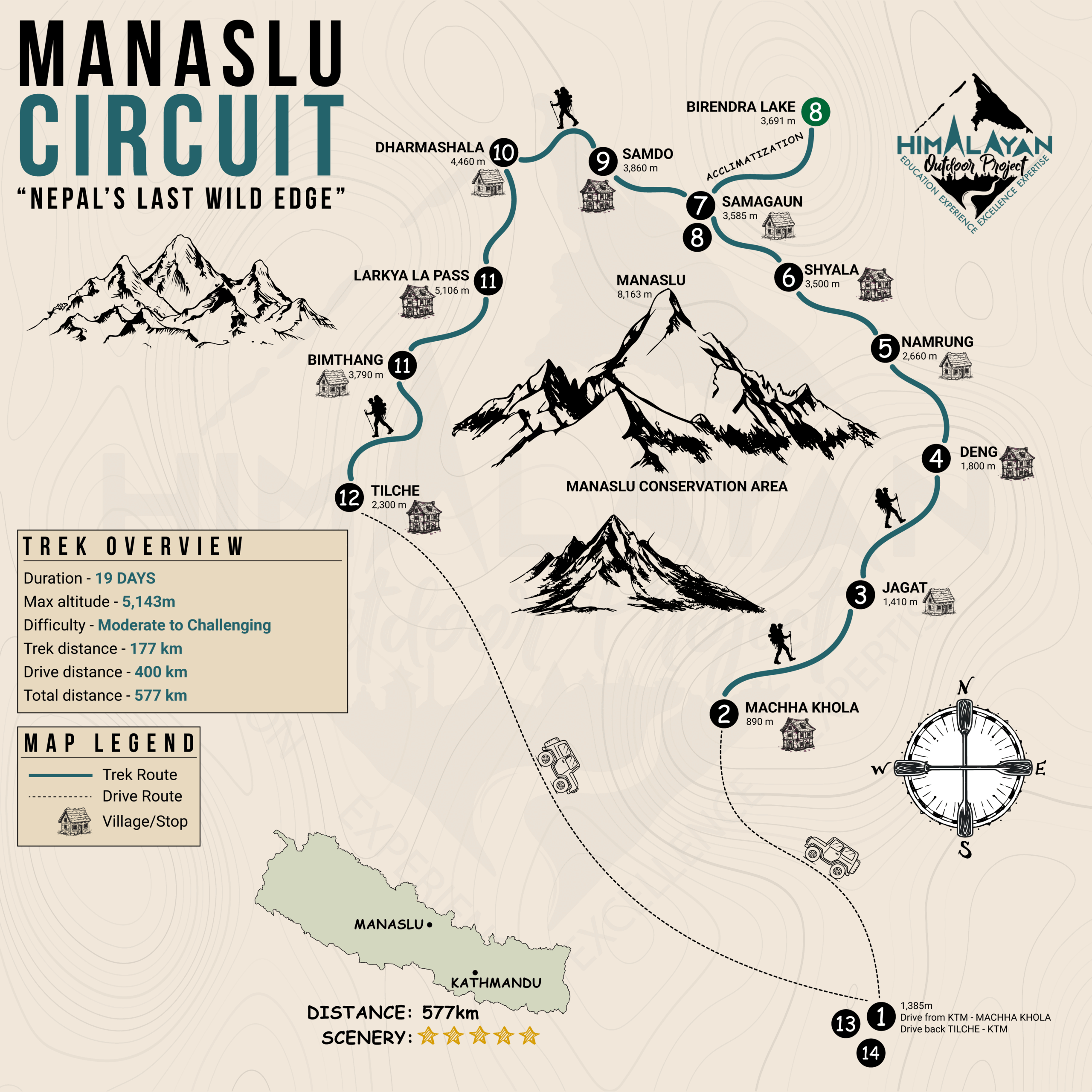
The trek follows the Budhi Gandaki River valley north from Machha Khola, passing through traditional villages including Jagat, Deng, Ghap, Namrung, Lho, and Shyala before reaching the Tibetan plateau area around Samagaun. After acclimatisation days at Samagaun with optional side trips to Manaslu Base Camp (4,800m) or Birendra Lake (3,900m) the route continues to Samdo, Dharmashala, and then over the dramatic Larkya La Pass at 5,160m. The descent leads through Bimthang to Dharapani, where the trail meets the Annapurna Circuit.


The Manaslu Circuit is rated moderate to strenuous placing it above the Everest Base Camp trek in overall physical demand. The trail covers approximately 177km over 14 to 18 days, with daily walks averaging 15 to 20km and 6 to 8 hours of active trekking. There are no road shortcuts once you enter the restricted zone at Jagat. The terrain involves sustained altitude gain, steep descents, river gorge traversals, and the demanding Larkya La Pass crossing a single day of 8 to 10 hours walking. The trek is non-technical no ropes, no ice axes, no climbing skills required. The difficulty is physical and cardiovascular, not mountaineering.


The Manaslu Circuit Trek is not merely about reaching a destination; it is about experiencing one of Nepal’s last truly unspoiled trekking regions where Tibetan Buddhist culture remains vibrantly alive and the trails feel like they did in Nepal’s golden trekking era. It is a once‑in‑a‑lifetime journey that demands exceptional preparation but offers rewards that last forever.

Here is brief information regarding the expedition, including dates, duration, pricing and more.

  1. MONTH

    March - May | Setpember - November
  2. GROUP SIZE

    4 - 14 adventurers
  3. DURATION

    Expedition duration is 14 days
  4. TRANSPORTATION

    We will be travelling via private transportation
  5. DIFFICULTY

    The level will be moderate
Manaslu Circuit Trek / Manaslu Circuit

Elevation Profile

14 Days to Manaslu circuit
5,160mMax altitude
14Trek days
1High pass
Trek / travel day Acclimatization Base camp / high pass

Itinerary

  • Day 1: Welcome to Nepal

    (Overnight altitude: 1,338m) We will pick you up at the airport and rest before we meet for the full trek briefing. We’ll meet the rest of the group and go over any questions you may have.

  • Day 2: The journey begins

    (Overnight altitude: 890m) Today, we embark on an exciting 9-10 hour drive to Machha Khola, passing through the scenic Arughat and Soti Khola. The journey offers a diverse landscape, with views of vibrant villages, terraced rice fields, and winding rivers. As we drive along the Trisuli and Budi Gandaki Rivers, we gradually enter warmer areas, passing charming farm villages and small towns. Machha Khola, nestled in the Gorkha district, welcomes us with its beautiful valley. We’ll spend the night in a cozy local guest house, ready for the adventure ahead!

  • Day 3: Trail to jagat

    (overnight altitude: 1,410m) After a restful overnight at Machha Khola, we start our morning by following the Budi Gandaki River upstream towards the small farm village of Khorla Beshi. The trail meanders along a pleasant, winding path, leading us to Tatopani, known for its natural hot springs—perfect for a relaxing soak if time allows. After rejuvenating in the hot springs, we continue our walk to Yaruphant, following the river as we make our way to Jagat village. Here, we cross a short suspension bridge before entering this moderately sized farm village, which offers shops and local stores for a quick break before continuing our trek.

  • Day 4: up and over

    (Overnight altitude: 1,800m) Today, we leave Jagat behind and start climbing higher, passing through small farm villages like Sirdibas Bazaar. It’s a pretty little spot where we’ll take a quick rest before pushing on. We then tackle a short climb, followed by a downhill stroll across a suspension bridge to reach Nagjet. From here, it’s a solid climb up to Philim, a larger village with scattered farmhouses. The trail winds through golden fields of wheat and barley, and the views are just epic! After soaking it all in, we head up a rocky ridge, diving into a bamboo forest before we settle in for the night at Deng village. It’s a bit of a challenge, but the adventure is well worth it! Let’s get ready for what’s next!

  • Day 5: Mani walls and mountain magic

    (Overnight altitude: 2,660mm) Today, we’re heading out of Deng and into the heart of nature! The trail takes us through a beautiful forest, passing countless Tibetan mani walls—those cool, intricately hand-carved stone walls with Buddhist scriptures. We’ll be weaving in and out of canyons, and the walk is mostly gradual as we make our way into a wide-open valley. As we continue, the landscape transforms into a colorful forest filled with firs, oaks, and rhododendrons. After a full day of trekking, we’ll arrive in the vibrant settlement of Namrung for a well-deserved overnight stay. It’s a long day, but the scenery makes it all worth it!

  • Day 6: Manaslu up close

    (Overnight altitude: 3,500m) Today, we trek for 6-7 hours towards Shyala, gradually ascending into the mountains. Along the way, we pass through Lho village, where you can explore its traditional houses and the massive Buddhist monastery, with stunning views of Mount Manaslu. The trail is filled with local culture, monasteries, and amazing landscapes. Once we reach Shyala, we’re surrounded by the majestic Manaslu Himalayas, offering a close-up view of Mount Manaslu and unforgettable mountain scenery.

  • Day 7: Spiritual serenity

    (Overnight altitude: 3,585m) After breakfast, we’ll visit the peaceful Pungyen Monastery, a sacred site that showcases the rich spiritual and cultural heritage of the Manaslu region. It’s a perfect spot to soak in the tranquility and unique Tibetan Buddhist culture. After our visit, we’ll head to Samagaun, walking through a stunning landscape of pine and juniper trees, with sparkling peaks all around. We’ll end the day with an overnight stay in the charming village of Samagaun, surrounded by the beauty of the Himalayas.

  • Day 8: Acclimate

    (Overnight altitude: 4,910m) Today is an important rest day for acclimatization before we push higher towards Larkya La Pass. We’ll take a short hike around the village to help our bodies adjust to the altitude. For those feeling adventurous, there’s an option to hike to the stunning Birendra Lake, a beautiful 3 hour round trip. The lake sits at 3,691m meters, offering spectacular views of the surrounding peaks. This hike is a fantastic way to soak in the natural beauty and cultural richness of the Manaslu region. If you’re up for more, you can also choose to extend your hike to the Manaslu Base Camp (4,800m). Just remember to pack a lunch, bring plenty of water, and gear up with warm clothing, trekking poles, gloves, sunglasses, and a warm hat. It’s a day full of unforgettable scenery and exploration!

  • Day 9: Samdo highs

    (Overnight altitude: 3,860m) Today, we trek for about 5-6 hours towards Samdo, the last village before Larkya La Pass (5,106m), nestled close to the Tibet border. Samdo is the largest and highest village on our trek, offering a unique glimpse into the local culture, traditions, and customs. You’ll have the chance to explore its monasteries and enjoy mesmerizing views of the Manaslu Himalayas. This village has a strong Tibetan influence, and you’ll even find Chinese goods as a reminder of its proximity to Tibet. It’s a fascinating and scenic stop on our journey!

  • Day 10: Larkya pass

    (Overnight altitude: 4,460m) Today is a short but essential day as we head towards Larkya Phedi (4,600m), also known as Dharmasala. After a nice stop at Samdo, we’ll cross an icy stream and enter a drier, more barren area. While the trek itself isn’t too tough, the rapid altitude gain is something to keep in mind. We’ll gradually ascend and descend before reaching Larkya Phedi, the base of Larkya La Pass. The afternoon is free for leisure, and we recommend a short hike to help with acclimatization. If you feel up for it, we suggest ascending at least 200 meters to aid your body in adjusting to the higher altitude.

  • Day 11: Conquer Larkya La

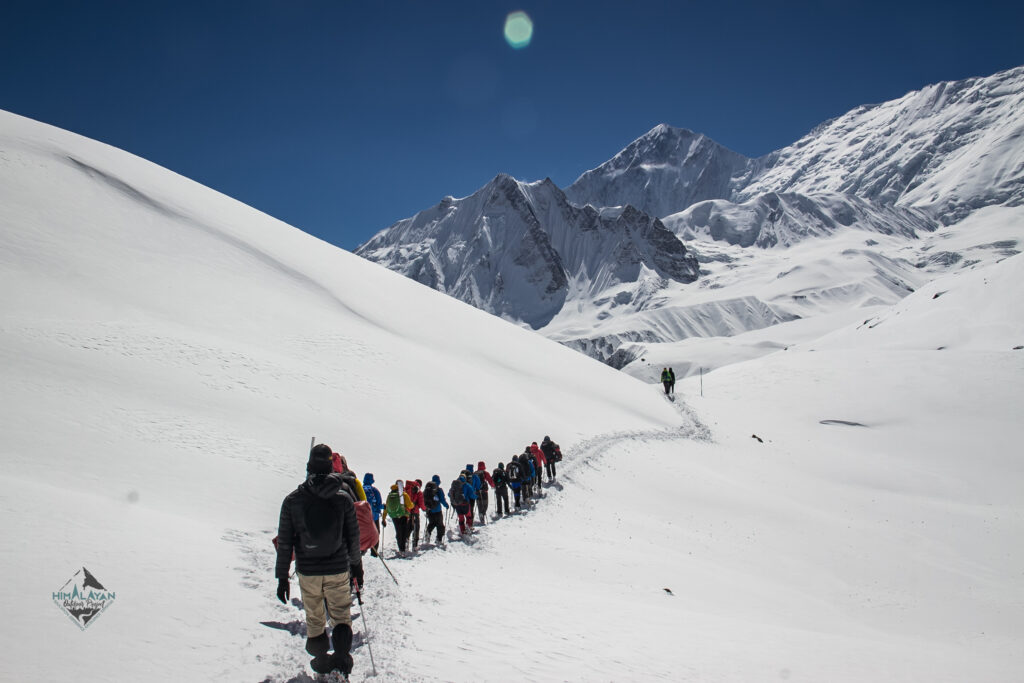
    (Overnight altitude: 3,790m) We start early this morning for the challenging ascent to Larkya La Pass (5,106m). It’s a strenuous climb, but the incredible views of surrounding hills, valleys, and towering peaks like Mt. Manaslu, Larkya Peak, Bouddha Himal, Himalchuli, and Peak 29 make it all worthwhile. After a tough climb, we’ll reach the top, adorned with colorful Buddhist prayer flags, and be rewarded with breathtaking panoramic views. After soaking in the scenery, we’ll begin our descent to Bimthang village. The downhill can be slippery and tricky, so it’s highly recommended to use crampons and trekking poles for safety. We’ll spend the night in Bimthang, surrounded by a majestic valley, reflecting on the incredible achievement of the day.

  • Day 12: A pleasant descent to tilche

    (Overnight altitude: 2,300m) After the tough climb of Larkya La Pass, today’s trek is a much more relaxed, gradual downhill. We’ll pass through the peaceful Gho village before making our way to Tilje village. The trail takes us through pristine woodlands, filled with rhododendrons, pines, and oak trees, with glimpses of local farmhouses along the way. We’ll cross the Phurke Khola, and from Bhimthang, the trail mostly descends, merging with the popular Annapurna Circuit route. Once we reach Tilche, we can catch a jeep to Besisahar, and after a rewarding day, we’ll spend the night in a cozy hotel, soaking in the beauty of the place.

  • Day 13: Back to hustle and bustle

    After an unforgettable trek, today we drive back to Kathmandu, soaking in the last views of Nepal’s stunning landscapes. It’s a long drive, but filled with great memories of the journey we’ve shared. Once we arrive in Kathmandu, we’ll wrap up the adventure with a special farewell dinner, celebrating the whole team and all the incredible moments we’ve experienced together. A perfect ending to an amazing trip!

  • Day 14: Bon voyage

    As our Masnaslu Circuit Trek concludes, it’s time to say goodbye. We look forward to many more adventures together in the future. Until next time.

THE HOP DIFFERENCE

Special Forces Leadership. Veteran Sherpa Experience. One Team. One Mission. One Trek.


At Himalayan Outdoor Project, every trek is approached with the same mission-focused mindset as an expedition. Founder and Expedition Planner Ex. Special Forces Maj. Rajiv Chand served for more than twenty years in the Nepali Army Special Forces, leading teams in complex and demanding environments where preparation, leadership, teamwork and risk management determined success. That same philosophy now guides every HOP trek.


Our treks combine:

  • The leadership, planning, discipline and risk‑management systems of Special Forces operations with

  • The mountain wisdom, resilience and experience of Nepal’s most accomplished trekking guides and Sherpas

This combination creates a trekking environment built on trust, professionalism, teamwork and safety essential ingredients for the physical and mental challenge of trekking through one of Nepal’s most remote and spectacular regions.

OUR TREKKING PHILOSOPHY

PLAN. PREPARE. EXECUTE. RETURN SAFELY.

Successful Manaslu Circuit treks begin long before arriving in Kathmandu and they end only when every trekker is safely home.


PLAN

Every detail matters – Route | Logistics | Weather | Equipment | Contingencies | Emergency response. Nothing is left to chance. The remoteness of the Manaslu region and the demanding Larkya La Pass require precise planning and careful route management.


PREPARE

Preparation creates confidence. Every trekker receives guidance on: Physical training | Trekking systems | Equipment selection | Nutrition and hydration | Mental preparation for the high‑altitude challenge.


EXECUTE

In the mountains conditions constantly change. Our team adapts, communicates and makes informed decisions based on: Weather | Trail conditions | Team health | Individual performance | Safety considerations.


RETURN SAFELY

The destination is only halfway. Our objective is simple: Bring every trekker home safely. Safety First. Summit Second.

HOP MANASLU CIRCUIT TREK PREPARATION PROGRAM

Most treks start in Kathmandu. Ours starts months before.


Physical Preparation

Develop the endurance, strength and resilience required for 14 to 18 days in the Himalayas. The trek involves daily walks of 15 to 20km and 6 to 8 hours of active trekking, with sustained altitude gain and steep descents. Recommended training period: Minimum 3‑6 months.


Technical Preparation

No technical climbing skills are required the Manaslu Circuit is non-technical. However, trekkers should be comfortable walking 6–8 hours a day on rugged terrain, using trekking poles, and managing steep ascents and descents. The Larkya La Pass crossing involves glacial moraine terrain in pre-dawn cold.


Mental Preparation

Manage fatigue, uncertainty, fear, stress, team dynamics and the psychological demands of high‑altitude trekking in one of Nepal’s most remote regions. The remoteness above Samagaun means there are no bail-out vehicle options for ten consecutive days of trail.

Equipment Preparation

Our team provides detailed equipment consultation and gear recommendations. Final equipment checks are conducted in Kathmandu.

YOUR TREKKING TEAM

Our trekking guides and Sherpas are not simply support staff.

They are your partners. | Mentors. | Teachers. | Leaders.


Many members of our team have extensive experience in the Manaslu region, with multiple circuit treks under their belts. Their knowledge of the mountains, weather, terrain, and high‑altitude decision‑making is invaluable. Experience matters.


Important: The Manaslu Circuit is a restricted area. A licensed guide is legally mandatory, solo trekking is prohibited (minimum 2-person group) and permits are only issued through registered trekking agencies.


That is why we work only with highly experienced, government‑licensed trekking guides who share our commitment to professionalism and safety.

WHO IS THIS TREK FOR?

This trek is designed for adventurers who:


✓ Have previous high‑altitude trekking experience
✓ Possess excellent physical fitness
✓ Are comfortable walking 6–8 hours per day
✓ Are prepared for steep ascents, descents, and high passes
✓ Want to experience one of Nepal’s most remote and authentic treks
✓ Understand teamwork and trekking commitment
✓ Possess the patience and resilience for a 14‑18 day journey
✓ Are seeking solitude and wilderness away from the crowds

RECOMMENDED EXPERIENCE

  • Previous high‑altitude trekking experience (4,000m+) is strongly recommended

  • Excellent fitness and endurance

  • No technical climbing experience required – but good fitness is essential

  • Recommended training period: Minimum 3‑6 months

  • Ideal for experienced trekkers seeking an authentic off‑the‑beaten‑path adventure

ACCLIMATIZATION STRATEGY

Proper acclimatisation is one of the most important factors in successful high‑altitude treks.


Our strategy includes:
✓ Gradual ascent through the Budhi Gandaki Valley from 900m to 5,160m over 10 days
✓ Acclimatisation day at Samagaun (3,530m) with optional side trips
✓ Acclimatisation hike to Manaslu Base Camp (4,800m) or Birendra Lake (3,900m)
✓ Carefully planned daily altitude gains 600–800 metres per day
✓ Planned recovery periods
✓ Continuous health monitoring


Every trekker acclimatises differently. The itinerary remains flexible to maximise safety and success.

TEA HOUSE & CAMPING LIFE

The Manaslu Circuit is a tea house trek, with functional lodges along most of the route. Facilities include:


✓ Tea house accommodation with shared rooms
✓ Dining rooms with traditional hospitality
✓ Hygienic meals – breakfast, lunch, and dinner
✓ Warm drinks and snacks along the trail
✓ Basic but comfortable lodges
✓ Team meetings and briefings
✓ Rest and recovery facilities


Note: Facilities become progressively more basic as you gain altitude above Samagaun. Wi-Fi and charging are available at some tea houses (at an additional cost). The remoteness is part of the adventure.

SAFETY & RISK MANAGEMENT

Safety is the foundation of every HOP trek.


Our safety systems include:
✓ Experienced trekking leadership
✓ Government‑licensed trekking guides
✓ High guide‑to‑trekker ratio
✓ Daily health monitoring
✓ Satellite communication
✓ Comprehensive medical kits
✓ Professional weather forecasting
✓ Emergency evacuation coordination
✓ Established contingency plans

COST INCLUDES

Permits & Logistics

  • Restricted Area Permit (RAP) – USD $100/week (Sep-Nov) or $75/week (Dec-Aug)

  • Manaslu Conservation Area Permit (MCAP) – USD $30

  • Annapurna Conservation Area Permit (ACAP) – USD $30

  • Chum Nubri Rural Municipality Permit – NPR 1,000

  • Garbage deposit

  • Government taxes

Accommodation & Meals

  • Kathmandu hotel accommodation

  • Tea house accommodation during trek

  • Full board meals during trek (breakfast, lunch, dinner)

  • Welcome and farewell dinners in Kathmandu

Transportation

  • Airport transfers

  • Private vehicle (Kathmandu – Machha Khola – Kathmandu)

  • Private vehicle (Dharapani – Besisahar – Kathmandu)

  • Trek cargo transportation

Trek Support

  • Trek leader

  • Government‑licensed trekking guides

  • Porters

  • Group trekking equipment

Training & Additional

  • Trek briefings

  • HOP trek merchandise

  • Trek completion certificate

COST EXCLUDES

  • International flights

  • Nepal visa fee

  • Personal trekking equipment

  • Personal travel insurance

  • Emergency evacuation insurance

  • Personal expenses

  • Lunch and dinner in Kathmandu

  • Alcoholic beverages

  • Personal tips

  • Additional accommodation due to delays

  • Costs arising beyond our control

MANDATORY INSURANCE
  • Comprehensive travel and high-altitude rescue insurance is mandatory.


    Coverage must include:

    ✓ High-altitude helicopter rescue

    ✓ Medical treatment

    ✓ Emergency evacuation

    ✓ Repatriation

IMPORTANT NOTE

The Manaslu Circuit Trek is a challenging and remote undertaking. Weather, trail conditions, and health issues may require itinerary changes. Flexibility, patience, resilience, and teamwork are essential.


The trek involves walking 6–8 hours daily over rugged terrain with sustained altitude gain and steep descents. The maximum altitude is 5,160m at Larkya La Pass. The Larkya La crossing is the most demanding day – an 8 to 10 hour ascent over glacial moraine terrain in pre-dawn cold.


Important legal requirements:

  • A licensed guide is legally mandatory

  • A minimum of two trekkers is required (solo permits are not issued)

  • Permits must be obtained through a registered trekking agency

Our mission is simple:

Professionally Planned. | Thoroughly Prepared. | Safely Executed.

HIMALAYAN OUTDOOR PROJECT

Education | Experience | Excellence | Expertise

FAQs

I've never trekked in the Himalayas before. Can I join one of your trekking expeditions?
  • Absolutely.
  • Many of our guests are first-time trekkers in Nepal.
  • You don’t need previous trekking experience to enjoy a Himalayan adventure. What matters most is choosing the right route based on your fitness level, interests, and goals.
  • Whether you’re looking for a scenic lodge-to-lodge trek, a challenging high-altitude journey, or your first multi-day mountain experience, we’ll help you select an expedition that’s right for you.
  • Our goal is not simply to get you to the destination. Our goal is to ensure you enjoy every step of the journey.
How difficult is trekking in Nepal?
  • The answer depends on the route.
  • Some treks are suitable for active beginners, while others require strong fitness and previous hiking experience.
  • Most trekking days involve walking between 5 and 8 hours at a comfortable pace.
  • The biggest challenge for most travelers is not the distance it’s altitude.
  • That is why our itineraries are carefully designed with proper acclimatization, realistic daily schedules, and experienced guides who understand how to manage trekking safely in the Himalayas.
How fit do I need to be?
  • You do not need to be an athlete.
  • If you enjoy walking, outdoor activities, and can comfortably stay active for several hours, you are already in a good position to enjoy many of our treks.
  • We recommend regular walking, hiking, cycling, or cardiovascular exercise for several weeks before your trip.
  • The better prepared you are, the more comfortable and enjoyable your expedition will be.
Is altitude sickness something I should be worried about?
  • Altitude is an important factor in the Himalayas and should always be taken seriously.
  • Our guides monitor guests daily, encourage proper hydration, and follow proven acclimatization schedules.
  • Most altitude-related problems can be avoided through proper pacing and responsible expedition planning.
  • At HOP, safety always comes before itinerary schedules or summit goals.
Why trek with a guide instead of trekking independently?

Because a great trek is about much more than following a trail.

Our guides provide:

  • Route expertise
    • Local cultural knowledge
    • Safety management
    • Permit coordination
    • Accommodation logistics
    • Emergency support
    • Weather and trail updates

Most importantly, they help you experience Nepal in a way that would be difficult to achieve on your own.

Many guests tell us that their guide became one of the most memorable parts of their journey.

What are accommodations like during the trek?
  • Most of our trekking expeditions use carefully selected tea houses and mountain lodges.
  • Accommodation is generally simple, clean, and comfortable.
  • The further you travel into the mountains, the more basic facilities become but that’s also where you’ll find some of the most authentic experiences and spectacular views.
  • Expect warm hospitality, hearty meals, and unforgettable mountain scenery.
What makes Himalayan Outdoor Project different?

We are not a mass-market tour operator.

We are a Nepal-based expedition company built around authentic experiences, professional leadership, and responsible adventure travel.

Our philosophy is simple:


Experienced certified guides.
Strong safety standards.
Meaningful cultural connections.
Real Himalayan experiences.

We believe the best expeditions are measured not only by where you go but by how deeply you experience the journey.