loader image

Himalayan Outdoor Project

Everest Basecamp fast Trek

Follow the path of myths to the foot of the sky.

A Trekker's Pilgrimage: Walking in the Footsteps of Himalayan Legends

Everest Fast Trek with Himalayan Outdoor Project is the ultimate solution for adventurers who dream of standing at the foot of the world’s highest peak but have limited time. Whether you’re a first-time trekker or a seasoned adventurer, Everest Fast Trek is designed to be accessible, thanks to HOP’s structured training programs and expert guidance. Founded by Anup Gurung a world-class kayaker, IRF instructor, and solo paraglider who has conquered extreme waters and peaks across the globe and Rajiv Chand, a former Major of the Nepal Army Special Forces with over 20 years of leadership and expedition experience, HOP was built on a powerful belief: “We don’t just take people into the mountains we help them discover who they are.” This is more than a trek it’s a purpose-driven adventure. Everest Fast Trek invites you to join a mission that empowers local communities and protects Nepal’s pristine landscapesEverest Trek has never been more accessible.


Everest Fast Trek follows the legendary path through the heart of the Khumbu region, beginning with a scenic flight to the famous Tenzing-Hillary Airport in Lukla (2,860m). The trek winds through lush pine forests, across suspension bridges draped with prayer flags, and past charming Sherpa villages like Phakding and Namche BazaarEverest Fast Trek is a journey rich in culture you’ll visit the historic Tengboche Monastery, witness ancient Buddhist traditions, and experience the warm hospitality of the Sherpa people. The itinerary includes a crucial acclimatization day in Namche, where you can hike to Khumjung village and visit the school established by Sir Edmund Hillary as a tribute to the Sherpa communityEverest Trek is not just about reaching a destination; it’s about immersing yourself in a living culture. With HOP, Everest Fast Trek ensures that every step is safe, structured, and guided by professionals who have dedicated their lives to the mountains.


A good level of physical fitness is beneficial for the Everest Fast Trek, but HOP’s 4E Principle Education, Experience, Expertise, Excellence ensures that even those with no prior high-altitude experience can participate confidently. The trek is rated moderate to challenging, with walking days of 4–7 hours over rugged terrainEverest Fast Trek is carefully designed to maximize acclimatization, with a rest day in Namche Bazaar to help your body adjust to the altitudeEverest Trek demands stamina and mental resilience, but HOP’s expert guides provide continuous support, safety briefings, and encouragement every step of the way. Whether you’re crossing high suspension bridges or ascending to the iconic viewpoint of Kala Patthar (5,643m), Everest Fast Trek is an achievable goal for anyone with determination and the right preparationEverest Trek is a testament to what you can accomplish with the right training and support.


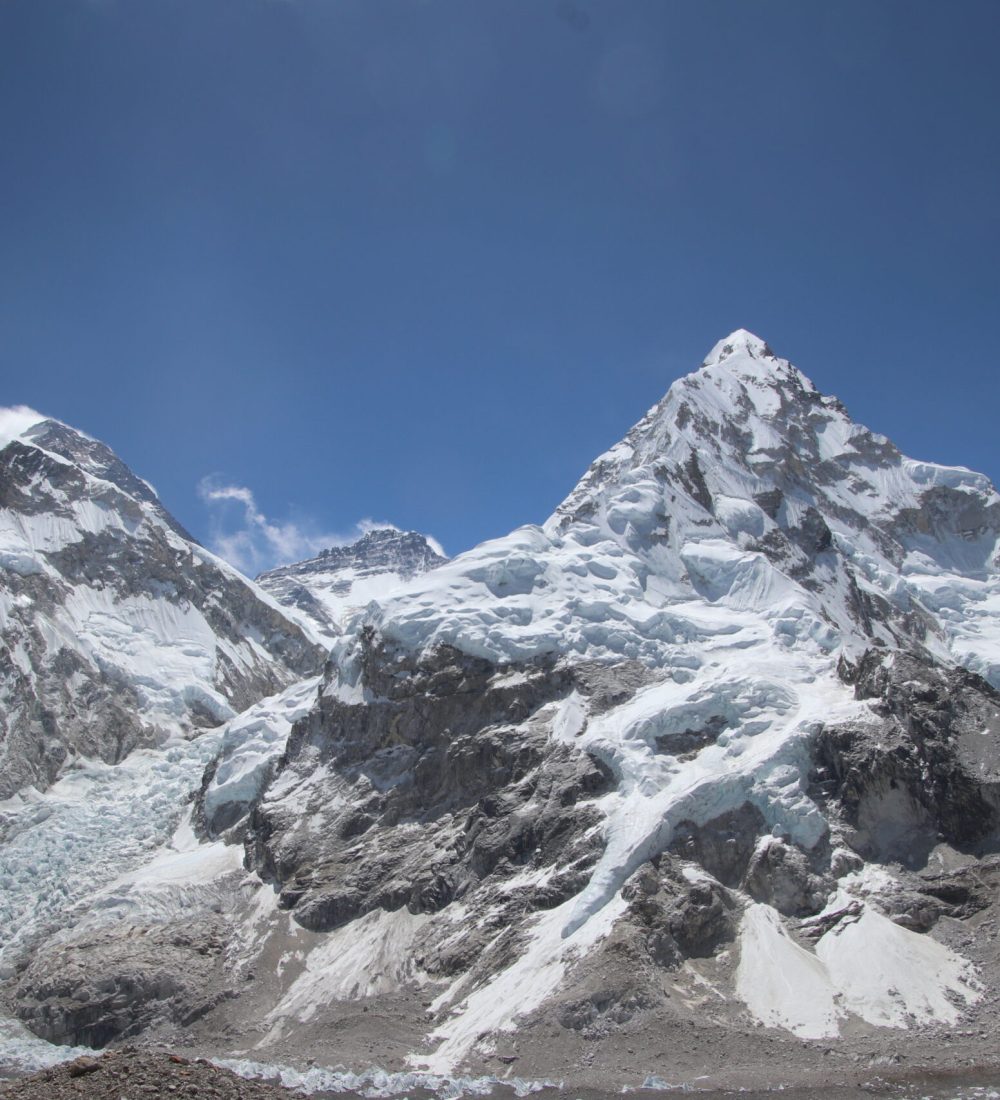
The highlight of the Everest Fast Trek is the ascent to Kala Patthar, where the world expands before you at 5,643 meters. On a crisp morning, the sun ignites the summit pyramid of Everest, while the faces of Lhotse and Ama Dablam stand in breathtaking relief. This vista, earned step by step, is your summit. Everest Fast Trek then continues to the legendary Everest Base Camp (5,364m), where you’ll stand at the foot of the Khumbu Icefall, surrounded by prayer flags fluttering in the wind. The return journey is a gentle descent, with a pause at Tengboche Monastery and a gradual walk alongside the rushing Dudh Kosi RiverEverest Trek completes not with a peak, but with a settled perspective the mountains now a lasting quiet within youEverest Fast Trek is not just a holiday; it’s a transformation. Everest Trek is an invitation to discover your own strength, to connect with a culture older than memory, and to return home changed. Choose Everest Fast Trek. Choose HOP. Let Everest Fast Trek redefine what you thought possible and let Everest Trek linger in your heart forever.

Everest Fast Trek / Everest Trek

Beyond Borders

Everest Fast Trek / Everest Trek

EXPEDITION OVERVIEW

Here is brief information regarding the expedition, including dates, duration, pricing and more.
  1. MONTH

    September - November / March - May
  2. GROUP SIZE

    4 - 14 adventurers
  3. DURATION

    Expedition duration is 10 days
  4. TRANSPORTATION

    We will be travelling via private transportation
  5. DIFFICULTY

    The level will be moderate

Itinerary

  • Day 1: Welcome to Nepal

    We will pick you up at the airport and rest before we meet for the full trek briefing. We’ll meet the rest of the group and go over any questions you may have. While enjoying the evening with a dinner.

  • Day 2: Soaring to the roof of the world

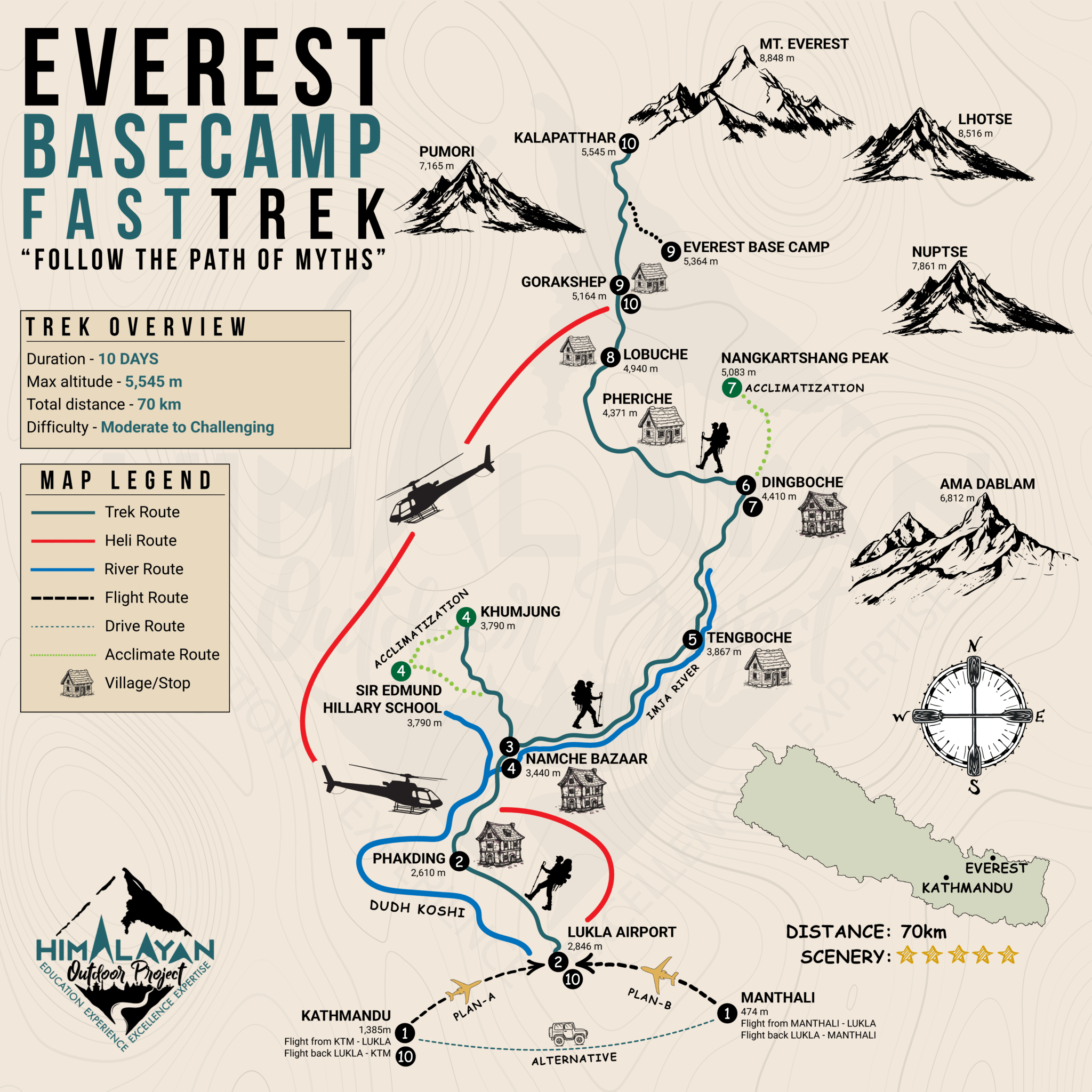
    (Overnight altitude: 2,610m) We kick off the day with a flight to the world-famous Tenzing-Hillary Airport in Lukla (2,860m), surrounded by incredible Himalayan views. Once we land, the trek begins! It’s an easy 3-4 hour hike downhill to the village of Phakding (2,610m). Walking through lush landscapes and charming Sherpa villages, we settle into a cozy teahouse by the Dudh Koshi River. Adventure is just getting started!

  • Day 3: The sherpa capital

    (Overnight altitude: 3,440m) Today, we trek to the bustling hub of Namche Bazaar (3,440m), the heart of the Everest region. The 6-7 hour journey takes us through dense pine forests, suspension bridges draped with prayer flags, and small villages alive with Sherpa culture. As we climb higher, the first glimpses of Everest and Ama Dablam might greet us along the way. Once in Namche, we settle into this vibrant town full of cozy cafes, shops, and mountain vibes!

  • Day 4: acclimate

    (Overnight altitude: 3,440) Today is an acclimatization day to allow our bodies to adjust to the high altitude. But that doesn’t mean we do anything! The best way to acclimatise is to be active. There is an opportunity to spend a few hours hiking around the area or visit the school set by Sir Edmund Hillary in the Khumjung village as a thank you for all the assistance the Sherpa people gave him in his successful ascent of Mt Everest. Some of the mountains on view today are Kwangde (6,011m), Thamserku (6,623m), Kangtega (6,782m), Nuptse (7,861m), Lhotse (8,516m), Ama Dablam (6,812m) and, of course, Mount Everest (8,848m).

  • Day 5: tengboche tranquility

    (Overnight altitude: 3,860m) There are not many steep ascents and descents today, giving plenty of time to concentrate on photography! Stupas (Buddhist shrines), prayer flags, mani walls (walls with Buddhist prayers carved into them), and mountains, such as Ama Dablam, and Tengboche Monastery, are all worth photographing. The trail up to Tengboche is a dusty switchback route, but the panoramic views from the monastery make it all worthwhile. If you are lucky, you can attend a service, for which a small donation would be appreciated. You can light some ghee lamps.

  • Day 6: dingboche

    (Overnight altitude: 4,410m) The trail is, of course, very scenic but also quite challenging today. We follow the Imja Khola before climbing up to Dingboche’s windswept fields (mainly potato). This is the highest Sherpa settlement in the Khumbu Region. Ama Dablam’s views from here are spectacular and dramatic as we will arrive at Dingboche in time for lunch. The rest of the afternoon is free to relax with a book or gaze at the surrounding mountains.

  • Day 7: Dingboche highs

    With the ever-rising altitude, it is important to take another day to acclimatize. There are several options available for short hikes today. Such as visiting the base of Nangkar Tshang Peak, with its sacred sites and views of Mt Makalu. This trip is a 3.5 to 5 hours round trip, and the ascending altitude on this hike will help our bodies prepare for the high altitudes ahead.

  • Day 8: on to lobuche

    (Overnight altitude: 4,940m) Today the trek begins with a gentle climb toward the Pheriche Valley. Trekking above the valley floor, we pass through alpine scrub and yak pastures. On display are Tawoch and Cholotse, with Ama Dablam behind us. From here, it appears Ama Dablam is rising directly from the valley floor. The trail continues on to Thokla Pass, where the ascent is challenging. Again a photographer’s paradise as there are panoramic views of Nuptse, Lhotse, Lhotse Shar, and a few other 7,000-plus meter peaks! After crossing the pass, we reach Lobuche. Not a very attractive settlement in itself, but the scenery surrounding it is beautiful and dramatic.

  • Day 9: Everest day

    (Overnight altitude: 5,164m) This is an exciting day! Today we ascent to the viewpoint for Everest. First, the trail takes us for about 3 hours over boulders and rough terrain to the small settlement of Gorakshep. After lunch, it starts out for Everest base camp, from where the views of Everest are simply the best views you can possibly get. While returning back to Gorakshep and prepare for our final adventure the next day.

  • Day 10: Kalapatthar - heli ride to lukla - fly back to ktm

    Today we start for Kalapatthar, we would do it this morning. Now we descend to Gorakshep and enjoying our breakfast. Now we descend to Lukla via a heli ride while enjoying the view of majestic landscapes and the trail that we walked earlier. After landing at Lukla we rest and wait for our flight back to Kathmandu for an overnight stay filled with a farewell dinner with our team with some beautiful cultural shows.

Brief Information

Cost includes:

  • All arrival, departure transfers as per the program by private vehicle. 
  • 10 days full board Lodge trek with all meals (breakfast, lunch and dinner) with accommodation in a tea house lodge.
  • 2 nights tourist standard hotel in Kathmandu including breakfast and government taxes. 
  • Flight for kathmandu to Luka and back.
  • Service of fluent english speaking guides and porters.
  • Accommodation, meals, insurance, equipment, and allowances of guides and porters.   
  • Sagarmatha NAtional Park entry fee for trek entry fees. 
  • Transportation for all arrival and departure transfers by private vehicle as per the above itinerary. 
  • Cultural tour in Kathmandu with local guide, transport but entry fee is extra. 
  • TIMS (Trekkers’ Information Management System) fee. 
  • All applicable government taxes (13% VAT and 10% tourism service charges)
  • Ground handling charges and necessary government taxes. 
  • Farewell and welcome Dinner with the whole trek team. 
  • Himalayanoutdoorproject merchandise (Cap or Hoodie)
 

Cost excludes:

  • Lunch and Dinner whilst staying in Kathmandu. 
  • Entry fee while cultural visit in Kathmandu. 
  • International flights to Nepal. 
  • Bottled drinks (mineral water, any cold drinks, and alcoholic drinks) whilst on trek. 
  • Your travel insurance.
  • Expenses of personal nature such as tips for guide, porter and driver, laundry, bar bill, telephone calls etc.
  • Nepal visa fee for 30 days.
  • Any additional activities not in the itinerary.

Things to consider while in Nepal and before coming to Nepal:

  • Roads can be unpredictable and bumpy in Nepal—be patient and trust the journey.
  • Forgetting personal medications is risky—pack enough for the entire trip as pharmacies are non-existent in these remote areas.
  • There’s little to no internet here—disconnect and enjoy the timeless beauty of the wilderness.
  • Drinking untreated water can ruin your adventure. Always use purification methods.
  • Never overpack.
  • Leave footprints not traces.
  • Have healthy mind set to respect local culture.
  • Remote areas mean minimal facilities—embrace the adventure over comfort.
  • Switch off everything and soak in the moments.
  • Carry enough cash because sometimes ATMs and other form of payments could not work.
  • Dont forget your permits and all the other required documents.
  • Stay calm in unexpected situations; panicking never helps, and solutions are always around the corner.
  • Don’t rush to the finish line; the magic is in enjoying every step of the journey.
  • Stick with the group; wandering off isn’t just unsafe, it’s unnecessary in such vast landscapes.
 

WHAT TO BRING: 

  • Hat/Cap
  • Beanie/Headband
  • Sunglasses
  • Neck Buff
  • Sunscreen
  • Light Base Layer
  • Insulating Layer (Fleece or Down)
  • Down Jacket
  • Raincoat
  • Gloves (Warm and Lightweight)
  • Trekking Pants (Quick-dry)
  • Thermal Bottoms (Optional)
  • Trekking Boots
  • Camp Shoes/Flip Flops
  • Wool Socks (Multiple Pairs)
  • Head Torch (with Extra Batteries)
  • Water Bottle (Up to 2L)
  • Personal Medications
  • Camera
  • Power Bank/Charger
  • Trekking Poles
  • Snacks/Protein Bars
  • Toilet Paper/Wet Wipes
  • Personal Hygiene Items
  • First Aid Kit (Basic)
  • Map/Guidebook
  • Backpack (Daypack for trekking)
  • Positive vibes

FAQs

I've never trekked in the Himalayas before. Can I join one of your trekking expeditions?
  • Absolutely.
  • Many of our guests are first-time trekkers in Nepal.
  • You don’t need previous trekking experience to enjoy a Himalayan adventure. What matters most is choosing the right route based on your fitness level, interests, and goals.
  • Whether you’re looking for a scenic lodge-to-lodge trek, a challenging high-altitude journey, or your first multi-day mountain experience, we’ll help you select an expedition that’s right for you.
  • Our goal is not simply to get you to the destination. Our goal is to ensure you enjoy every step of the journey.
How difficult is trekking in Nepal?
  • The answer depends on the route.
  • Some treks are suitable for active beginners, while others require strong fitness and previous hiking experience.
  • Most trekking days involve walking between 5 and 8 hours at a comfortable pace.
  • The biggest challenge for most travelers is not the distance it’s altitude.
  • That is why our itineraries are carefully designed with proper acclimatization, realistic daily schedules, and experienced guides who understand how to manage trekking safely in the Himalayas.
How fit do I need to be?
  • You do not need to be an athlete.
  • If you enjoy walking, outdoor activities, and can comfortably stay active for several hours, you are already in a good position to enjoy many of our treks.
  • We recommend regular walking, hiking, cycling, or cardiovascular exercise for several weeks before your trip.
  • The better prepared you are, the more comfortable and enjoyable your expedition will be.
Is altitude sickness something I should be worried about?
  • Altitude is an important factor in the Himalayas and should always be taken seriously.
  • Our guides monitor guests daily, encourage proper hydration, and follow proven acclimatization schedules.
  • Most altitude-related problems can be avoided through proper pacing and responsible expedition planning.
  • At HOP, safety always comes before itinerary schedules or summit goals.
Why trek with a guide instead of trekking independently?

Because a great trek is about much more than following a trail.

Our guides provide:

  • Route expertise
    • Local cultural knowledge
    • Safety management
    • Permit coordination
    • Accommodation logistics
    • Emergency support
    • Weather and trail updates

Most importantly, they help you experience Nepal in a way that would be difficult to achieve on your own.

Many guests tell us that their guide became one of the most memorable parts of their journey.

What are accommodations like during the trek?
  • Most of our trekking expeditions use carefully selected tea houses and mountain lodges.
  • Accommodation is generally simple, clean, and comfortable.
  • The further you travel into the mountains, the more basic facilities become but that’s also where you’ll find some of the most authentic experiences and spectacular views.
  • Expect warm hospitality, hearty meals, and unforgettable mountain scenery.
What makes Himalayan Outdoor Project different?

We are not a mass-market tour operator.

We are a Nepal-based expedition company built around authentic experiences, professional leadership, and responsible adventure travel.

Our philosophy is simple:


Experienced certified guides.
Strong safety standards.
Meaningful cultural connections.
Real Himalayan experiences.

We believe the best expeditions are measured not only by where you go but by how deeply you experience the journey.