
Close
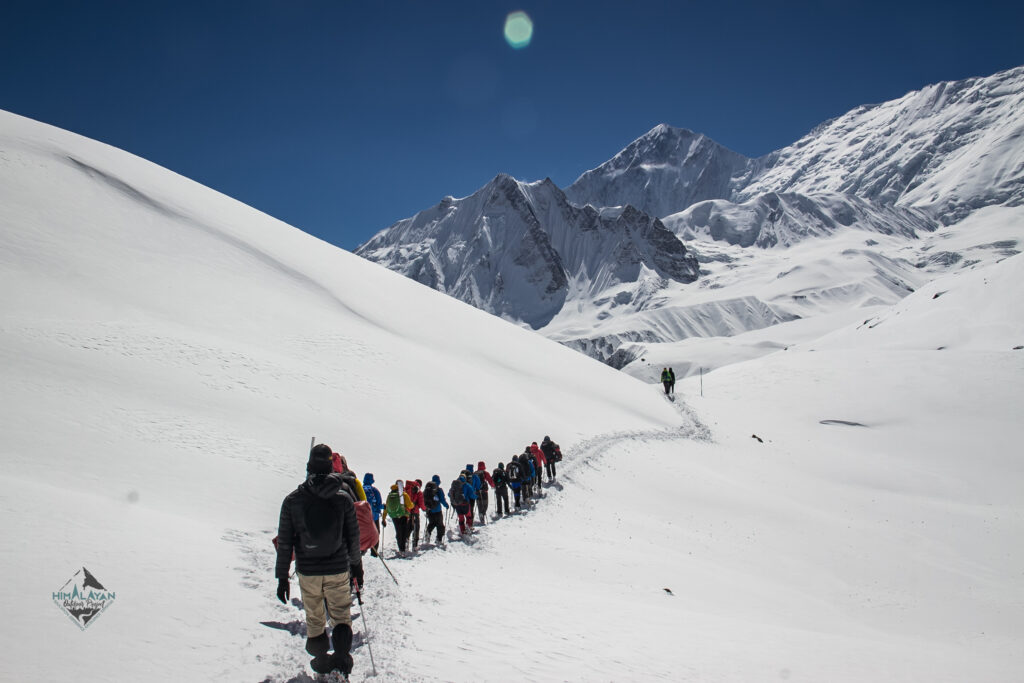
28°47'49"N · 83°56'19"E - ANNAPURNA MASSIF
Cross the throne of the gods at the Thorong La.
Expedition Data
Packages
Mission Brief
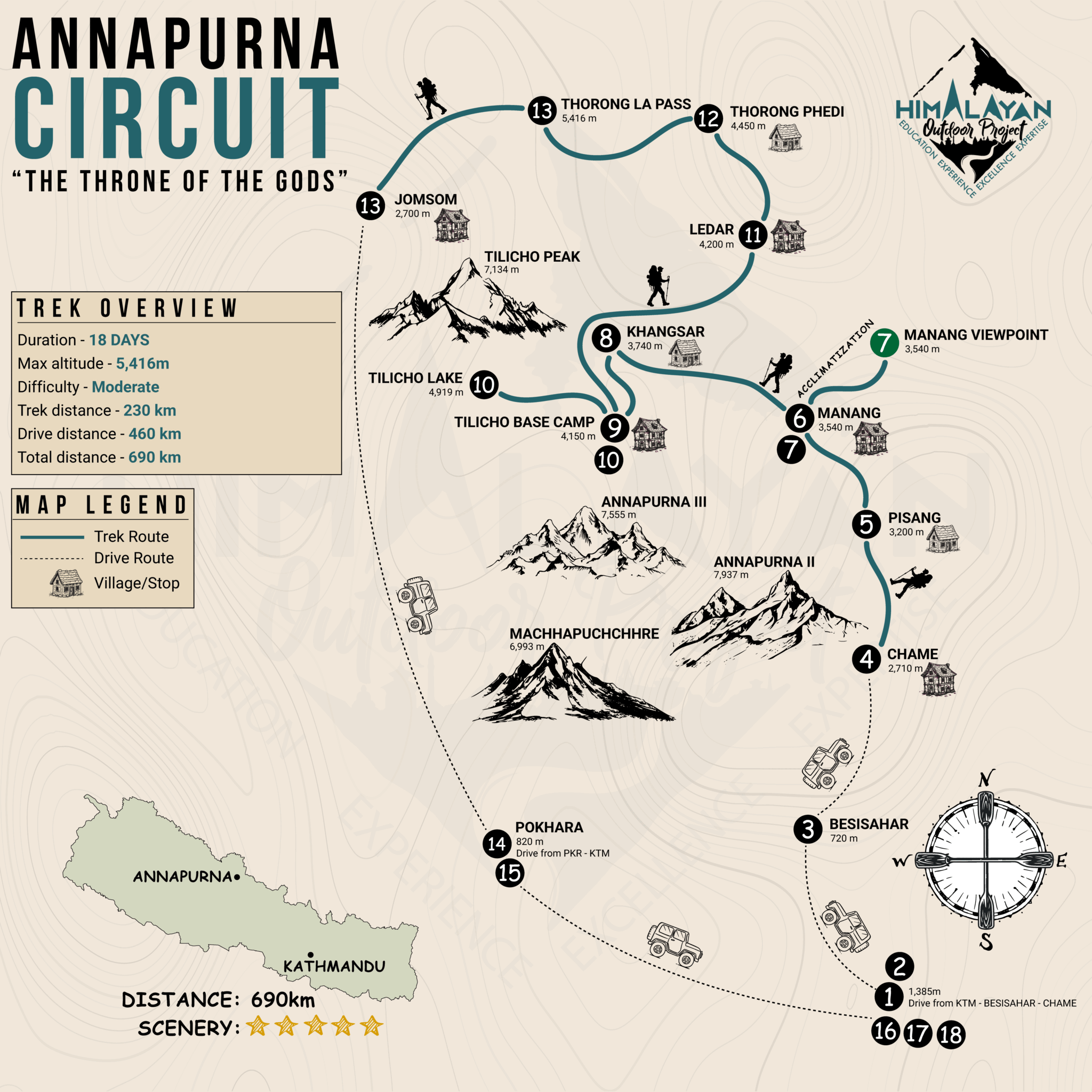
The Annapurna Circuit Trek is one of the most iconic and diverse trekking routes in the world. Circling the Annapurna Massif in a broad counterclockwise loop, this legendary trail takes you through a remarkable variety of landscapes from lush subtropical forests and terraced farmland to high-altitude deserts and glacial moraines. The highlight is the crossing of Thorong La Pass at 5,416 metres, one of the highest trekking passes in the world and the culmination of weeks of steady climbing.
The journey begins with a scenic drive from Kathmandu to Besisahar, following the Marsyangdi River valley northward through traditional Gurung, Tamang, and Tibetan-Buddhist villages. The trail passes through charming settlements like Chamje, Bagarchhap, and Chame before reaching the high-altitude desert of the Manang Valley. After acclimatisation days in Manang with optional side trips to Gangapurna Lake or the ancient monasteries the route continues to Thorong Phedi and then over the pass. The descent leads to the sacred temple of Muktinath, a pilgrimage site for both Hindus and Buddhists, before continuing through the arid landscapes of Mustang and the Kali Gandaki Valley.
The Annapurna Circuit is rated moderate to challenging, placing it above the Everest Base Camp trek in overall physical demand. The trail covers approximately 160 to 230 kilometres over 15 to 18 days, with daily walks averaging 6 to 8 hours of active trekking. The terrain involves sustained altitude gain, steep ascents and descents, and the demanding Thorong La Pass crossing a single day of 6 to 8 hours walking from Thorong Phedi. The trek is non-technical: no ropes, no ice axes, no climbing skills required. The difficulty is physical and cardiovascular, not mountaineering.
The Annapurna Circuit Trek is not merely about reaching a destination; it is about immersing yourself in one of the world's most diverse and spectacular mountain journeys. It is a once-in-a-lifetime adventure that demands preparation but offers rewards that last forever.
Route Profile










Trail Manifest
The HOP Difference
At Himalayan Outdoor Project, every trek is approached with the same mission-focused mindset as an expedition. Founder and Expedition Planner Ex. Special Forces Maj. Rajiv Chand served for more than twenty years in the Nepali Army Special Forces, leading teams in complex and demanding environments where preparation, leadership, teamwork and risk management determined success. That same philosophy now guides every HOP trek.
Our treks combine the leadership, planning, discipline and risk-management systems of Special Forces operations with the mountain wisdom, resilience and experience of Nepal's most accomplished trekking guides and Sherpas. This combination creates a trekking environment built on trust, professionalism, teamwork and safety essential ingredients for the physical and mental challenge of completing one of the world's most iconic Himalayan circuits.
Our Trekking Philosophy
Successful Annapurna Circuit treks begin long before arriving in Kathmandu and they end only when every trekker is safely home.
Every detail matters Route, Logistics, Weather, Equipment, Contingencies, Emergency response. Nothing is left to chance. The length of the circuit and the demanding Thorong La Pass require precise planning and careful route management.
Preparation creates confidence. Every trekker receives guidance on physical training, trekking systems, equipment selection, nutrition and hydration, and mental preparation for the high-altitude challenge.
In the mountains conditions constantly change. Our team adapts, communicates and makes informed decisions based on weather, trail conditions, team health, individual performance, and safety considerations.
The destination is only halfway. Our objective is simple: bring every trekker home safely. Safety first. Summit second.
Preparation Program
Most treks start in Kathmandu. Ours starts months before.
Develop the endurance, strength and resilience required for 15 to 18 days in the Himalayas daily walks of 6 to 8 hours, sustained altitude gain, and steep ascents and descents. A high level of physical fitness is essential. Recommended training period: minimum 3–6 months.
No technical climbing skills are required there is no mountaineering, rope work, or need for prior expedition experience. Trekkers should be comfortable walking 6–8 hours a day on rugged terrain, using trekking poles, and managing steep ascents and descents.
Manage fatigue, uncertainty, fear, stress, team dynamics and the psychological demands of high-altitude trekking on a long and challenging circuit.
Our team provides detailed equipment consultation and gear recommendations. Final equipment checks are conducted in Kathmandu.
Your Trekking Team
Our trekking guides and Sherpas are not simply support staff. Many members of our team have extensive experience in the Annapurna region, with multiple circuit treks under their belts. Their knowledge of the mountains, weather, terrain, and high-altitude decision-making is invaluable. Experience matters.
That is why we work only with highly experienced, government-licensed trekking guides who share our commitment to professionalism and safety.
Fit Check
Recommended Experience
Acclimatization Strategy
Proper acclimatisation is one of the most important factors in successful high-altitude treks.
Tea House & Camping Life
The Annapurna Circuit is a classic teahouse trek, with comfortable lodges along the entire route. Teahouses have been welcoming trekkers since the 1970s. Facilities become progressively more basic as you gain altitude in lower villages you'll find hot showers and Wi-Fi, but higher up near Manang and Thorong Phedi, things get more basic. The remoteness is part of the adventure.
Safety & Risk Management
Cost Breakdown
Permits & Logistics
Accommodation & Meals
Transportation
Trek Support
Training & Additional
Mandatory Insurance
Important note: The Annapurna Circuit Trek is a challenging and rewarding undertaking. Weather, trail conditions and health issues may require itinerary changes. Flexibility, patience, resilience, and teamwork are essential. The trek involves walking 6–8 hours daily over rugged terrain with sustained altitude gain and steep descents. The maximum altitude is 5,416m at Thorong La Pass — the most demanding day, a steady climb from 4,450m to 5,416m followed by a long descent. The air gets thinner as you approach the pass, and trekkers must be prepared for the physical and mental demands of high altitude.
FAQs
Because a great trek is about much more than following a trail. Our guides provide:
Most importantly, they help you experience Nepal in a way that would be difficult to achieve on your own. Many guests tell us that their guide became one of the most memorable parts of their journey.
We are not a mass-market tour operator. We are a Nepal-based expedition company built around authentic experiences, professional leadership, and responsible adventure travel. Our philosophy is simple:
We believe the best expeditions are measured not only by where you go but by how deeply you experience the journey.
From The Journal
 Trekking · Field Notes
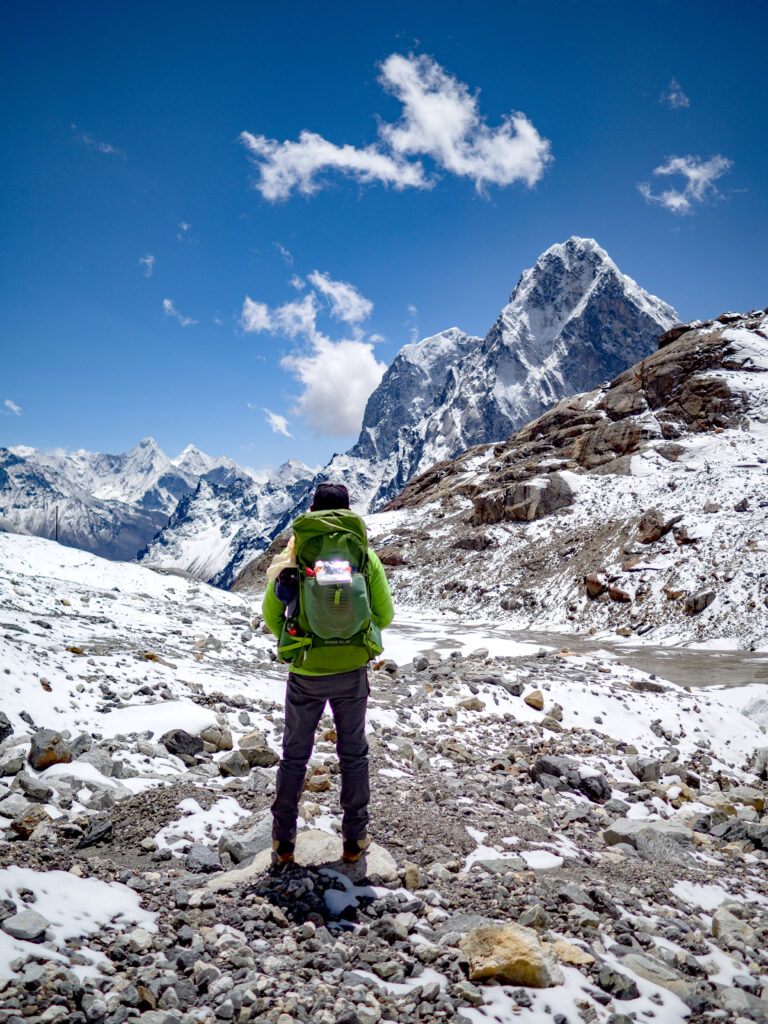
A step up from EBC Kongma La, Cho La and Renjo La connect the Khumbu's separate valleys into one continuous high-altitude circuit.
Read the guide →
Planning
How pre-monsoon spring compares to post-monsoon autumn for high-altitude routes like the Annapurna Circuit weather, visibility, and crowd levels.
Read the guide → Trekking · Field Notes
Both cross a 5,000m+ pass in the cold before dawn but they ask very different things of the people who walk them. Here's what actually happens on each.
Read the guide → Gear
Gear
Layering strategy, footwear, and the gear that actually earns its weight on an 18-day teahouse trek to 5,416m.
Read the guide →