
Close

29°45'52"N · 80°55'31"E - API NAMPA CONSERVATION AREA
The only crowds are the rhododendrons
Expedition Data
Packages
Mission Brief
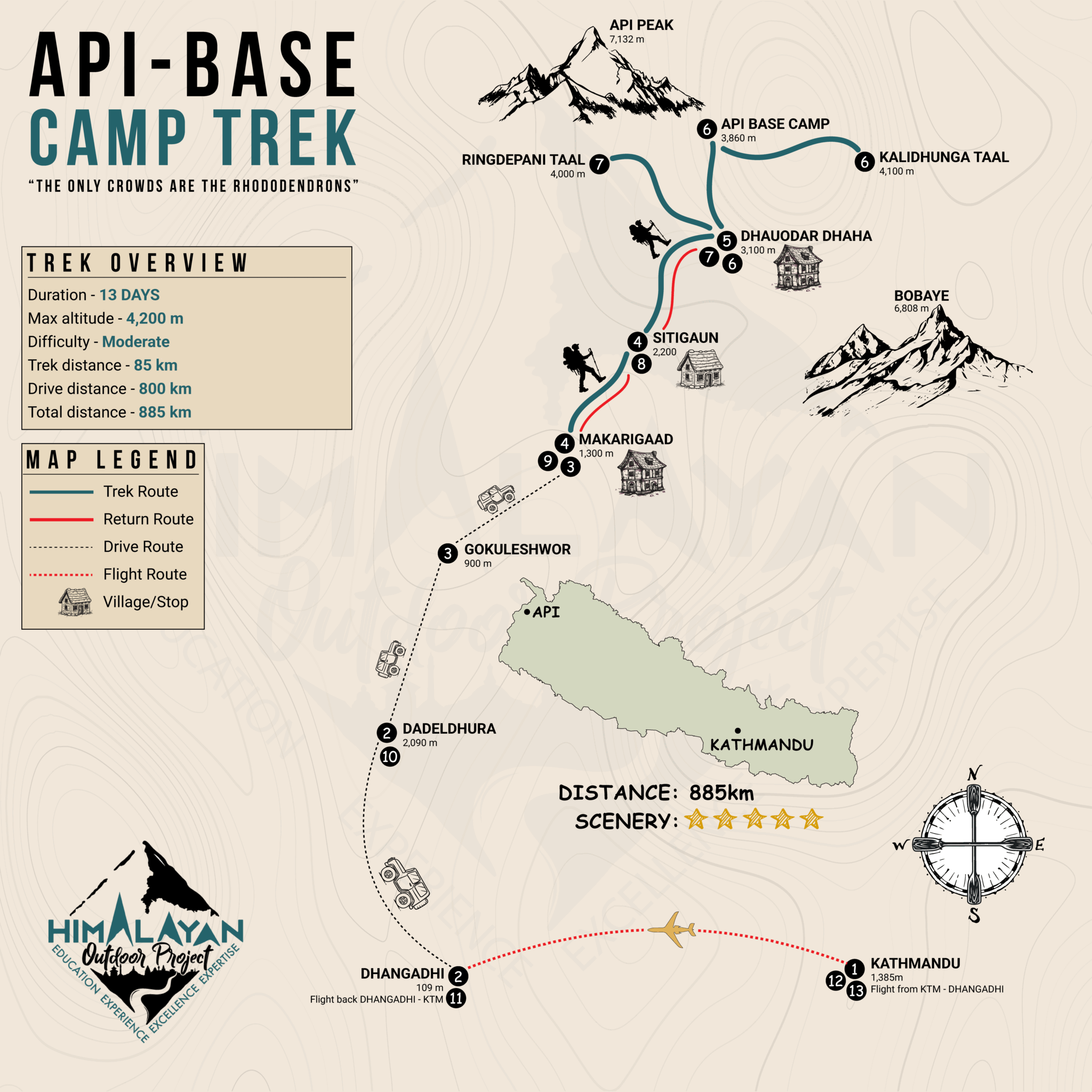
The API Trek is one of Nepal's most untouched and remote trekking experiences, located in the secluded Far-Western region near the Nepal-Tibet border. Named after Mount Api (7,132m) the highest peak in western Nepal this off-the-beaten-path journey is ideal for trekkers seeking solitude, raw Himalayan wilderness, and authentic cultural encounters. While Everest Base Camp welcomed over 50,000 trekkers and the Annapurna Circuit saw nearly 250,000 visitors in recent years, this trail sees only a few hundred adventurers annually, preserving its remote character and unspoiled beauty.
The mountain's name, "Api," comes from the local Byash language meaning "grandmother," symbolising protection and respect. The region is considered highly spiritually significant among the locals, who believe it is a sacred deity. The trek lies within the Api Nampa Conservation Area, offering a unique blend of natural wilderness and authentic cultural encounters.
The journey begins with a flight from Kathmandu to Dhangadhi, followed by a scenic drive into the hills. The trail winds through subtropical forests, cascading waterfalls, and traditional villages inhabited by the Bohora, Chhetri and Kham communities. As you ascend, the landscape transforms into alpine meadows and glacial valleys, eventually reaching the dramatic base camp of Api Himal at approximately 3,900m. From here, a hike to Kalidhunga Lake at 4,200m rewards you with breathtaking views of Api and the surrounding peaks.
The API Basecamp Trek is not merely about reaching a destination; it is about experiencing one of Nepal's last truly wild frontiers where the trails feel like they did in Nepal's golden trekking era and the mountains don't try to impress you; they just stay with you. It is a once-in-a-lifetime journey that demands preparation but offers rewards that last forever.
Route Profile










Trail Manifest
The HOP Difference
At Himalayan Outdoor Project, every trek is approached with the same mission-focused mindset as an expedition. Founder and Expedition Planner Ex. Special Forces Maj. Rajiv Chand served for more than twenty years in the Nepali Army Special Forces, leading teams in complex and demanding environments where preparation, leadership, teamwork and risk management determined success. That same philosophy now guides every HOP trek.
Our treks combine the leadership, planning, discipline and risk-management systems of Special Forces operations with the mountain wisdom, resilience and experience of Nepal's most accomplished trekking guides and Sherpas. This combination creates a trekking environment built on trust, professionalism, teamwork and safety essential ingredients for the physical and mental challenge of trekking through one of Nepal's most remote and untouched regions.
Our Trekking Philosophy
Successful API Basecamp treks begin long before arriving in Kathmandu and they end only when every trekker is safely home.
Every detail matters Route, Logistics, Weather, Equipment, Contingencies, Emergency response. Nothing is left to chance. The remoteness of the Far-Western region and limited infrastructure require precise planning and careful route management.
Preparation creates confidence. Every trekker receives guidance on: Physical training, Trekking systems, Equipment selection, Nutrition and hydration, Mental preparation for the high-altitude challenge.
In the mountains conditions constantly change. Our team adapts, communicates and makes informed decisions based on: Weather, Trail conditions, Team health, Individual performance, Safety considerations.
The destination is only halfway. Our objective is simple: Bring every trekker home safely. Safety First. Summit Second.
Preparation Program
Most treks start in Kathmandu. Ours starts months before.
Develop the endurance, strength, and resilience required for 14 to 17 days in the Himalayas. The trek involves daily walks of 5 to 7 hours over rugged terrain with some steep ascents. A good level of physical fitness is essential. Recommended training period: minimum 3–6 months.
No technical climbing skills are required there is no mountaineering, rope work, or need for prior expedition experience. However, trekkers should be comfortable walking on rugged terrain, using trekking poles and managing steep ascents and descents.
Manage fatigue, uncertainty, fear, stress, team dynamics, and the psychological demands of trekking in one of Nepal's most remote regions. The remoteness means limited infrastructure and no internet or electricity for extended periods.
Our team provides detailed equipment consultation and gear recommendations. Final equipment checks are conducted in Kathmandu.
Your Trekking Team
Our trekking guides and Sherpas are not simply support staff. Many members of our team have extensive experience in the Far-Western region, with multiple API treks under their belts. Their knowledge of the mountains, weather, terrain and high-altitude decision-making is invaluable. Experience matters.
Important: The API Basecamp Trek is exclusively open to group trekking. A licensed guide is legally mandatory and permits are only issued through registered trekking agencies. That is why we work only with highly experienced, government-licensed trekking guides who share our commitment to professionalism and safety.
Fit Check
Recommended Experience
Acclimatization Strategy
Proper acclimatisation is one of the most important factors in successful high-altitude treks.
Every trekker acclimatises differently. The itinerary remains flexible to maximise safety and success.
Camping & Homestay Life
The API Basecamp Trek is a camping trek with some homestay options available. This is a remote trek with limited infrastructure facilities are basic compared to the Everest or Annapurna regions. Trekkers should lower their expectations from modern amenities and embrace the raw, authentic experience.
Safety & Risk Management
Cost Breakdown
Permits & Logistics
Accommodation & Meals
Transportation
Trek Support
Training & Additional
Mandatory Insurance
Important note: The API Basecamp Trek is a remote and challenging undertaking. Weather, trail conditions, and health issues may require itinerary changes. Flexibility, patience, resilience, and teamwork are essential. The trek involves walking 5–7 hours daily over rugged terrain with steep ascents. The maximum altitude is 4,200m at Kalidhunga Lake. The region has limited infrastructure no internet or electricity for extended periods. Trekkers must be physically fit and mentally prepared for the challenges of remote high-altitude trekking. A licensed guide is legally mandatory, group trekking is required (solo permits are not issued), and permits must be obtained through a registered trekking agency.
FAQs
Because a great trek is about much more than following a trail. Our guides provide:
Most importantly, they help you experience Nepal in a way that would be difficult to achieve on your own. Many guests tell us that their guide became one of the most memorable parts of their journey.
We are not a mass-market tour operator. We are a Nepal-based expedition company built around authentic experiences, professional leadership, and responsible adventure travel. Our philosophy is simple:
We believe the best expeditions are measured not only by where you go but by how deeply you experience the journey.
Beyond Borders
 Trekking · Field Notes
For trekkers weighing API's remoteness against a shorter, closer alternative how the two compare in access and crowds.
Read the guide → Trekking · Field Notes
What actually causes altitude sickness, and how acclimatization schedules like the API Trek's are built to manage it.
Read the guide → White Water · Field Notes
Prefer water to altitude? The same Far-West remoteness, minus the ridge trek entirely.
Read the guide →