
Close
27°55'15"N · 86°56'07"E — KHUMBU, NEPAL
Follow the path of myths to the foot of the sky.
Expedition Data
Packages
Mission Brief
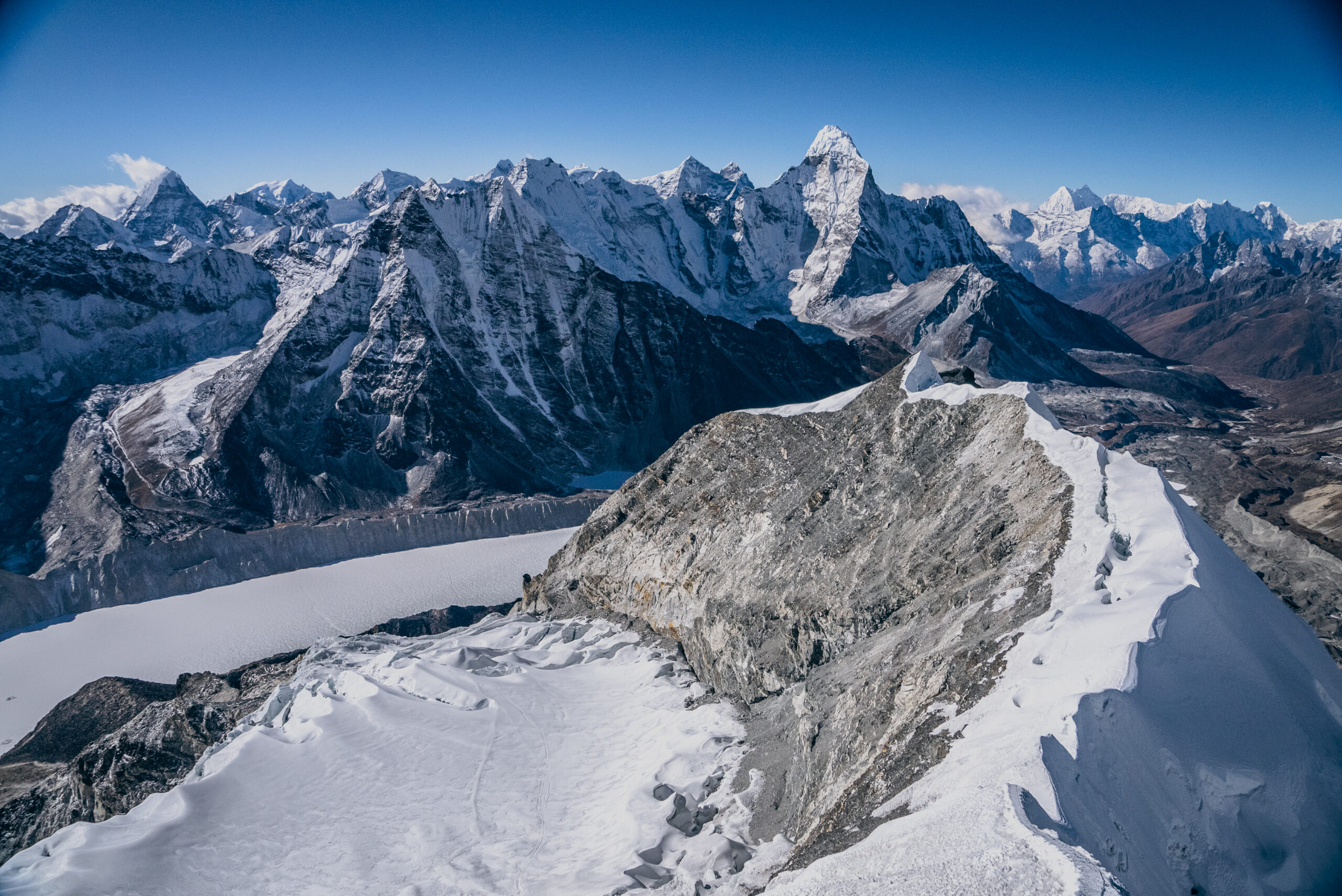
Island Peak, also known locally as Imja Tse, is the most popular trekking peak in Nepal at 6,189 metres. Located in the heart of the Khumbu Valley, this Himalayan gem offers the perfect introduction to the world of high-altitude mountaineering.
The mountain was named Island Peak in 1953 by members of the British Mount Everest expedition because it appears as an island in a sea of ice when viewed from Dingboche. It was later renamed Imja Tse in 1983, but Island Peak remains the popular choice. The southwest summit was first climbed in 1953 as a training exercise by the British Everest expedition team, which included Tenzing Norgay. The main summit was first climbed in 1956 by Hans-Rudolf Von Gunten and two Sherpas, members of the Swiss team that made the second ascent of Everest and the first ascent of Lhotse.
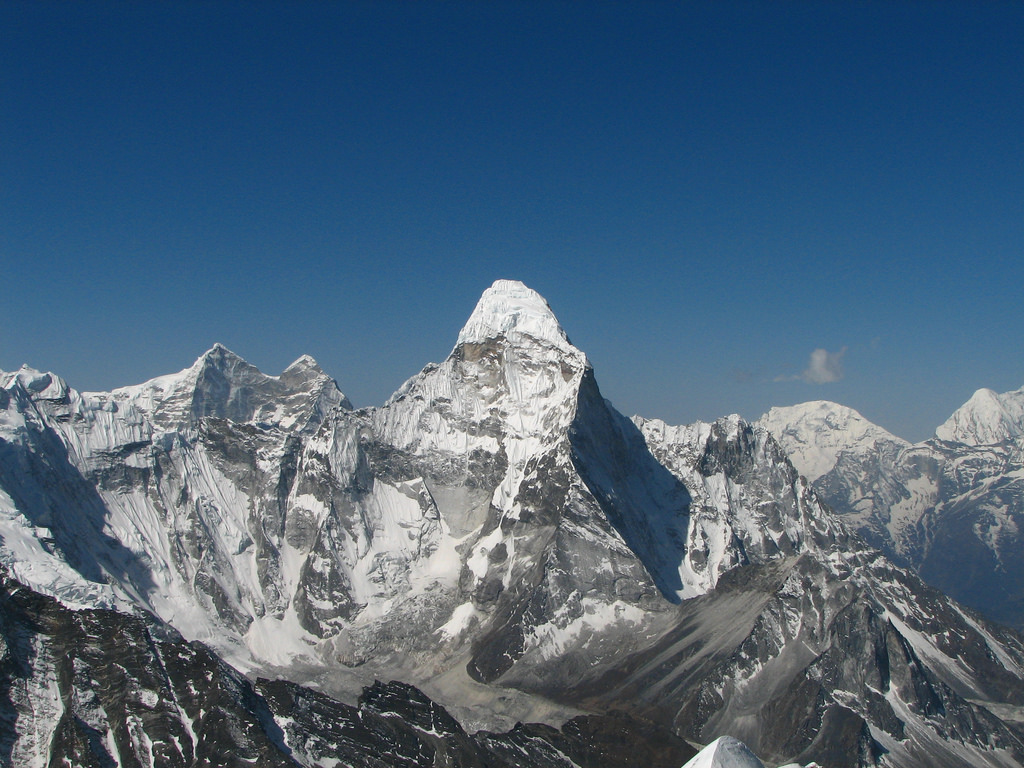
The journey begins with a flight from Kathmandu to Lukla, followed by a trek through Namche Bazaar, Tengboche and Dingboche. The route offers incredible views of Everest, Lhotse, and Ama Dablam along the way. At Chhukung, climbers receive essential mountaineering training before moving to Base Camp at 5,200m. The expedition establishes a High Camp at 5,600m, making the summit day shorter and more manageable. The summit push involves a headwall of snow and ice up to 45 degrees, a glacier crossing with crevasses, and a narrow exposed ridge. Basic mountaineering techniques like rope work, ladder crossings and crampon use are required.
The Island Peak Expedition is not merely about reaching a summit; it is about taking the first confident step into the world of Himalayan mountaineering. It is a once-in-a-lifetime journey that demands preparation but offers rewards that last forever.
Route Profile











Trail Manifest
The HOP Difference
At Himalayan Outdoor Project, every expedition is approached as a mission. Founder and Expedition Planner Ex. Special Forces Maj. Rajiv Chand served for more than twenty years in the Nepali Army Special Forces, leading teams in complex and demanding environments where preparation, leadership, teamwork and risk management determined success. That same philosophy now guides every HOP expedition.
Our expeditions combine:
This combination creates an expedition environment built on trust, professionalism, teamwork and safety essential ingredients for the physical and mental challenge of climbing a 6,000-metre peak.
Our Expedition Philosophy
Successful Island Peak expeditions begin long before arriving at Base Camp and they end only when every climber is safely home.
Every detail matters – Route | Logistics | Weather | Equipment | Contingencies | Emergency response. Nothing is left to chance. The technical demands of the North Ridge, with its steep headwall and exposed summit ridge, require precise planning and careful route management.
Preparation creates confidence. Every climber receives guidance on: Physical training | Technical skills | Expedition systems | Equipment selection | Nutrition and hydration | Mental preparation for the 6,000-metre challenge.
In the mountains conditions constantly change. Our team adapts, communicates and makes informed decisions based on: Weather | Route conditions | Team health | Individual performance | Safety considerations.
The summit is only halfway. Our objective is simple: Bring every climber home safely. Safety First. Summit Second.
Preparation Program
Most expeditions start in Kathmandu. Ours starts months before.
Develop the endurance, strength, and resilience required for twenty days in the Himalayas and the demands of a 6,000-metre summit.
Build confidence in crampon techniques, fixed-line movement, glacier travel, ladder crossings, and ice axe skills. Island Peak requires basic mountaineering skills – your guide will teach you at Chhukung and Base Camp.
Manage fatigue, uncertainty, fear, stress, team dynamics, and the psychological demands of high-altitude climbing on a technically demanding peak.
Our team provides detailed equipment consultation and gear recommendations. Final equipment checks are conducted in Kathmandu.
Your Expedition Team
Our climbing Sherpas are not simply support staff. They are expedition partners. Mentors. Teachers. Leaders.
Many members of our Sherpa team have multiple Island Peak summits and extensive experience on 8,000-metre peaks. Their knowledge of the mountain, weather, terrain and high-altitude decision-making is invaluable. Experience matters.
That is why we work only with highly experienced, government-certified climbing Sherpas who share our commitment to professionalism and safety.
Fit Check
Recommended Experience
Acclimatization Strategy
Proper acclimatisation is one of the most important factors in successful Himalayan expeditions.
Base Camp Life
Island Peak Base Camp (5,200m) and High Camp (5,600m) become home for the final push to the summit.
Safety & Risk Management
Cost Breakdown
Permits & Logistics
Accommodation & Meals
Transportation
Expedition Support
Training & Additional
Mandatory Insurance
Important note: Climbing Island Peak is a serious undertaking despite being classified as a “trekking peak”. Weather, route conditions, and health issues may require itinerary changes. Flexibility, patience, resilience and teamwork are essential. Island Peak involves technical sections including steep slopes, a headwall of snow and ice up to 45 degrees, glacier travel with crevasses, and a narrow exposed ridge. Climbers must be proficient with crampons, ice axes, and fixed rope systems. While no previous climbing experience is required, climbers must be physically fit and mentally prepared for the challenges of high altitude. Summit day is physically demanding, typically lasting 10–14 hours.
FAQs
From The Journal
 Trekking · Field Notes
Both cross a high pass in the cold before dawn but they ask very different things of the people who walk them. Here's what actually happens on each.
Read the guide → Educational
Nepal visa & permit guide for trekkers and climbers the visa, restricted area permits, and the extra paperwork required for regions like Nar-Phu.
Read the guide → Trekking · Field Notes
Another high-altitude circuit worth knowing - Kongma La, Cho La and Renjo La connect the Khumbu's separate valleys into one continuous route.
Read the guide → Gear
Gear
What to bring for every season during trekking in Nepal overpacking is the most common mistake first-time Himalayan trekkers make.
Read the guide →