loader image
Skip to main content

Himalayan Outdoor Project

Annapurna Fast Trek

Cross the throne of the gods at the Thorong La

Peak icon
Trek Annapurna Circuit
Elevation icon
Elevation 5,416m / 17,769ft
Region icon
Region Annapurna Massif
Route icon
Route Thorong La Pass
Expedition Duration icon
Co-ordinates 28°47'49"N 83°56'19"E
Group Size icon
Weather Reports Live Weather Report
Expedition Grade icon
Walking Per Day 3 – 6 Hours
Highest Camp icon
Trek Duration 10 Days
Accommodation icon
Accommodation Hotel | Tea House | Lodge
Best Season icon
Best Season Mar – May | Sept – Nov

FAST TREK - Annapurna The Pilgrim's Path Through the Giants

TRIP HIGHLIGHTS

TREK OVERVIEW

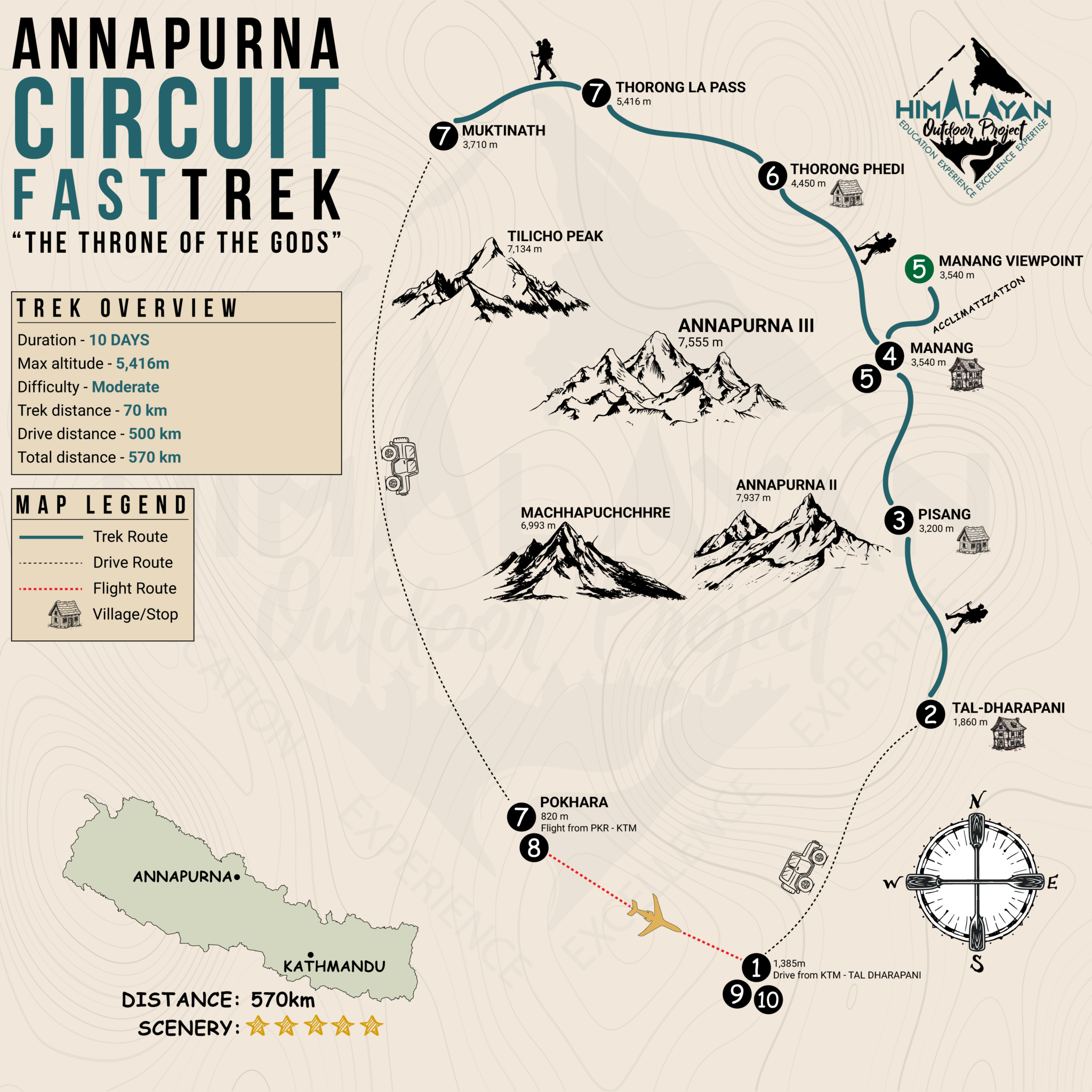
The Annapurna Fast Trek is the ultimate solution for adventurers who want to experience the majesty of the Annapurna Circuit but are short on time. This express itinerary condenses the classic 15–20 day trek into just 7 days by utilising improved road access to higher trailheads, cutting out days of walking through lower-altitude foothills. It is designed for fit, determined trekkers who want to stand at the foot of the world’s tenth-highest peak without the long-term time commitment.


The journey follows the legendary trail through the Annapurna Himalayas, beginning with a scenic drive from Kathmandu to the trailhead at Tal-Dharapani. The route passes through charming villages, ancient monasteries, and lush pine forests before reaching the high-altitude desert of the Manang Valley. The highlight of the trek is the crossing of the iconic Thorong La Pass at 5,416 metres one of the highest trekking passes in the world. From the summit, you are rewarded with jaw-dropping views of the Annapurna Massif, Dhaulagiri, and the surrounding Himalayan giants. The descent leads to the sacred temple of Muktinath, a pilgrimage site for Hindus and Buddhists alike.


The Annapurna Fast Trek is not merely about reaching a destination; it is about experiencing the sheer efficiency of modern adventure. With private jeep transfers cutting out days of walking through lower-altitude foothills, every hour you spend on the trail is focused on moving closer to the majestic Annapurna Sanctuary. It is a once‑in‑a‑lifetime journey that demands preparation but offers rewards that last forever.

Here is brief information regarding the expedition, including dates, duration, pricing and more.
  1. MONTH

    March - May | Setpember - November
  2. GROUP SIZE

    4 - 14 adventurers
  3. DURATION

    Expedition duration is 10 days
  4. TRANSPORTATION

    We will be travelling via private transportation
  5. DIFFICULTY

    The level will be moderate

Itinerary for annapurna fast trek

  • Day 1: Welcome to Nepal

    (Overnight altitude: 1,338m) We will pick you up at the airport and rest before we meet for the full trek briefing. We’ll meet the rest of the group and go over any questions you may have.

  • Day 2: off to road

    (Overnight altitude: 1,860m) It’s time to hit the road! We’ve got a 7-8 hour drive from Kathmandu to Tal-dharapani, the offical starting point of our Annapurna adeventure. The ride is packed with awesome views think green hills, winding rivers and cozy villages along the way. Once we get there, we’ll settle in and get ready for next day adventure ride.

  • Day 3: Pisang Express

    (Overnight altitude: 3,250m) Time to hit the road again! We’ve got a 3-4 hour drive from Tal-Dharapni to Pisang, the official starting point of our Annapurna trek. The ride is packed with awesome views of the himalayan range along the road. Once we get there, we’ll kick back, settle in and have briefing regarding the trek for the following day.

  • Day 4: pisang to manang

    (Overnight altitude: 3,519m) Time to lace up those boots and hit the trail! Its a 3-4 hour trek from Pisang (3250m) to Manang (3519m), where we’ll pass through lush pine forests, cross suspension brides and take in jaw dropping mountain views. It’s trail filled with uphill sections but nothing to wild. By the time we roll into Manang, we’ll be ready to kick back and get ready for tomorrow’s adventure.

  • Day 5: Manang acclimatization

    (Overnight altitude: 3,519m) Today it’s all about getting used to the altitude. We’ll have a short hike around Manang, gaining a few hundred meters. We’ll keep it easy just some stunning view and exploring Gangapurna lake.

  • Day 6: phedi push

    (Overnight altitude: 4,450m) We make our way to Thorong Phedi today, sitting at 4,450m. It’s about a 5-6 hour trek with a steady climb, so pace yourself as we approach the base of the mighty Thorong La pass. As we get closer, the air gets thinner and we’ll enjoy some great mountain views along the way. Once at Thorong Phedi, we settle in and get ready for the big pass crossing tomorrow!

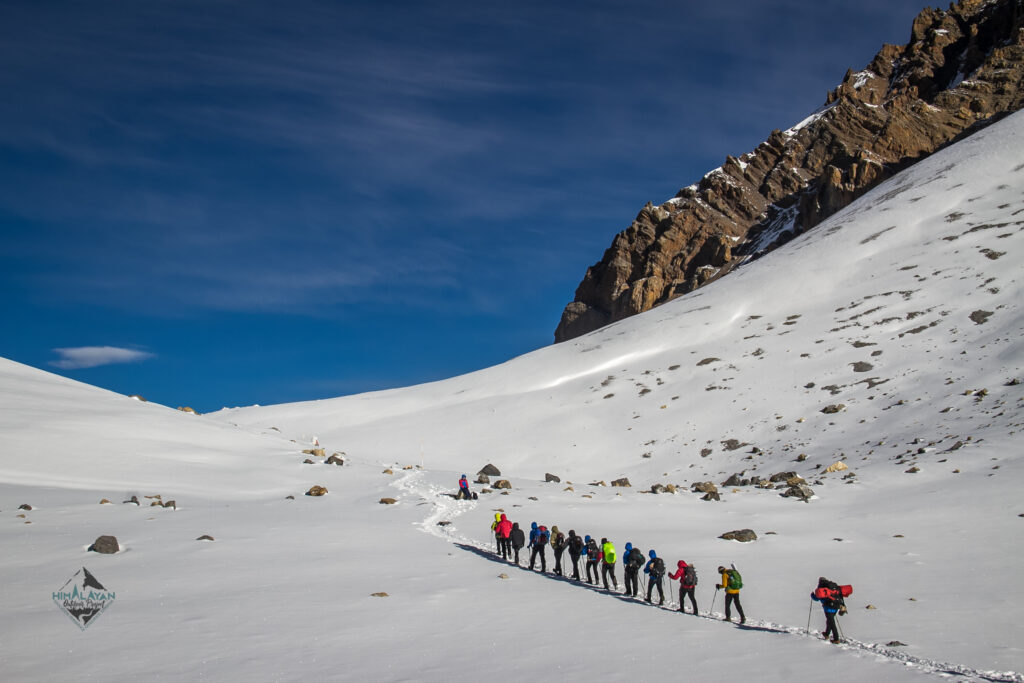
  • Day 7: Summit push

    (Overnight altitude: 3800m) Get ready for a huge day! We wake up early to take on the iconic Thorong La Pass (5,416m). It’s a challenging climb, but the views from the top are absolutely jaw dropping. After soaking in the glory, we descend, but don’t be fooled it’s not a walk in the park! The descent can be tough on the knees, but we push through as we make our way down to Muktinath Temple (3,800m), where our tranposrt will be waiting to take us to Pokhara. A drive of 5-6 hours filled with view of himalayas.

  • Day 8: Pokhara: Cheers to the journey

    Today’s all about soaking in the sights and vibes of Pokhara. You’ve earned it! From boating on the serene Phewa Lake to checking out the famous Peace stupa, the day is yours to relax and explore. Want to get the adrenaline going? Try paragliding for views that’ll blow your mind! Or just chill at Lakeside, enjoy the cafes, and take it all in. The day’s about enjoying Pokhara at your own pace.

  • Day 9: Fly back to kathmandu

    We hit the road back to Kathmandu today. After a scenic flight, we’ll arrive in the capital, ready to wrap up the adventure and reflect on the epic trek. This day, we will pamper ourselves, buy some souvenir and may be party hard at the vibrantly extravagant Thamel.

  • Day 10: departure

    Today, we wrap up our epic adventure with a smooth transfer to the airport. It’s time to say goodbye to the mountains, but not forever. Wishing you safe travels and a heart full of memories. See you again soon!

THE HOP DIFFERENCE

Special Forces Leadership. Veteran Sherpa Experience. One Team. One Mission. One Trek.


At Himalayan Outdoor Project, every trek is approached with the same mission-focused mindset as an expedition. Founder and Expedition Planner Ex. Special Forces Maj. Rajiv Chand served for more than twenty years in the Nepali Army Special Forces, leading teams in complex and demanding environments where preparation, leadership, teamwork and risk management determined success. That same philosophy now guides every HOP trek.


Our treks combine:

  • The leadership, planning, discipline and risk‑management systems of Special Forces operations with

  • The mountain wisdom, resilience and experience of Nepal’s most accomplished trekking guides and Sherpas

This combination creates a trekking environment built on trust, professionalism, teamwork and safety essential ingredients for the physical and mental challenge of completing a fast‑track trek through the Annapurna Massif.

OUR TREKKING PHILOSOPHY

PLAN. PREPARE. EXECUTE. RETURN SAFELY.

Successful Annapurna Fast Treks begin long before arriving in Kathmandu and they end only when every trekker is safely home.


PLAN

Every detail matters – Route | Logistics | Weather | Equipment | Contingencies | Emergency response. Nothing is left to chance. The compressed timeline of this fast trek and the demanding Thorong La Pass require precise planning and flawless execution.


PREPARE

Preparation creates confidence. Every trekker receives guidance on: Physical training | Trekking systems | Equipment selection | Nutrition and hydration | Mental preparation for the high‑altitude challenge.


EXECUTE

In the mountains conditions constantly change. Our team adapts, communicates and makes informed decisions based on: Weather | Trail conditions | Team health | Individual performance | Safety considerations.


RETURN SAFELY

The destination is only halfway. Our objective is simple: Bring every trekker home safely. Safety First. Summit Second.

HOP ANNAPURNA FAST TREK PREPARATION PROGRAM

Most treks start in Kathmandu. Ours starts months before.


Physical Preparation

Develop the endurance, strength, and resilience required for a condensed trek with daily walking of 3–6 hours at high altitude. The Thorong La crossing involves a challenging climb from 4,450m to 5,416m. A high level of physical fitness is essential. Recommended training period: Minimum 3‑6 months.


Technical Preparation

No technical climbing skills are required there is no mountaineering, rope work, or need for prior expedition experience. However, trekkers should be comfortable walking on rugged terrain, using trekking poles, and managing steep ascents and descents.


Mental Preparation

Manage fatigue, uncertainty, fear, stress, team dynamics, and the psychological demands of high‑altitude trekking on a fast‑track itinerary. The Thorong La crossing is a huge day an early start, challenging climb and long descent.

Equipment Preparation

Our team provides detailed equipment consultation and gear recommendations. Final equipment checks are conducted in Kathmandu.

YOUR TREKKING TEAM

Our trekking guides and Sherpas are not simply support staff.

They are your partners. | Mentors. | Teachers. | Leaders.


Many members of our team have extensive experience in the Annapurna region, with multiple circuit treks under their belts. Their knowledge of the mountains, weather, terrain and high‑altitude decision‑making is invaluable. Experience matters.


That is why we work only with highly experienced, government‑licensed trekking guides who share our commitment to professionalism and safety.

WHO IS THIS TREK FOR?

This trek is designed for adventurers who:


✓ Have previous high‑altitude trekking experience
✓ Possess excellent physical fitness
✓ Are comfortable walking 6–8 hours per day
✓ Are prepared for steep ascents, descents, and high passes
✓ Want to experience one of Nepal’s most remote and authentic treks
✓ Understand teamwork and trekking commitment
✓ Possess the patience and resilience for a 14‑18 day journey
✓ Are seeking solitude and wilderness away from the crowds

RECOMMENDED EXPERIENCE

  • Previous high‑altitude trekking experience (4,000m+) is strongly recommended

  • Excellent fitness and endurance

  • No technical climbing experience required but good fitness is essential

  • Recommended training period: Minimum 3‑6 months

  • Ideal for experienced trekkers seeking the ultimate fast‑track adventure

ACCLIMATIZATION STRATEGY

Proper acclimatisation is one of the most important factors in successful high‑altitude treks even on a fast itinerary.


Our strategy includes:
✓ Gradual ascent through the Annapurna region with vehicle support to higher trailheads
✓ Acclimatisation day in Manang (3,519m) with hike to explore Gangapurna Lake
✓ Carefully planned daily altitude gains
✓ Planned recovery periods
✓ Continuous health monitoring


Every trekker acclimatises differently. The itinerary remains flexible to maximise safety and success.

TEA HOUSE & CAMPING LIFE

The Annapurna Fast Trek follows the classic tea house route, with comfortable lodges along the trail.


Facilities include:


✓ Comfortable tea house accommodation with shared rooms
✓ Dining rooms with traditional hospitality
✓ Hygienic meals – breakfast, lunch, and dinner
✓ Warm drinks and snacks along the trail
✓ Charging facilities (at an additional cost)
✓ Communication facilities (Wi-Fi available at most tea houses)
✓ Daily weather updates from guides
✓ Team meetings and briefings
✓ Rest and recovery facilities

SAFETY & RISK MANAGEMENT

Safety is the foundation of every HOP trek.


Our safety systems include:
✓ Experienced trekking leadership
✓ Government‑licensed trekking guides
✓ High guide‑to‑trekker ratio
✓ Daily health monitoring
✓ Satellite communication
✓ Comprehensive medical kits
✓ Professional weather forecasting
✓ Emergency evacuation coordination
✓ Established contingency plans

COST INCLUDES

Permits & Logistics

  • Annapurna Conservation Area Permit (ACAP)

  • TIMS Card (Trekkers’ Information Management System)

  • Garbage deposit

  • Government taxes

Accommodation & Meals

  • Kathmandu hotel accommodation

  • Tea house accommodation during trek

  • Full board meals during trek (breakfast, lunch, dinner)

  • Welcome and farewell dinners in Kathmandu

Transportation

  • Airport transfers

  • Private vehicle (Kathmandu – Tal-Dharapani – Pisang)

  • Private vehicle (Muktinath – Pokhara – Kathmandu)

  • Trek cargo transportation

Trek Support

  • Trek leader

  • Government‑licensed trekking guides

  • Porters

  • Group trekking equipment

Training & Additional

  • Trek briefings

  • HOP trek merchandise

  • Trek completion certificate

COST EXCLUDES

  • International flights

  • Nepal visa fee

  • Personal trekking equipment

  • Personal travel insurance

  • Emergency evacuation insurance

  • Personal expenses

  • Lunch and dinner in Kathmandu

  • Alcoholic beverages

  • Personal tips

  • Additional accommodation due to delays

  • Costs arising beyond our control

MANDATORY INSURANCE
  • Comprehensive travel and high-altitude rescue insurance is mandatory.


    Coverage must include:

    ✓ High-altitude helicopter rescue

    ✓ Medical treatment

    ✓ Emergency evacuation

    ✓ Repatriation

IMPORTANT NOTE

The Annapurna Fast Trek is a serious undertaking despite its condensed timeline. Weather, trail conditions, and health issues may require itinerary changes. Flexibility, patience, resilience, and teamwork are essential.


This fast‑track itinerary is designed for experienced trekkers with a high level of physical fitness. While daily walking hours are reduced (3–6 hours), the overall trek is intense and demanding. The Thorong La crossing is the most challenging day an early start, steady climb from 4,450m to 5,416m, and a long descent. The air gets thinner as you approach the pass, and trekkers must be prepared for the physical and mental demands of high altitude.


Our mission is simple:

Professionally Planned. | Thoroughly Prepared. | Safely Executed.


HIMALAYAN OUTDOOR PROJECT

Education | Experience | Excellence | Expertise

FAQs

I've never trekked in the Himalayas before. Can I join one of your trekking expeditions?
  • Absolutely.
  • Many of our guests are first-time trekkers in Nepal.
  • You don’t need previous trekking experience to enjoy a Himalayan adventure. What matters most is choosing the right route based on your fitness level, interests, and goals.
  • Whether you’re looking for a scenic lodge-to-lodge trek, a challenging high-altitude journey, or your first multi-day mountain experience, we’ll help you select an expedition that’s right for you.
  • Our goal is not simply to get you to the destination. Our goal is to ensure you enjoy every step of the journey.
How difficult is trekking in Nepal?
  • The answer depends on the route.
  • Some treks are suitable for active beginners, while others require strong fitness and previous hiking experience.
  • Most trekking days involve walking between 5 and 8 hours at a comfortable pace.
  • The biggest challenge for most travelers is not the distance it’s altitude.
  • That is why our itineraries are carefully designed with proper acclimatization, realistic daily schedules, and experienced guides who understand how to manage trekking safely in the Himalayas.
How fit do I need to be?
  • You do not need to be an athlete.
  • If you enjoy walking, outdoor activities, and can comfortably stay active for several hours, you are already in a good position to enjoy many of our treks.
  • We recommend regular walking, hiking, cycling, or cardiovascular exercise for several weeks before your trip.
  • The better prepared you are, the more comfortable and enjoyable your expedition will be.
Is altitude sickness something I should be worried about?
  • Altitude is an important factor in the Himalayas and should always be taken seriously.
  • Our guides monitor guests daily, encourage proper hydration, and follow proven acclimatization schedules.
  • Most altitude-related problems can be avoided through proper pacing and responsible expedition planning.
  • At HOP, safety always comes before itinerary schedules or summit goals.
Why trek with a guide instead of trekking independently?

Because a great trek is about much more than following a trail.

Our guides provide:

  • Route expertise
    • Local cultural knowledge
    • Safety management
    • Permit coordination
    • Accommodation logistics
    • Emergency support
    • Weather and trail updates

Most importantly, they help you experience Nepal in a way that would be difficult to achieve on your own.

Many guests tell us that their guide became one of the most memorable parts of their journey.

What are accommodations like during the trek?
  • Most of our trekking expeditions use carefully selected tea houses and mountain lodges.
  • Accommodation is generally simple, clean, and comfortable.
  • The further you travel into the mountains, the more basic facilities become but that’s also where you’ll find some of the most authentic experiences and spectacular views.
  • Expect warm hospitality, hearty meals, and unforgettable mountain scenery.
What makes Himalayan Outdoor Project different?

We are not a mass-market tour operator.

We are a Nepal-based expedition company built around authentic experiences, professional leadership, and responsible adventure travel.

Our philosophy is simple:


Experienced certified guides.
Strong safety standards.
Meaningful cultural connections.
Real Himalayan experiences.

We believe the best expeditions are measured not only by where you go but by how deeply you experience the journey.