
Close

27°42'36"N · 88°08'48"E - FAR EAST, NEPAL
Begin your quest for the great snow's hidden treasures.
Expedition Data
Packages
Mission Brief
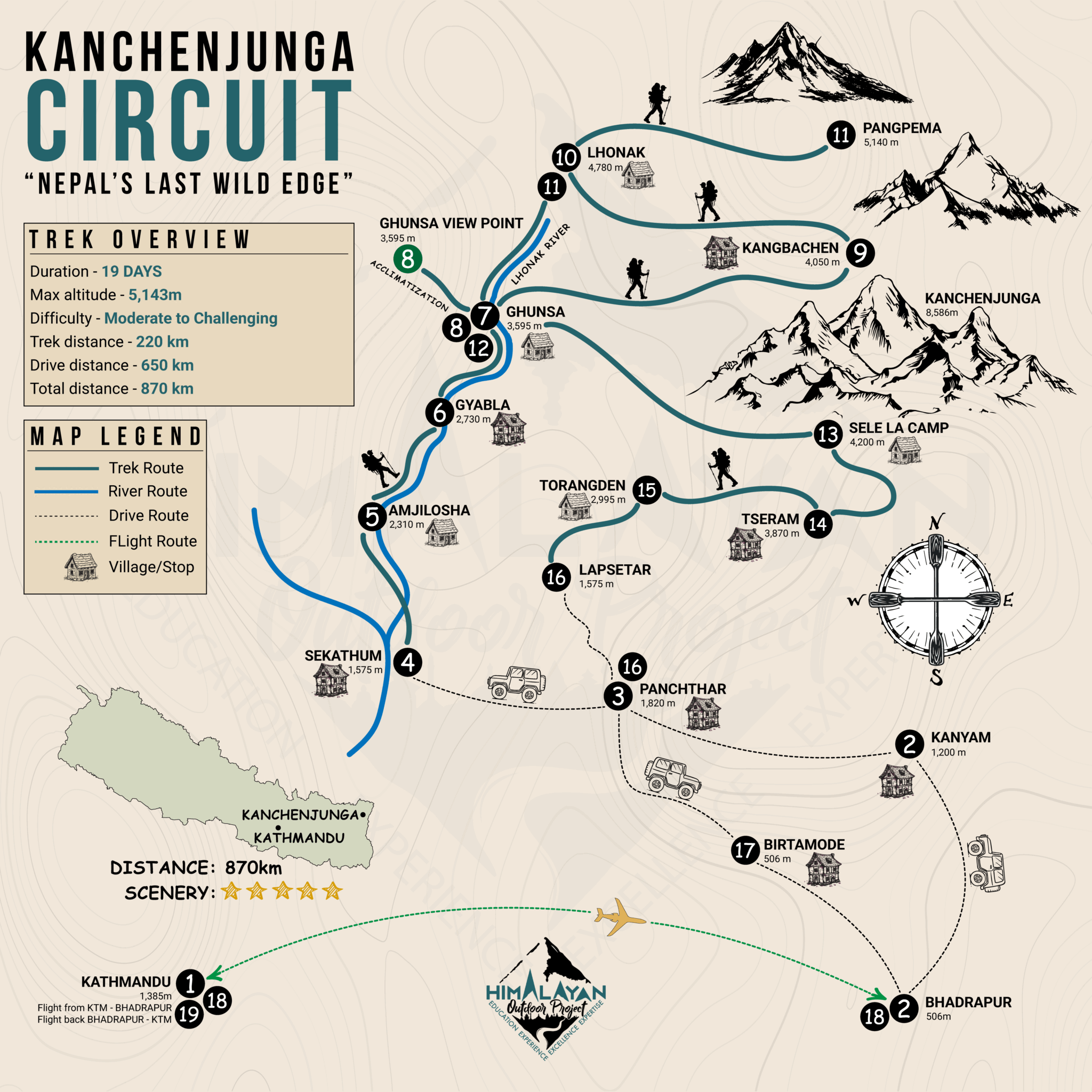
The Kanchenjunga Circuit Trek is one of the most remote and awe-inspiring trekking experiences in Nepal, circling the world's third-highest peak Mount Kanchenjunga (8,586m). Located in the far eastern corner of Nepal, near the borders of Tibet and India's Sikkim state, this trek offers a true wilderness adventure that remains largely untouched by mass tourism. It is the ultimate challenge for trekkers seeking solitude, raw natural beauty, and an authentic Himalayan experience.
The region only opened to foreign trekkers in 1988. Restricted area permits and a mandatory licensed guide have kept visitor numbers remarkably low ever since. What you get in return is a 19-day circuit that visits two base camps on opposite sides of the same mountain, connected by a high-pass traverse that is the hardest single day on any Nepal teahouse route.
The journey begins with a scenic flight from Kathmandu to Bhadrapur, followed by a drive to Taplejung the gateway to the Kanchenjunga region. The trail winds through lush subtropical forests, terraced farmland, and traditional villages inhabited by Rai, Limbu, and Sherpa communities. As you ascend, the landscape transforms into alpine meadows, glacial moraines, and high-altitude desert.
The trek covers both the North Base Camp at Pangpema (5,143m) and the South Base Camp at Oktang (4,730m), connected by the famous Sele La traverse. From Pangpema, you witness the massive north face of Kanchenjunga framed by the Jannu massif. From Oktang, you are presented with an unparalleled view of all four summits above 8,400m Main (8,586m), Yalung Kang (8,505m), Central (8,482m), and South (8,476m) standing before you simultaneously.
The Kanchenjunga Circuit Trek is not merely about reaching base camps; it is about experiencing one of the last great wilderness areas on Earth. It is a once-in-a-lifetime journey that demands exceptional preparation but offers rewards that last forever.
Route Profile










Trail Manifest
The HOP Difference
At Himalayan Outdoor Project, every trek is approached with the same mission-focused mindset as an expedition. Founder and Expedition Planner Ex. Special Forces Maj. Rajiv Chand served for more than twenty years in the Nepali Army Special Forces, leading teams in complex and demanding environments where preparation, leadership, teamwork and risk management determined success. That same philosophy now guides every HOP trek.
Our treks combine the leadership, planning, discipline and risk-management systems of Special Forces operations with the mountain wisdom, resilience and experience of Nepal's most accomplished trekking guides and Sherpas. This combination creates a trekking environment built on trust, professionalism, teamwork and safety essential ingredients for the physical and mental challenge of trekking through one of the most remote regions in the Himalayas.
Our Trekking Philosophy
Successful Kanchenjunga Circuit treks begin long before arriving in Kathmandu and they end only when every trekker is safely home.
Every detail matters Route, Logistics, Weather, Equipment, Contingencies, Emergency response. Nothing is left to chance. The remoteness of the Kanchenjunga region and the high passes require precise planning and careful route management.
Preparation creates confidence. Every trekker receives guidance on physical training, trekking systems, equipment selection, nutrition and hydration and mental preparation for the high-altitude challenge.
In the mountains conditions constantly change. Our team adapts, communicates and makes informed decisions based on weather, trail conditions, team health, individual performance, and safety considerations.
The destination is only halfway. Our objective is simple: bring every trekker home safely. Safety first. Summit second.
Preparation Program
Most treks start in Kathmandu. Ours starts months before.
Develop the endurance, strength, and resilience required for 19 days in the Himalayas. The trek involves long walking days of 6-8 hours, steep ascents and descents and extended periods at altitudes above 3,500 metres. Recommended training period: minimum 3-6 months.
No technical climbing skills are required there is no mountaineering, rope work, or need for prior expedition experience. However, trekkers should be comfortable walking 5-7 hours a day on rugged terrain with basic endurance and reasonable leg strength.
Manage fatigue, uncertainty, fear, stress, team dynamics, and the psychological demands of high-altitude trekking in one of Nepal's most remote regions.
Our team provides detailed equipment consultation and gear recommendations. Final equipment checks are conducted in Kathmandu.
Your Trekking Team
Our trekking guides and Sherpas are not simply support staff. Many members of our team have extensive experience in the Kanchenjunga region, with multiple circuit treks under their belts. Their knowledge of the mountains, weather, terrain, and high-altitude decision-making is invaluable. Experience matters.
Important: Independent trekking is not allowed in the Kanchenjunga region due to its restricted area designation. A licensed guide is legally mandatory, and a minimum of two trekkers is required in a group (solo permits are not issued). That is why we work only with highly experienced, government-licensed trekking guides who share our commitment to professionalism and safety.
Fit Check
Recommended Experience
Acclimatization Strategy
Proper acclimatisation is one of the most important factors in successful high-altitude treks.
Tea House & Camping Life
The Kanchenjunga Circuit Trek is primarily a tea house trek, with functional lodges along most of the route. Facilities are more basic than the Everest or Annapurna regions Wi-Fi is available in only a few tea houses, and showers are typically bucket showers. The remoteness is part of the adventure.
Safety & Risk Management
Cost Breakdown
Permits & Logistics
Accommodation & Meals
Transportation
Trek Support
Training & Additional
Mandatory Insurance
Important note: Trekking the Kanchenjunga Circuit is one of the most challenging and remote treks in Nepal. Weather, trail conditions and health issues may require itinerary changes. Flexibility, patience, resilience and teamwork are essential. The trek involves long walking days of 6–8 hours, steep ascents and descents, high mountain passes and extended periods at altitudes above 3,500 metres. The maximum altitude is 5,143m at Pangpema (North Base Camp). The Sele La traverse crosses four passes in a single day, taking 8–10 hours with no teahouses in between. A licensed guide is legally mandatory, a minimum of two trekkers is required (solo permits are not issued), and permits must be obtained through a registered trekking agency.
FAQs
Because a great trek is about much more than following a trail. Our guides provide:
Most importantly, they help you experience Nepal in a way that would be difficult to achieve on your own. Many guests tell us that their guide became one of the most memorable parts of their journey.
We are not a mass-market tour operator. We are a Nepal-based expedition company built around authentic experiences, professional leadership, and responsible adventure travel. Our philosophy is simple:
We believe the best expeditions are measured not only by where you go but by how deeply you experience the journey.
From The Journal
 Trekking · Field Notes
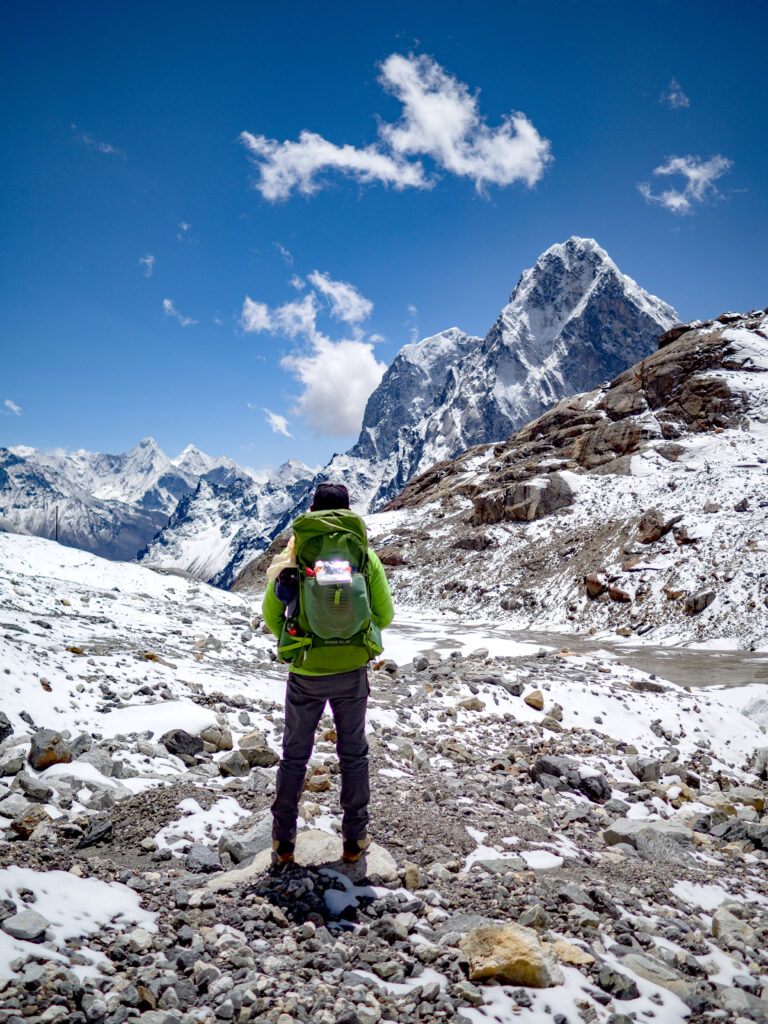
A step up from EBC Kongma La, Cho La and Renjo La connect the Khumbu's separate valleys into one continuous high-altitude circuit.
Read the guide → Planning
How pre-monsoon spring compares to post-monsoon autumn for high-altitude routes like the Kanchenjunga Circuit weather, visibility, and crowd levels.
Read the guide →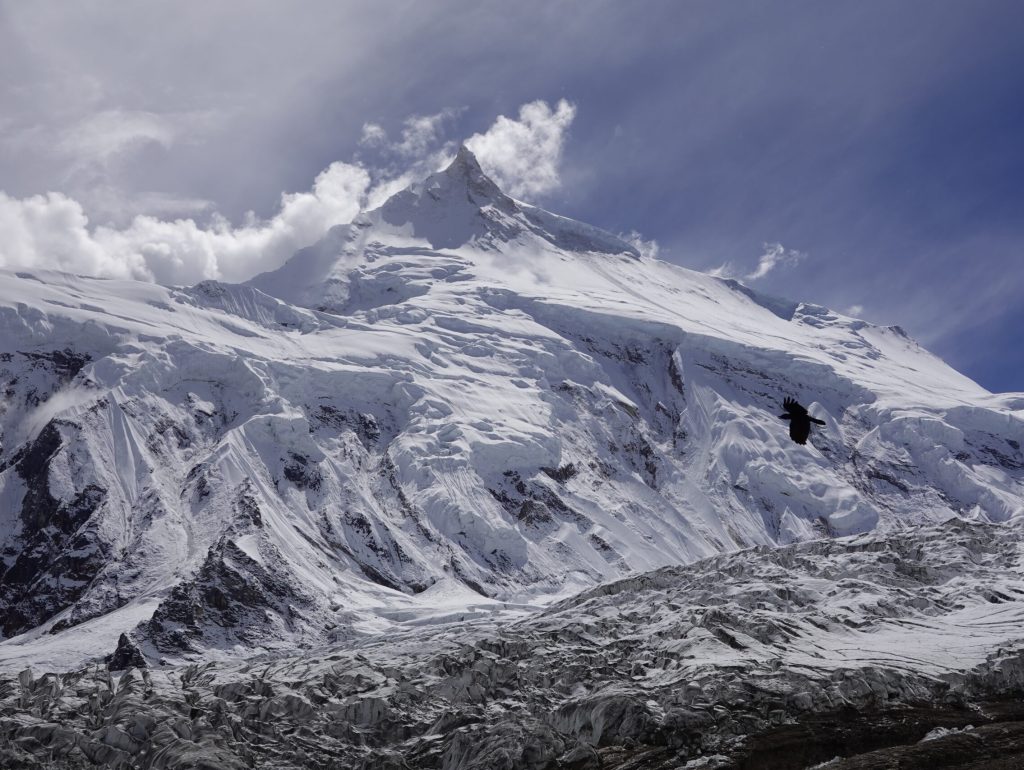 Trekking · Field Notes
Both cross a 5,000m+ pass in the cold before dawn but they ask very different things of the people who walk them. Here's what actually happens on each.
Read the guide → Gear
Gear
Layering strategy, footwear, and the gear that actually earns its weight on a 14-day teahouse trek to 5,160m.
Read the guide →