
Close

30°00'15"N · 80°56'00"E — DARCHULA DISTRICT, NEPAL
The Remote Giant of the Far West.
Expedition Data
Packages
Mission Brief
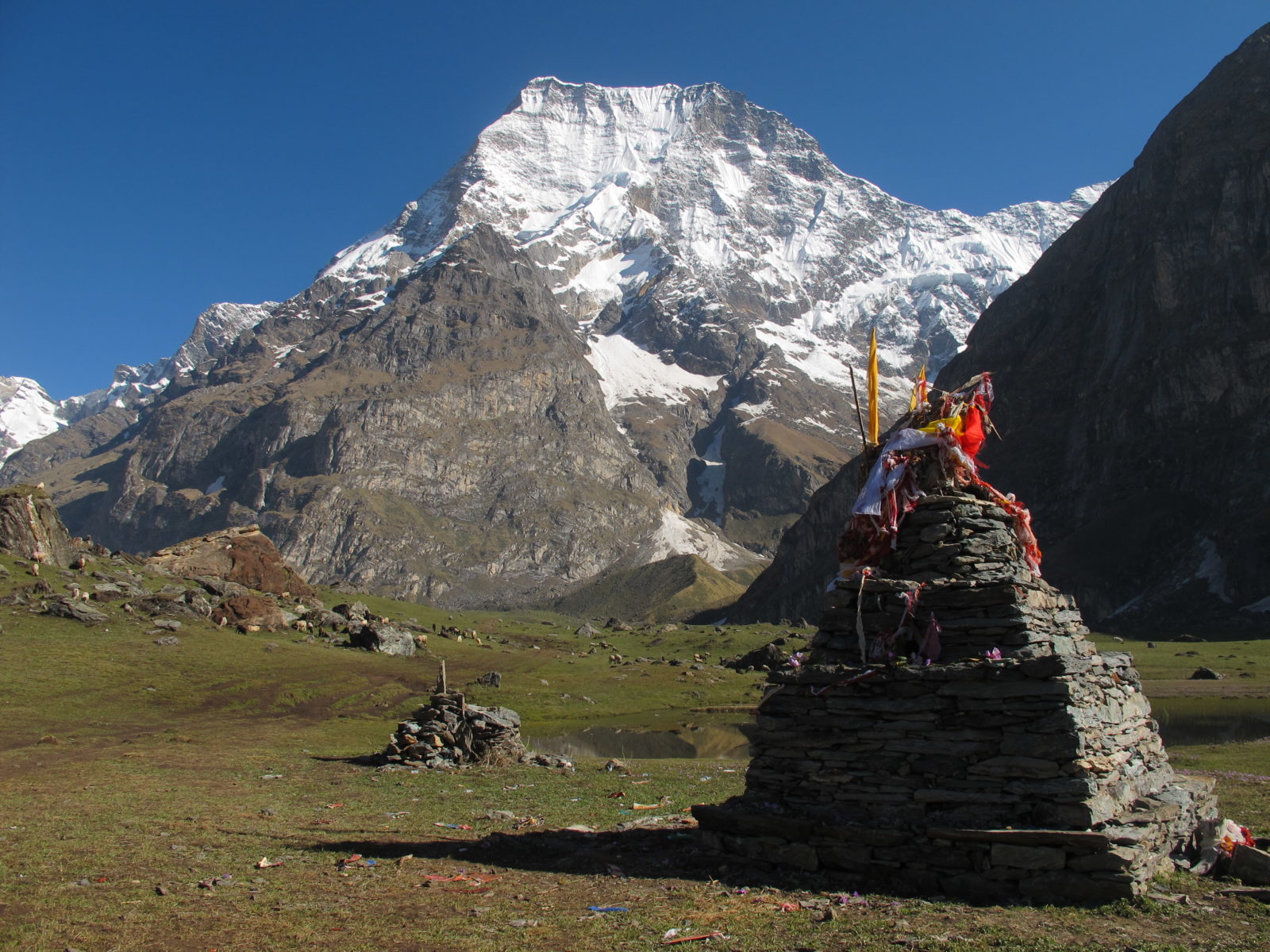
Mount Api, the highest peak in Far-Western Nepal at 7,132 metres, stands as the crown jewel of the Gurans Himal range. Located in the remote Darchula district near the borders of India and Tibet, Api is a little-known peak in a rarely visited part of the Himalayas. It rises dramatically over the low surrounding terrain, with its south face soaring 3,300 metres above its base.
The peak was first climbed on May 10, 1960, by a Japanese expedition team from the Doshisha Alpine Society, who successfully completed the Northwest Face route. Since then, only a handful of ascents have been recorded in 1978, 1996, and 2001. Due to its extreme remoteness and lack of commercial airstrips nearby, Api remains one of the most secluded and difficult-to-reach mountain areas in the entire country.
The journey begins with a flight from Kathmandu to Dhangadhi, followed by a jeep drive through the hot Terai plains to the trailhead at Makarigadh. The trek passes through traditional villages, terraced fields, and rhododendron forests before emerging into alpine grasslands. Base Camp is established at 3,900m near the sacred Kalidhunga Taal.
The climb itself is technically demanding, requiring advanced ice and rock climbing skills. The route involves steep snowfields, exposed ridges, and sections of technical climbing. For over two weeks, you and your Sherpa team will establish high camps, fix ropes, and push your limits on one of Nepal's most isolated 7,000-metre peaks. The Api Expedition is not merely about reaching a summit; it is about venturing into one of Nepal's last true wilderness areas.
Route Profile











Trail Manifest
The HOP Difference
At Himalayan Outdoor Project, every expedition is approached as a mission. Founder and Expedition Planner Ex. Special Forces Maj. Rajiv Chand served for more than twenty years in the Nepali Army Special Forces, leading teams in complex and demanding environments where preparation, leadership, teamwork and risk management determined success. That same philosophy now guides every HOP expedition.
Our expeditions combine:
This combination creates an expedition environment built on trust, professionalism, teamwork and safety essential ingredients for the immense physical and mental challenge of climbing a remote and technical 7,000-metre peak.
Our Expedition Philosophy
Successful Api expeditions begin long before arriving at Base Camp and they end only when every climber is safely home.
Every detail matters Route | Logistics | Weather | Equipment | Contingencies | Emergency response. Nothing is left to chance. The remoteness of Api and the technical demands of the Northwest Face require precise planning and route management.
Preparation creates confidence. Every climber receives guidance on: Physical training, Technical skills, Expedition systems, Equipment selection, Nutrition and hydration, Mental preparation for the 7,000-metre challenge.
In the mountains conditions constantly change. Our team adapts, communicates and makes informed decisions based on: Weather, Route conditions, Team health, Individual performance, Safety considerations.
The summit is only halfway. Our objective is simple: Bring every climber home safely. Safety First. Summit Second.
Preparation Program
Most expeditions start in Kathmandu. Ours starts months before.
Develop the endurance, strength, and resilience required for twenty-eight days in the Himalayas and the demands of a technical 7,000-metre summit.
Build confidence in fixed rope travel, ascender systems, crampon techniques, ladder crossing, glacier travel, and ice axe skills. Api is considered a technically demanding mountain, requiring advanced ice and rock climbing skills.
Manage fatigue, uncertainty, fear, stress, team dynamics, and the psychological demands of high-altitude climbing on exposed ridges in one of Nepal's most remote regions.
Our team provides detailed equipment consultation and gear recommendations. Final equipment checks are conducted in Kathmandu.
Your Expedition Team
This expedition is led by Tashi Chhumbel Sherpa. Our climbing Sherpas are not simply support staff they are expedition partners, mentors, teachers and leaders. Many members of our Sherpa team have extensive experience on 7,000-metre and 8,000-metre peaks. Their knowledge of the mountain, weather, terrain, and high-altitude decision-making is invaluable. Experience matters.
That is why we work only with highly experienced, government-certified climbing Sherpas who share our commitment to professionalism and safety.
Fit Check
Recommended Experience
Acclimatization Strategy
Proper acclimatisation is one of the most important factors in successful Himalayan expeditions.
Base Camp Life
Api Base Camp (3,900m), nestled in the alpine grasslands near Kalidhunga Taal, becomes home for several weeks. Facilities include:
Safety & Risk Management
Cost Breakdown
Permits & Logistics
Accommodation & Meals
Transportation
Expedition Support
Training & Additional
Mandatory Insurance
Important note: Climbing Api Peak is a serious technical undertaking in one of Nepal's most remote regions. Weather, route conditions, and health issues may require itinerary changes. Flexibility, patience, resilience, and teamwork are essential. Api is considered a technically demanding mountain, requiring advanced ice and rock climbing skills. The route involves steep snowfields, exposed ridges, and technical sections. Climbers must be proficient with fixed ropes, crampons, and ice axes. The remoteness of Api adds an additional layer of challenge logistics are more complex and emergency response times are longer than in the more frequented regions of Nepal. This expedition is for mountaineers seeking a true wilderness experience. Our mission is simple: Professionally Planned. Thoroughly Prepared. Safely Executed.
FAQs
From The Journal
 Educational
Nepal visa & permit guide for trekkers and climbers the visa, restricted area permits, and the extra paperwork required for remote regions like Darchula.
Read the guide → Trekking
A shorter approach into the high Himalaya, and a good acclimatisation-style trek for climbers building toward a bigger objective.
Read the guide → Trekking · Field Notes
Another high-altitude circuit worth knowing - Kongma La, Cho La and Renjo La connect the Khumbu's separate valleys into one continuous route.
Read the guide → Gear
Gear
What to bring for every season during trekking in Nepal overpacking is the most common mistake first-time Himalayan trekkers make.
Read the guide →