Close
One of the last truly isolated expedition environments remaining in the Himalaya. This is not a standard trekking holiday. This is a full remote wilderness expedition conducted in austere terrain with no road access, limited communications, prolonged exposure above 4,000 metres, and multiple high mountain pass crossings above 5,000 metres.
The expedition takes you deep into one of the most isolated and culturally preserved regions of the Himalaya, where ancient Tibetan Buddhist traditions, remote mountain villages, and vast trans-Himalayan landscapes remain almost untouched by modern development.

(Overnight altitude: 1,350m) Meals: Breakfast Namaste and welcome to Nepal. The moment you step out of Tribhuvan International Airport, your expedition team is there to greet you. A private vehicle whisks you to our comfortable 4‑star hotel in Kathmandu. Today is intentionally relaxed. After long‑haul flights, you need rest, hydration, and a mental reset. We’ll ease into the adventure with a welcome briefing, initial medical checks and a casual team dinner.
(Overnight altitude: 1,350m) Morning starts with military-style briefings on route, weather, emergency protocols, and movement. Then a medical session covering AMS, HAPE, HACE, hydration, cold injuries and evacuation. Next, gear inspection (sleeping bags, boots, waterproofs, medical kits), plus duffel bag allocation, porter loads and permit confirmation. Logistics wrapped by lunch. Afternoon – cultural visit to Swayambhunath Stupa (Monkey Temple). A short walk up steps aids acclimatisation and offers Kathmandu Valley views. Learn Himalayan Buddhist culture before heading into Upper Dolpo.
(Overnight altitude: 150m) A one‑hour domestic flight takes us west to Nepalgunj, the lowland gateway to far western Nepal. The air gets warmer, the pace slows, and we enjoy our last hot showers and cold drinks before the trail. This is our final staging point – tomorrow we deploy into Dolpo.
(Overnight altitude: 2,140m) A short 35‑minute flight lands us at Juphal airstrip the true start of our adventure. The air is crisp and the mountains feel close. We lace up our boots for a gentle 2‑3 hour trek along the Thuli Bheri River. The trail drops slightly to Dunai, the district headquarters of Dolpo. Tonight we camp and the expedition rhythm begins.
(Overnight altitude: 2,838m) A 6‑7 hour trek that takes us deep into Shey Phoksundo National Park. We move through dense pine forest, cross rushing streams on narrow bridges and pass tiny villages tucked into hillsides. The trail climbs steadily not too steep, but enough to remind you that you’re gaining altitude.
(Overnight altitude: 3,120m) Today the trail gets serious. We trek 5‑6 hours on cliffside paths with dramatic drops to the river below. The gorge narrows, and the vegetation thins. It’s exposed, beautiful and a little thrilling. We camp at Jharana, where the sound of waterfalls (Jharana means “waterfall” in Nepali) lulls us to sleep.
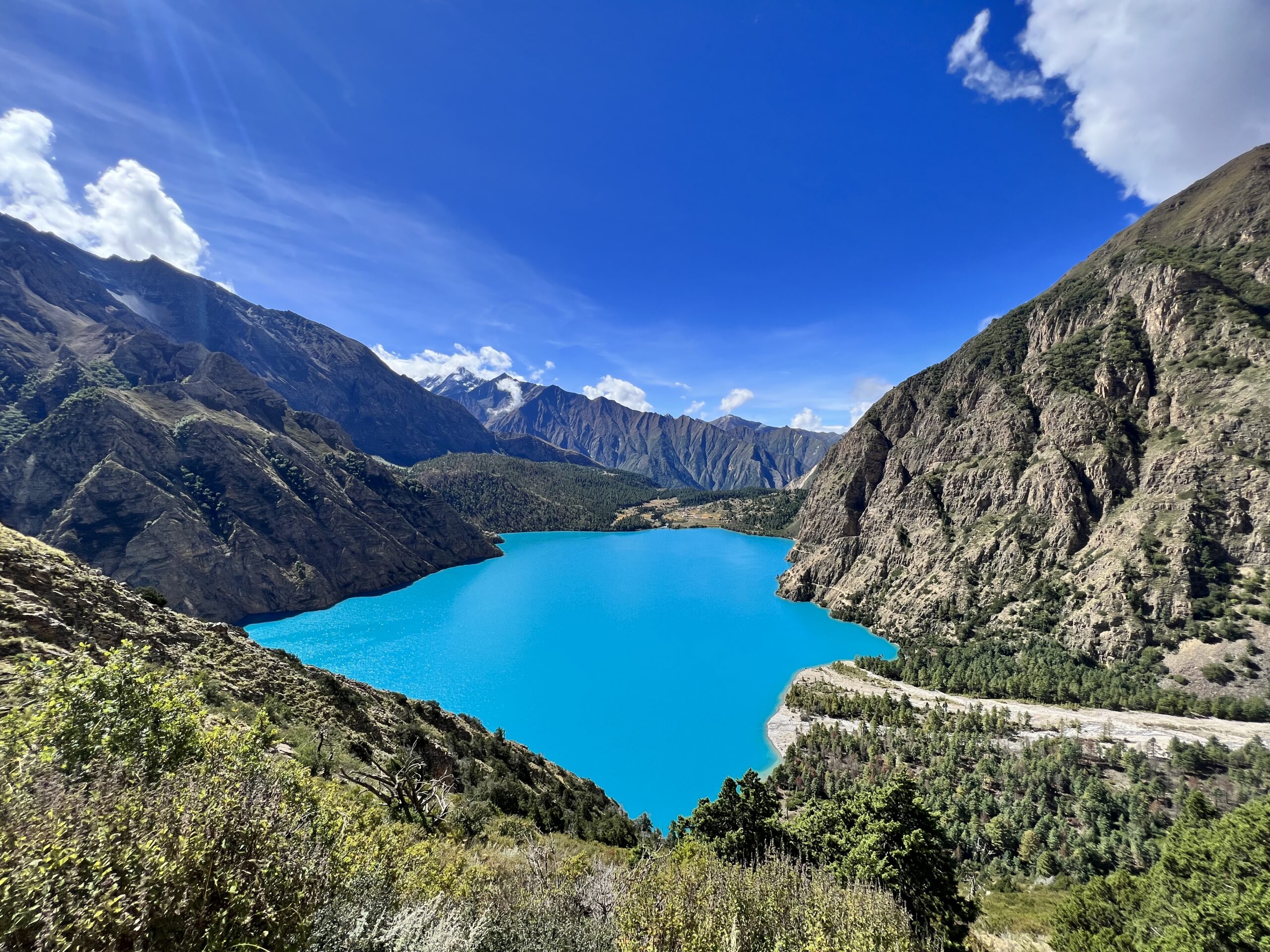
(Overnight altitude: 3,600m) A shorter day 4 - 5 hours but the reward is immense. We arrive at Phoksundo Lake, one of Nepal’s most iconic alpine gems. Its turquoise waters are surrounded by sheer cliffs and pristine forest. We set up camp, then take a gentle reconnaissance walk along the shoreline. Drink water, rest, and let the altitude settle into your bones.
(Overnight altitude: 3,600m) A critical rest day. We take controlled acclimatisation hikes to higher ground, then return to camp. Medical staff monitor SpO2 levels, hydration and any signs of altitude sickness. We review our gear, plan the coming high‑altitude phase, and give our bodies time to adapt. It’s not a rest from adventure it’s a rest for success.
(Overnight altitude: 3,640m) A 5‑6 hour trek that follows remote cliffside trails above the lake’s western shore. The views back across Phoksundo are unforgettable. We gain altitude slowly but surely and the landscape becomes more barren and alpine. Camp at Sallaghari feels like a true wilderness outpost.
(Overnight altitude: 4,700m) Today we enter high‑altitude operational terrain. A 5‑6 hour climb brings us to Nangdala Base Camp at 4,700m. The air is thin and every step requires discipline. We move slowly, breathe deeply and stay together as a team. This is our launchpad for tomorrow’s pass crossing.
(Overnight altitude: 4,500m) Major expedition objective day. An early alpine start headlamps on, layers zipped. The climb to Kang La (5,360m) is cold, steep and utterly spectacular. At the top, the Dhaulagiri Range spreads out before you, with Crystal Mountain glinting to the east and the vast Upper Dolpo Plateau unfolding like a frozen ocean. After photos and high‑fives, we descend carefully to Shey Gompa (4,500m). This is what you came for.
(Overnight altitude: 4,500m) A well‑deserved recovery day. We visit the famous Shey Gompa (also known as Crystal Monastery), perched on a hillside with panoramic views. Some of us take a short reconnaissance towards Crystal Mountain. Others rest, hydrate and let our bodies recover from the pass. Medical checks continue we are still at altitude.
(Overnight altitude: 4,400m) A 6‑7 hour trek that crosses the remote Saldang La pass and drops into the trans‑Himalayan valleys of Upper Dolpo. The landscape is stark, beautiful and reminiscent of the Tibetan plateau. We camp at Namgung, a small settlement surrounded by barren hills and blue skies.
(Overnight altitude: 3,770m) A shorter day 4‑5 hours but we arrive at Saldang, one of the largest settlements in Upper Dolpo. The village feels like a time capsule: whitewashed houses, chortens and fields of barley. We camp nearby and enjoy the slightly thicker air at lower altitude.
(Overnight altitude: 4,200m) A 5‑6 hour trek along ancient Tibetan trade trails. The route is dotted with mani walls and prayer flags. We reach Yangze Gompa, a remote monastery that sees few visitors. The monks may offer us tea a simple but profound welcome.
(Overnight altitude: 3,940m) Another 5‑6 hour day through a long, remote valley. We share the trail with yak caravans their bells echoing off the hillsides. The landscape softens as we descend towards Sibu. Camp is peaceful, and the stars are incredibly bright.
(Overnight altitude: 4,900m) We climb 5‑6 hours back into high alpine terrain. Jeng La Base Camp (4,900m) is our staging point for the second major pass. The air is thin again but our bodies are more prepared this time. Early to bed tomorrow is another big day.
(Overnight altitude: 4,040m) A long operational day 7‑8 hours. We ascend Jeng La Pass (5,090m) in the cold dawn light. The views stretch across hidden valleys and distant peaks. Then a long descent to Dho Tarap, the highest permanent settlement in Dolpo. Stone houses, prayer wheels and a warm welcome. We’ve conquered our second major pass.
(Overnight altitude: ~2,100m – lodge or camp) Our final trekking day. We descend through lower valleys and along river systems. The trail widens, and the vegetation returns. We reach Dunai by afternoon the same place we camped on Day 4. Tonight we consolidate equipment, repack duffels and prepare for extraction. A sense of accomplishment fills the air.
(Overnight altitude: 1,350m) We retrace our steps: a short flight from Juphal to Nepalgunj, then another to Kathmandu. In the evening, we hold a full expedition debrief sharing lessons learned, leadership reflections and favourite moments. A farewell dinner follows, complete with photos and laughter. You’ve completed a true Himalayan journey. Tomorrow, you fly home with stories that will last a lifetime.
People 14 years or older can join the trip. This ensures everyone is physically capable and can follow safety guidelines.
The cash that you need to carry entirely depends upon the length of the trek and if you are opting to plan the trek with a travel agency or not. All the basic facilities like food, accommodation, porters and guides are provided by the travel agency if you go on an all-inclusive package with them. In that case, you need to bring cash only for your personal expenses, tipping and shopping.
Of course! Just let us know, and we can help with arrangements.
We use cookies to improve your experience on our site. By using our site, you consent to cookies.
Manage your cookie preferences below:
Essential cookies enable basic functions and are necessary for the proper function of the website.
These cookies are needed for adding comments on this website.
Statistics cookies collect information anonymously. This information helps us understand how visitors use our website.
Google Analytics is a powerful tool that tracks and analyzes website traffic for informed marketing decisions.
Service URL: policies.google.com (opens in a new window)
You can find more information in our Cookie Policy and Privacy Policy.