loader image

Himalayan Outdoor Project

Ama Dablam Expedition

Follow the path of myths to the foot of the sky.

Ama Dablam expedition: Summiting the Mother’s Necklace

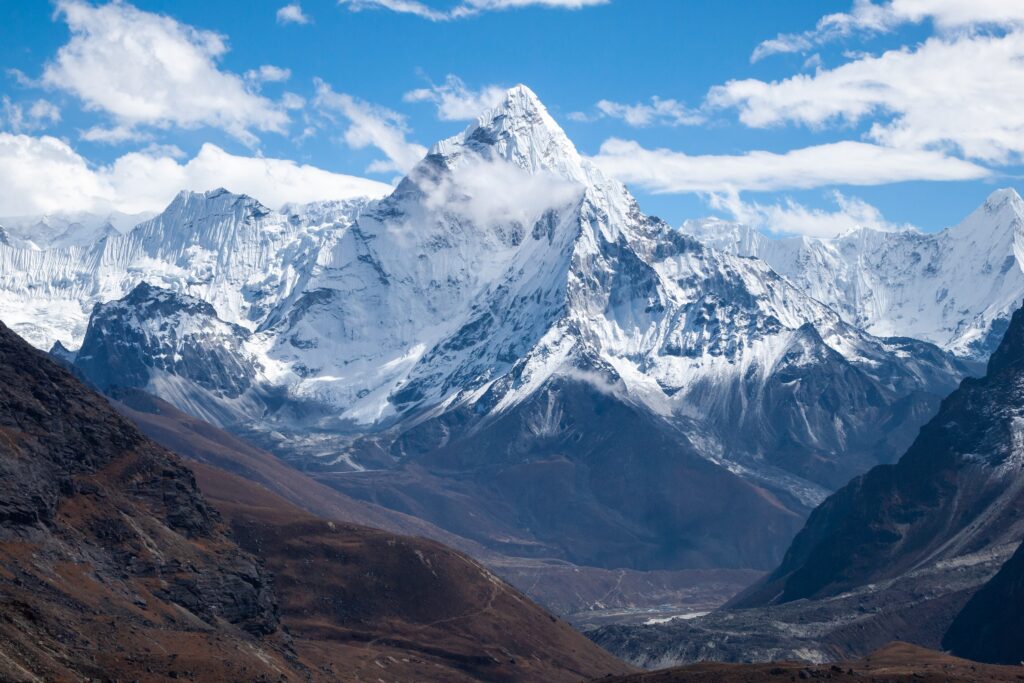
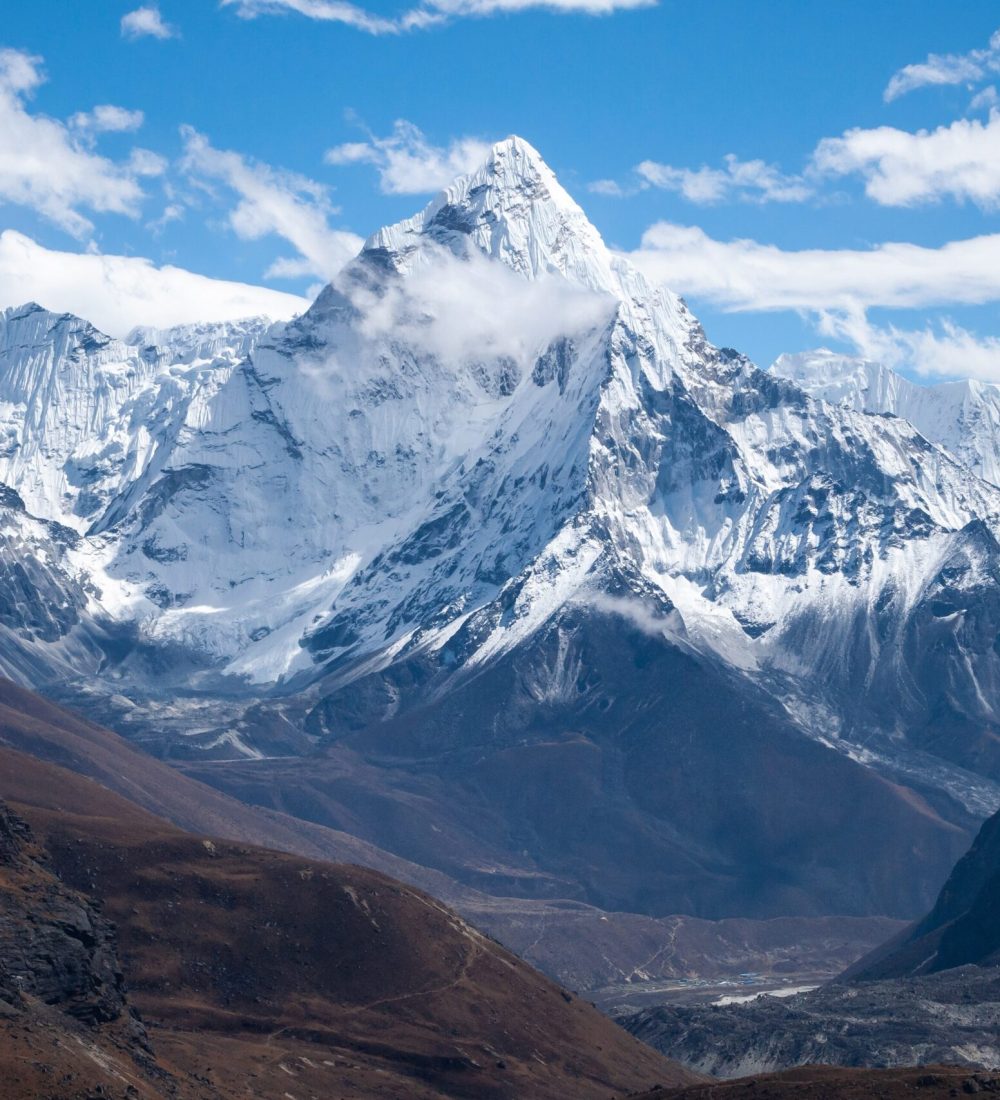
Ama Dablam expedition is a journey where each move becomes a vertical prayer, fingertips searching for holds on the famous granite ridge. Towering above the Khumbu Valley at 6,812m, Ama Dablam is considered one of the most beautiful mountains in the world, its iconic summit pyramid resembling a mother’s jewel box hence its name, meaning “Mother’s Necklace.”

Ama Dablam lies in the Everest region, surrounded by giants like Everest, Lhotse, and Makalu. Ama Dablam expedition offers a dramatic view from every angle the southwest face reveals the famous ridgeline, while the north face presents sheer granite walls. Ama Dablam is a technical climb requiring advanced mountaineering skills. Ama Dablam expedition is not for beginners it is for experienced climbers seeking one of the most rewarding and beautiful ascents in the Himalayas.


Ama Dablam expedition was first ascended in 1961 by a New Zealand team led by Edmund Hillary, making the first ascent via the Southwest Ridge. Since then, Ama Dablam has become a sought-after objective for mountaineers worldwide. Ama Dablam expedition is a demanding and technical climb as the exposed ridgelines, steep snow and ice sections, and unpredictable weather make it extremely challenging. The famous “Yellow Tower” and the final summit ridge require precise climbing technique. Ama Dablam demands unwavering focus every placement of your crampon, every shift of your weight, every breath must be deliberate. Ama Dablam expedition pushes you to your edge and gently asks for more. Ama Dablam rewards only the prepared.


A high level of physical fitness and advanced mountaineering skills is required if you want to go on an Ama Dablam expedition. Acclimatization and carefulness are the keys to a successful summit. Ama Dablam expedition emphasizes gradual altitude gain with multiple rest days. Upon arrival at base camp (4,600m), our Sherpa team will establish a route with fixed ropes and ladders leading to Camp 1 at 5,400m. We will then spend a night at Camp 1 and touch Camp 2 at 5,800m before returning to base camp. Ama Dablam requires multiple rotations to higher camps for proper acclimatization. Ama Dablam expedition conducts these rotations carefully, including a sleep at Camp 2 before descending. Ama Dablam demands respect for the mountain and its weather patterns.


As we touch Camp 2, we return to base camp and conduct one more rotation to sleep at Camp 2. Then we return to base camp to await a favorable weather window for the summit bid. When conditions are optimal, we head to Camp 2 to spend a couple of nights followed by a night at Camp 3 (6,200m). The next day will be summit day of Ama Dablam at 6,812m. The final mantle onto the summit crown is a moment of pure grace the world explodes in a circle of giants, with your shadow cast across the clouds below. After the summit, we descend back to Camp 2 for a night’s rest. The next day, we continue descending to base camp. Ama Dablam expedition concludes not with conquest, but with a reverent nod to the mountain’s fierce beauty and the quiet knowledge that your amadablam expedition will live in your bones forever. Ama Dablam stays with you. Ama Dablam expedition transforms you.

Amadablam Expedition

Beyond Borders

Amadablam Expedition

EXPEDITION OVERVIEW

Here is brief information regarding the expedition, including dates, duration, pricing and more.
  1. MONTH

    September - November
  2. GROUP SIZE

    4 - 14 adventurers
  3. DURATION

    Expedition duration is 25 days
  4. TRANSPORTATION

    We will be travelling via private transportation
  5. DIFFICULTY

    The level will be moderate

Itinerary For AMADABLAM EXPEDition

  • Day 1

    Arrival in Kathmandu & Transfer to the Hotel

  • Day 2

    UNESCO sightseeing, checking up gear and briefing

  • Day 3

    Kathmandu to Ramechhap by Drive

  • Day 4

    Ramechhap to Phakding via Lukla

  • Day 5

    We trek from Phakding to Namche Bazaar

  • Day 6

    We Day-Hike to Everest View Hotel from Namche Bazaar For Acclimatization

  • Day 7

    We trek from Namche Bazaar to Pangboche

  • Day 8

    We have a briefing session at Base Camp and equipment check

  • Day 9

    We have training session with Guides at Base-Camp

  • Day 10 - 19

    From Base Camp we start our Summit Push (Camp I to Camp III - Summit and Back to Base Camp) - Duration 10 Days

  • Day 20

    Rest and packup day at Base Camp

  • Day 21

    We trek from Base Camp to Namche Bazaar

  • Day 22

    We trek from Namche Bazaar to Lukla

  • Day 23

    We take flight from Lukla to Kathmandu

  • Day 24

    We chill and go for shopping in Kathmandu and a farewell party

  • Day 25

    Fly back Home

Brief Information

Cost includes:

  • All arrival, departure transfers as per the program by private vehicle. 
  • 25 days full board Lodge trek with all meals (breakfast, lunch and dinner) with accommodation in a tea house lodge.
  • 4 nights tourist standard hotel in Kathmandu including breakfast and government taxes. 
  • Flight for kathmandu to Luka and back.
  • Service of fluent english speaking guides and porters.
  • Accommodation, meals, insurance, equipment, and allowances of guides and porters.   
  • Expedition Royalty and a permit fee from the Nepal Government to climb Amadablam Peak , NMA permit to climb Amadablam Peak, Sagarmatha National Park and Pasang Lhamu Rural Municipality entry permit and fee.
  • Transportation for all arrival and departure transfers by private vehicle as per the above itinerary. 
  • Cultural tour in Kathmandu with local guide, transport but entry fee is extra. 
  • TIMS (Trekkers’ Information Management System) fee. 
  • All applicable government taxes (13% VAT and 10% tourism service charges)
  • Ground handling charges and necessary government taxes. 
  • Farewell and welcome Dinner with the whole trek team. 
  • Himalayanoutdoorproject merchandise (Cap or Hoodie)
 

Cost excludes:

  • Lunch and Dinner whilst staying in Kathmandu. 
  • Entry fee while cultural visit in Kathmandu. 
  • International flights to Nepal. 
  • Bottled drinks (mineral water, any cold drinks, and alcoholic drinks) whilst on trek. 
  • Your travel insurance.
  • Expenses of personal nature such as tips for guide, porter and driver, laundry, bar bill, telephone calls etc.
  • Nepal visa fee for 30 days.
  • Any additional activities not in the itinerary.

Things to consider while in Nepal and before coming to Nepal:

  • Roads can be unpredictable and bumpy in Nepal be patient and trust the journey.
  • Forgetting personal medications is risky pack enough for the entire trip as pharmacies are non-existent in these remote areas.
  • There’s little to no internet here disconnect and enjoy the timeless beauty of the wilderness.
  • Drinking untreated water can ruin your adventure. Always use purification methods.
  • Never overpack.
  • Leave footprints not traces.
  • Have healthy mind set to respect local culture.
  • Remote areas mean minimal facilities embrace the adventure over comfort.
  • Switch off everything and soak in the moments.
  • Carry enough cash because sometimes ATMs and other form of payments could not work.
  • Dont forget your permits and all the other required documents.
  • Stay calm in unexpected situations; panicking never helps, and solutions are always around the corner.
  • Don’t rush to the finish line; the magic is in enjoying every step of the journey.
  • Stick with the group; wandering off isn’t just unsafe, it’s unnecessary in such vast landscapes.
 

WHAT TO BRING: 

  • Hat/Cap
  • Beanie/Headband
  • Sunglasses
  • Neck Buff
  • Sunscreen
  • Light Base Layer
  • Insulating Layer (Fleece or Down)
  • Down Jacket
  • Raincoat
  • Gloves (Warm and Lightweight)
  • Trekking Pants (Quick-dry)
  • Thermal Bottoms (Optional)
  • Trekking Boots
  • Camp Shoes/Flip Flops
  • Wool Socks (Multiple Pairs)
  • Head Torch (with Extra Batteries)
  • Water Bottle (Up to 2L)
  • Personal Medications
  • Camera
  • Power Bank/Charger
  • Trekking Poles
  • Snacks/Protein Bars
  • Toilet Paper/Wet Wipes
  • Personal Hygiene Items
  • First Aid Kit (Basic)
  • Map/Guidebook
  • Backpack (Daypack for trekking)
  • Positive vibes

FAQs

I've never climbed a mountain before. Can I join a summit expedition?
  • Yes.
  • Several Himalayan peaks are suitable for first-time climbers who have good fitness and a willingness to learn.
  • Our guides provide instruction, support, and mentoring throughout the expedition.
  • For many guests, a HOP summit expedition becomes the beginning of a lifelong passion for mountaineering.
What is the difference between trekking and climbing?
  • Trekking follows established mountain trails and does not require technical climbing equipment.
  • Climbing involves ascending a mountain summit and may require equipment such as crampons, harnesses, helmets, ropes, and ice axes.
  • Climbing expeditions demand greater preparation, but they also offer one of the most rewarding achievements in mountain travel.
How physically demanding are summit expeditions?
  • Summit expeditions require a higher level of fitness than trekking.
  • You should be comfortable hiking for multiple days, handling steep terrain, and maintaining consistent effort at altitude.
  • Our team provides detailed preparation advice before every expedition to help you arrive ready and confident.
Do I need technical climbing experience?
  • Not always.
  • Many trekking peaks in Nepal are specifically designed for climbers who are new to mountaineering.
  • Our guides teach the skills you’ll need during the expedition and ensure you’re comfortable using equipment before summit day.
  • More advanced peaks require previous climbing experience, and we’ll always advise honestly on what is appropriate for your ability level.
What happens if weather prevents a summit attempt?
  • Mountain weather always has the final say.
  • If conditions become unsafe, our guides may postpone, modify, or cancel a summit attempt.
  • While reaching the summit is the objective, returning safely is the true measure of a successful expedition.
  • This commitment to safety is one of the reasons travelers trust HOP.
Why choose Nepal for your first summit?
  • Nepal is home to some of the world’s best introductory climbing peaks.
  • Combined with experienced guides, breathtaking Himalayan scenery and a rich mountaineering heritage, there is no better place to begin your climbing journey.
  • Standing on your first Himalayan summit is an experience you’ll never forget.